Never Let Me Go – Kazuo Ishiguro

Book #1

Reviewer: Inspirationalreads

NLMG

So I want to start out by saying that I am going to be deliberately vague about the finer points of this novel.  Like others on this list, I have avoided any kind of advance knowledge about the plot of this book because I wanted to go in and come out again having experienced the book as a whole, not tainted by any pre-conceived ideas about it.  And I am so thankful that did this.  All I knew was that it has been classified as a British Science Fiction novel about three people who grew up in a private boarding school establishment who grow to be more aware of their significance and contribution to the world they live in.   From this point onwards  as said earlier, I will be vague but still will give more specific details so if you want to go into this book like I did, which by the way I recommend, then STOP READING NOW!

Kathy is a thirty-one year old carer, of which she has been for the past eleven years. When a patient learns that Kathy is from the esteemed and now defunct school Hailsham, he asks Kathy to let him know all of her memories and experiences.  With this, it sets Kathy to reminiscing, about her time at Hailsham, in particular her relationship with two of her school mates Tommy and Ruth and how the path for their life was laid out .

Despite shielding myself from any spoilers, I did go into this novel with high expectations, and these were easily exceeded.  Having seen it described as “a tale of deceptive simplicity” it is hard to find anything more apt to describe it myself.  Kathy’s tale slowly unfolds, one memory leading to another in an almost conversational recollection.  This never becomes confusing, rather the reader is taken along, snippets revealed here and there.  There is no complex weaving of multiple narratives, the timeline despite being a recollection moves in a linear manner, the language is clear and straight forward.  But this simplicity is deceptive, because this story is full and layered.  There is a analogy here, about what we as humans do for the supposed greater good.  Does the end always justify the means?  Also the question of destiny, if the destination is known does it matter what we do on the path towards it?  Does that journey matter at all?

I currently have the movie waiting beside my player, all ready for me to watch.  Much is made of the love story on the DVD cover that has already made me so wary to watch it and so if you have seen the movie but not yet read the book I implore you to rush give it a read as it will be well worth your time.  As is generally the case of any movie (or TV show ) adapted from a novel.

Ishiguro is truly a masterful storyteller, entwining these questions, these comments on destiny and purpose, into a story that is enthralling as much as it gives the reader much to mull over.  The simplicity is the way it is told, the deception is in what is being told. I can see this story not letting me go for quite a while yet.

One more thing – yay for number one being done and dusted!

The Wasp Factory – Iain Banks

Book #254

Reviewer: Inspirationalreads


wasp

Two years after I killed Blyth I murdered my young brother Paul, for quite different and more fundamental reasons than I’d disposed of Blyth, and then a year later I did for my young cousin Esmeralda, more or less on a whim.That’s my score to date. Three. I haven’t killed anybody for years, and don’t intend to ever again.It was just a stage I was going through.

Let me introduce Frank Cauldhame; sixteen years old and living a reclusive lifestyle in rural Scotland with his father.The typical adolescent though, Frank is not.  If it is not obvious from the above quote, Frank is a sociopath; although he has limited his murder of humans to three, he continues to torture and murder animals, using them in rituals to help predict the course of events in his life.  Told from Frank’s perspective, the story opens with news that Frank’s older brother Eric has escaped from a psychiatric holding facility.  Oh yes blog follower, not one but two mentally deranged individuals in one family.   With Eric arrival imminent, Frank’s story unfolds switching between current events and Frank’s memories including the abandonment of his mother, a savage attack on him by the family dog which maimed and physically altered Frank, and the three horrific acts of detached, calculated murder.

Which leads me to that regular old disclaimer from me; if you are at all easily offended or squeamish and wish not to purposefully introduce dark, disturbing reading material into your life, then avoid this novel. I like to think I am providing at least some small kind of service to those who wish to avoid such books.  Don’t all rush to thank me.

This is a masterful novel, the first outing for Banks.  This is the first of SIX of his books on the list and is a quick read, but by no means easy.  The prose is straight forward but the subject matter is hard hitting.  Frank’s internal monologue is far from a rambling mass of delusional diatribes.  He is clear, methodical and applies his own brand of morality on everything he does.  There is a genuine quality in Frank, a madness that is not in any part an affectation and it is this, the characterisation of someone abhorrent and yet deserving of our sympathies and in some way, affection, that Banks genius is clearly evident.  For example, when Eric and Frank get a chance to talk Frank becomes horrified that Eric could possibly have a dog with him, setting dogs alight being one of the key indicators of Eric’s deepening instability.  Yet, earlier that same day, Frank kills one rabbit with his bare hands and then blows up a warren, delighting in his victory.  Frank is self-aware, he knows just what kind of monster he is and is often repentant, but is unwilling or unable to change.

The story itself moves along at a great pace, never feeling sluggish.  This is aided by its short length, but also in the way that the past and the present being are revealed at the same time.  All leading to Eric arriving back at the family home, bringing revelations that changes Frank’s world and the readers perspective of it.

I feel like I am doing a disservice to those who will avoid this book because of some content.  It really is a great story, with one of the most interesting characters I have read in a long time.  The elements of ick can be viewed as sensationalist or can be viewed as necessary to Frank, his inner dialogue, his idea of himself and therefore necessary to the story.  I would like to therefore take back my advice and just add a little cautionary message because this book is worth reading and I feel like it is a great introduction to a wonderful author.  Highly recommended.

Farewell, My Lovely – Raymond Chandler

Book #586

Reviewer: Beth’s List Love (first published January 2013)

FMLovely

It was a warm day, almost the end of March, and I stood outside the barbershop looking up at the jutting neon sign of a second floor dine and dice emporium called Florian’s. A man was looking up at the sign too. He was looking up at the dusty windows with a sort of ecstatic fixity of expression, like a hunky immigrant catching his first sight of the Statue of Liberty. He was a big man but not more than six feet five inches tall and not wider than a beer truck. He was about ten feet away from me. His arms hung loose at his sides and a forgotten cigar smoked behind his enormous fingers.

…The doors swung back outwards and almost settled to a stop. Before they had entirely stopped moving they opened again, violently, outwards. Something sailed across the sidewalk and landed in the gutter between two parked cars. It landed on its hands and knees and made a high keening noise like a cornered rat. It got up slowly, retrieved a hat and stepped back onto the sidewalk. It was a thin, narrow-shouldered brown youth in a lilac colored suit and a carnation. It had slick black hair. It kept its mouth open and whined for a moment. People stared at it vaguely. Then it settled its hat jauntily, sidled over to the wall and walked silently splay-footed off along the block.

Silence. Traffic resumed. I walked along to the double doors and stood in front of them. They were motionless now. It wasn’t any of my business. So I pushed them open and looked in.

With writing like this, how can you not enjoy a nice noir mystery? Farewell, My Lovely is a brilliant effort from Raymond Chandler, and definitely deserves its place on the 1001 Books list. Marlowe is smart but not smart enough not to get hurt, or end up with a bout of the DTs, but you want him to succeed in his quest to figure out what is going on in the situation he links himself to inextricably by pushing these doors open to look in. He makes wry and witty observations about life, pisses off most of the people he meets, and knows a decent person when I encounters one.

I have always enjoyed Robert B. Parker‘s Spenser, and he is clearly modeled on Marlowe. It is no surprise that Parker at one point finished an unfinished Chandler novel. He was the right man to do it, but nothing equals the original. Chandler’s voice and eye for detail are flawless. He has a marvelous sense of pacing and creates delicious characters to play out his drama. He even quotes a little Shakespeare when you least expect it. I feel crazy giving this 5 stars when I’ve given so many other excellent books just 4, but this is the best of a genre, so it gets all 5.

Legend – David Gemmell

Book #248

Reviewer: Inspirationalreads

druss

Aaaaaahhhhh.  That is the sound of me settling into one of my favourite genres, a first for my reads for this blog.  Fantasy, my first and if I am honest,  favourite, reading love.  I was pleasantly surprised to see this book on the list.  I expected Tolkien, but more modern epic fantasy was not and therefore became an easy one for me to tick off the list.  And for all my fantasy adoration, the Drenai Saga, of which this book is the first of thirteen, is not a Gemmell I had read before.  So what more of a push did I need?

The legend of this story is Druss; Deathwalker, Captain of the Axe, a battle scared living legend who is the most beloved of all the heroes in Drenai.  Well into his sixties, Druss is long time widowed and all but retired from the art of war. When he receives a plea from a his close friend, the Earl of Delnoch, to help defend his fort against the invading Nadir tribes, he finds the invitation hard to turn down and journeys to the fort to prepare for what is widely known as a hopeless cause.  The Nadir were once a scattered group of fighting tribes, now united under the brilliant Ulric, creating a seemingly unstoppable juggernaut of ambition and hunger for more power and domain.  The weight of the Drenai survival weighs heavily on Fort Delnoch, as it is the last obstacle in the Nadir’s bid to annihilate and then

As is typical of many fantasy novels, there is a large supporting cast of characters.  Joining Druss in this supposedly doomed campaign is Rek, running in the opposite direction of the fighting due to his crippling fear.  Then fate steps in and Rek not only finds himself joining the battle, but also leading it.  Our mystical element is provided by the albino Serbitar; he and his monk-like group known as The Thirty join the battle physically and metaphysically, reading futures, foretelling betrayals and fighting off psychic attacks.  A beautiful serial killer, farm hands who rise to the challenge, pampered officials, all come together in a battle that appears to have been lost before it is even fought.

As I said in the opening, I am truly a fan of fantasy writing and so much of Legend contained a lot of what I enjoy about the genre.  For starters, it is just plain old fun.  The characters are larger than life – they are braver, stronger, more noble.  This may not be to everybody’s tastes, as this does not leave much room for complexity or depth.  There are surprise developments for a couple of the characters, but not too much of a stretch.  In our legendary hero, we have a rousing, inspirational man who is deserving of every bit of praise and hero-worship heaped upon him.  Even in his old age he is near-indestructible and the target of all Nadir.  He is the one that could turn it around for the Drenai, by inspiring with his reputation, his actions and by his words;

Get rid of your doubts. Yesterday is dead.  Past mistakes are like smoke in the breeze.  What counts is tomorrow, and every tomorrow until Woundweaver gets here with reinforcements.  Make no mistake, Orrin. When we survive and the songs are sung, you will be worth your place in them and no one will sneer.  Not a soul. Believe it!

Where Legend is successful, is in the pacing.  There are 13 novels in the Drenai saga, but many can stand alone for they are not one continuous narrative as many other fantasy series.  What this allows for is a fast pace with no need for padding with long speeches or descriptions of surroundings. The second half of the book is all battle and it makes for thrilling reading.  These are not minor skirmishes, but a battle in the truest, grandest sense with the relevant death toll.  The glimpses we get of Ulric and his Nadir help to raise the suspense and anticipation of what could possibly come next.

This is a great introduction to fantasy for those who have yet to try it but always wanted to.  When putting my mind to why this was chosen as the selection above others such as Feist, Jordan or Eddings my opinions is that it succinctly defines much of what the genre has to offer in one book that can stand alone or be a  gateway to more books in the series.  It is not overly complicated, as some of the plots and sub-plots can be in long series (I’m looking at you Mr. Martin; nothing but frustrated adoration for you from me though).  I thoroughly enjoyed it and will be passing it on to my son who has already devoured another of Gemmell’s works and is eager for more.  Highly recommended.

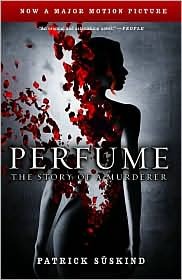
Perfume:The Story of a Murderer – Patrick Süskind

Book #243

Reviewer: Sweetp

2895

Perfume: The Story of a Murderer is a book I’ve had on my ‘to-read’ list for some time. I started reading it with some trepidation since horror isn’t my usual genre of choice, and I was under the impression this was a particularly gruesome book.

I was soon quite engrossed in this story about Jean-Baptiste Grenouille who is born in the squalidness of pre-Revolution Paris (1730s) and who has no personal odour.  As he manages to survive a bleak and loveless childhood he discovers he has a ‘gift’ for smells – in that he can smell everything in the world in the most minute detail. The descriptions of Grenouille’s olfactory experiences are lush and you can almost smell them coming off the page – from the suffocating stench of overcrowded Paris with it’s oozing cemeteries, fish markets and tanneries and stinking river, to the sweet scent of all the individual flowers used to make a perfume.

Eventually Grenouille ends up working for a master perfumer, learning how to distill perfumes and extract scents. I found this part of the book quite fascinating (probably my science background coming to the fore) particularly the techniques used in an age without modern laboratory facilities. Pages are devoted to describing the extraction of scents and the manufacture of perfumed oils and other accessories, and I can only wonder at the amount of research that must have gone into this subject. Far from boring, the juxtaposition of the stench of the city with the descriptions of the aristocracy wearing these manufactured perfumes is cleverly done and makes for an interesting historical commentary.

Grenouille is an odd character, freakish in both physical appearance and in temperament. Aloof, disconnected from the world around him, and seemingly without any sense of social propriety or conscience he increasingly becomes obsessed with his gift and embarks on a journey to learn other techniques for extracting scents. He uses his new found skills to extract the scent of inanimate objects, creating art-like “masterpieces”.

He was enchanted by their meaningless perfection; and at no time in his life, either before or after, were there moments of such truly innocent happiness as in those days when he playfully and eagerly set about creating fragrant landscapes, still lifes, and studies of individual objects.

Soon his obsession reaches new heights, and eventually he begins to murder in order to possess the scent of beautiful young girls.

The murder aspect of the book begins at roughly the 75% mark. Perfume: the story of *murder* it really isn’t and my assumptions about gruesomeness or gore were totally unfounded. The book doesn’t dwell on the violence, but more on the increasingly bizarre behaviours of Grenouille and the obsessive nature of his quest to possess the scents and his ability to catalogue them inside himself. As titled, the novel is really the story of a *murderer* – Grenouille – and he is not an easy character to empathize with. While his originality and creativity are almost admirable, to be honest there’s not a lot to like here. The obsession that drives him is pretty creepy and the overall tone of the book smells like a sinister Gothic horror.

This isn’t a long book and I read it quite quickly. The magical realism themes occur near the end of the book and will be a disappointment for some readers. The end perhaps is not as strong as the rest of the book, but to my mind Grenouille’s final ‘decision’ seemed a fitting end to his story.

He who ruled scent ruled the hearts of men.