Cold Comfort Farm – Stella Gibbons

Book #650
Reviewer: Tall, Short & Tiny
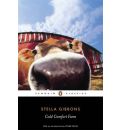
Cold Comfort FarmOne reviewer said of Cold Comfort Farm, “Very probably the funniest book ever written” (Julie Burchill, Sunday Times), while another touted it as having “comic aplomb”.

I tend to agree; this is an amusing story. The characters, the situation, the language – I found myself chuckling outwardly on many occasions. The names of the cows on the farm were especially amusing: Graceless, Aimless, Feckless and Pointless, and served to highlight this as a parody on the usually romanticised portrayal of rural life in the 1930s.

Following the death of her parents, Flora Poste is left wondering how she is going to make enough money to survive. In talking to her friend, Mrs Smiling, she decides to contact her various relatives, because “no limits are set, either by society or one’s own conscience, to the amount one may impose on one’s relatives”. She decides to visit distant relatives on Cold Comfort Farm, in Sussex, saying,

“I think if I find that I have any third cousins living at Cold Comfort Farm who are named Seth, or Reuben, I shall decide not to go….because highly sexed young men living on farms are always called Seth or Reuben, and it would be such a nuisance. And my cousin’s name, remember is Judith. That in itself is most ominous. Her husband is almost certain to be called Amos; and if he is, it will be a typical farm, and you know what they are like.”

The inhabitants of the farm – Aunt Ada, the Starkadders (Judith, Amos, Seth, Reuben and Elfine) and assorted workers – are all aware of a wrong done to her father in the past, and thus feel obligated to welcome Flora to their home. Each of the farm’s inhabitants has some kind of emotional problem, and the farm is badly run. Flora sets out to solve their problems, with the aid of her handbook, The Higher Common Sense. She introduces some of her relatives to professionals who can help them; she teaches them how to act in a modern and socially appropriate way, and enables romantic relationships (including her own) to form.

Gibbons’ writing is very relaxed and cheeky; she captures each situation and character perfectly, with humour and insight. She gives characters lines such as, “She has a brittle, hare-like quality…”, which is apparently a good thing.

With comments such as, “I propose to send a letter to the relatives I have mentioned…asking them if they are willing to give me a home in exchange for my beautiful eyes and a hundred pounds a year”, and “…I think we ought to dine out – don’t you? – to celebrate the inaugurations of my career as a parasite”, the story’s heroine initially seems self-centred and spoiled, but as the novel unfolds, it becomes apparent that she is a very good person indeed.

An amusing, easy read that will have you smiling, if not laughing, and deserving of 4 out of 5 stars.

The Wind-Up Bird Chronicle – Haruki Murakami

Book #125
Reviewer: Tall, Short & Tiny

The Wind-Up Bird ChronicleTo say that I enjoy the work of Haruki Murakami is an understatement; since my first encounter with his work (Kafka on the Shore), I have been eager to read more of his stories.

Picking up The Wind-Up Bird Chronicle, I didn’t know whether it would follow a similar pattern to the previous Murakami I have read, but I did expect to be left wondering, often, what was going on.

The story is narrated by Toru Okada, a 30-year-old man who has resigned from his job and is keeping house for his young wife, Kumiko. When the couple’s cat goes missing, Kumiko enlists the help of a young medium and her sister.

While looking for the cat, Toru befriends a teenage girl; they drink beer in her backyard and she talks often of death. Through her, Toru learns about an abandoned house in the neighbourhood, where bad luck and tragedy has befallen every person who has lived on that plot of land. As Toru’s search for the cat continues, his life begins to take some unexpected turns, where the line between reality and dreams becomes blurred.

The story has just a handful of characters; some we learn more about as the story unfolds, and some appear important but in fact have only “bit parts”. In typical Murakami-style, the first-person narrative is the perfect fit for such a story, where everything and nothing unfolds at the same time.

Such an ambiguous comment needs explanation: Murakami novels are compelling and confusing, and it is often unsettling to be reading with the nagging feeling that you really don’t know what’s going on. I occasionally wondered about the purpose of some chapters, but it does all tie together (somewhat!) in the end. Murakami himself has admitted that when he writes, the story unfolds – he rarely plans the direction his novels will take.

This novel is full of twists and turns, passages that are open to interpretation and passages that are impossible to interpret. It weaves back and forth, yet on a strange level, it makes sense. It is hard to describe this feeling to those who might not have read any other Murakami novels – feeling as though you “got” the story, at the same time as knowing that you only “got” a small portion of it.

Murakami’s ability to create intriguing character histories is spell-binding. In this novel, one character tells of wartime atrocities he witnessed; one such instance is described in such graphic detail that I found quite disturbing, which only served to make it seem so much more real.

A brain-twisting, mind-boggling, intriguing read that I give 4/5 stars.

The Secret History – Donna Tartt

Book #147
Reviewer: Tall, Short & Tiny

The Secret History


“The snow in the mountains was melting and Bunny had been dead for several weeks before we came to understand the gravity of our situation.”

When a novel draws me in from the opening line, I know that chances are, the rest of the story is going to deliver. The Secret History did not disappoint in that regard, and despite its sheer size (over 600 pages), I managed to finish it in record time.

The story is narrated by Richard Papen, a student at an elite New England college who finds himself involved with a group of eccentric Classics students who are living a slightly different way to the usual student life. The opening line reveals the murder of Edmund “Bunny” Corcoran, and from there, we are drawn into the most fascinating of stories.

It is a mystery in reverse; the crime is revealed on the first page, but the motives and circumstances behind it are revealed page by page. As the story unfolds, we are left wondering how such intelligent young people have failed to live up to their potential; how they became caught up in such a tragic event that has ruined their lives.

Even though the story is quite fast-paced, none of the details are lost; Donna Tartt has a truly evocative style and paints a wonderful picture of the wintery woodland scenes, the chilly student accommodation, and the university way of life.

The Secret History is, in many ways, like a modern soap opera. There is unrequited love, latent homosexuality, hidden love, backstabbing and alcoholism. The cast of characters are extremely easy to relate to, but also highly dramatised and often amusing. I found myself liking a character one minute, then feeling frustrated with him or her the next; Tartt has depicted her characters so perfectly and they are very believable, at the same time as often seeming outlandish and atypical.

As I said at the beginning, I raced through this book, neglecting my children and my housework* in order to just keep reading.

It is a gripping read; clever and superbly written, I give it 5/5 stars.

*I didn’t really neglect my children….I may have neglected the housework a little though!

Breakfast at Tiffany’s – Truman Capote

Book #467

Reviewer: Tall, Short & Tiny


Breakfast at Tiffany's

It is impossible to read, or indeed review, Breakfast at Tiffany’s without conjuring up that famous image of Audrey Hepburn in her black gown and jewelled headdress, standing outside Tiffany’s in New York City, coffee in hand. In fact, I’m the first to admit that for a long time, I had no idea that one of my favourite films was in fact based on Truman Capote’s novella.

Sometimes, having seen the film first can ruin the subsequent reading of the book. However, there are so many points of difference between the two that there’s no possible cause for true comparison. Both, in my opinion, are fantastic…but that’s not much of a review now, is it?

The novella is narrated by a writer living in the same apartment building as one Holly Golightly, a mysterious, outwardly sophisticated but inwardly lonely and scared young woman with a penchant for rich suitors and expensive drink. She is the object of desire for virtually every man she meets, and while she often benefits from the attention, it is apparent that she is uncomfortable with her own beauty and attractiveness. She decides, on their first meeting, to call the narrator ‘Fred’, as he reminds her of his brother. It is hinted at that the writer is gay and that Holly is an escort, but these remain speculations.

Holly has many admirers, and throws many parties frequented by many men, yet she seems to be perpetually alone. She has a cat for company, but even then, she doesn’t wish for any sense of belonging to exist between the two. In the early part of the novel, Holly comes across as flighty, and the reader almost expects to find her vanished at the turn of the next page, but when she does disappear, it is a disappointment and the reader – along with our friendly narrator – is left hoping that she is all right.

I enjoy Capote’s style of writing. It is elegant and flowing, warm and enthralling. In Breakfast at Tiffany’s, he relies heavily on dialogue rather than description to tell the story, and that appeals to me immensely (I am the sort who will skim through a tedious book until I reach the dialogue; the relationships between characters is always my favourite part). This is a short story (94 pages in my copy), and a very easy, enjoyable read, earning 4/5 stars from me.

The Tree of Man – Patrick White

Book #496a
Reviewer: Tall, Short & Tiny

The Tree of Man


A friend’s boyfriend recommended The Tree of Man years ago, when he found out how much I love to read. He wrote the name of the novel in the little notebook I carried for such purposes, and a few years later, I decided to try his suggestion.

From the moment I began to read White’s prize-winning novel, I was hooked.

It is an evocative, beautifully written novel, with descriptive passages that transport the reader directly to the heart of rural Australia. However, the narrative never detracts from the quintessentially simple, rural nature of the story; it only serves to describe the setting and its inhabitants perfectly. White has taken an ordinary, plain situation, and made it interesting and beautiful.

The imagery is fantastic; I especially enjoyed the way White described the intensity of bush fires, and was turning pages as fast as the flames ripped through the landscape. I also thoroughly enjoyed White’s use of language, with immensely appealing lines such like,

“…she began to feel sad, or chocolatey.”

White has the ability to describe the most mundane, ordinary things in a deliciously ordinary way that evokes such strong images, such as,

“She sat in an old cane chair, which creaked beneath her. The chair had been unravelling for many years but it was comfortable.”

This novel is about human endurance, about relationships (including friendships) and how they change over time. There is a recurring theme that in time, and with age, love is transformed into habit; I interpreted the line above about the cane chair as a metaphor for the love-to-habit theme. As the central characters, Stan and Amy Parker, move through their lives, there are many moments where their love for each other is questioned, yet they still appear strong. White writes,

“Habit comforted them, like warm drinks and slippers, and even went disguised as love.”

and Amy is often lamenting not loving someone enough.

For the most part, this novel was a real page-turner. About three-quarters of the way in, I felt as though the chapters were just filling in time until something inevitable happened, and didn’t enjoy it as much as. However, only a few chapters later, I was hooked once more, and felt the novel was back on track.

When a central character dies (I will not say who!), there is very little drama or fanfare about it, which feels natural because the novel is very much about the everyday. Perhaps it is also because the death of someone is expected, given that the novel begins with marriage, and goes through the (natural) progressions of life; while it is a sad occasion, I don’t think the novel would have felt complete with this happening.

I thoroughly enjoyed The Tree of Man, and it came as no surprise that this was the winner of The Nobel Prize for Literature in 1973. I give it 4.5/5 stars.