The Little Prince – Antoine de Saint-Exupéry

Book #574

Reviewer: Ange from Tall, Short & Tiny
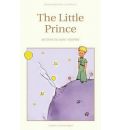
The Little Prince​My copy of The Little Prince was bought for £1.99 in 2009, just days before we left London to return to New Zealand, and was immediately sealed in a box, ready to be shipped home. There it stayed, for almost four months, until being unpacked when we moved into our new house. Once it was unpacked, I read it over a few hours while putting things in their new places, and when I’d finished, I sat with a smile on my face.

It is a beautiful story, magical, poignant, sad, poetic​​; I only wish I could read it in its original French, as I imagine that would simply enhance its beauty.

The Little Prince is essentially a children’s story, but it has massive appeal for adults too. It is quite complex in its themes and metaphors which I think many (perhaps most?) children would not get, but its simplicity and imagery ​would be enough to capture and hold young imaginations. The story begins with the narrator lamenting the fact that adults often lack imagination, which children would identify with,

“All grown-ups were once children… but only few of them remember it.”

“Grown-ups never understand anything by themselves, and it is tiresome for children to be always and forever explaining things to them.”

and the little prince himself comments that,

“Grown-ups are very strange/really very odd/certainly absolutely extraordinary”.

The basic story is of the narrator, a pilot who crashes his plane in the desert, meeting a young boy (the little prince) from a distant planet. Over eight days, the narrator attempts to repair his plane, while the little prince tells stories about his home planet, and the places he has been. He tells of his tiny home planet, with its three little volcanoes (which he cleans) and a variety of plants. He tells of his love for a beautiful rose that suddenly appeared growing; he tended the rose until he began to feel that she was taking advantage of him, and although she apologises for her vanity, he decides to travel and explore the universe.

He tells of the interesting characters he has met along the way (including a king with no subjects, and a man who believes himself to be the most admirable person on a planet inhabited by no other), and that he first believed Earth to be uninhabited due to landing in the desert. When he discovers a whole row of rosebushes, he is sad, because he’d believed his rose was unique. He meets a fox who explains that his rose really is special, because she is the object of the prince’s love. The fox is wise, and asks the prince to tame him; he is given many of the story’s most profound, memorable lines:

“I shall look at you out of the corner of my eye, and you will say nothing. Words are the source of misunderstandings.”

“To me, you are still nothing more than a little boy who is just like a hundred thousand other little boys. And I have no need of you. And you, on your part, have no need of me. To you I am nothing more than a fox like a hundred thousand other foxes. But if you tame me, then we shall need each other. To me, you will be unique in all the world. To you, I shall be unique in all the world….”

“Goodbye,” said the fox. “And now here is my secret, a very simple secret. It is only with the heart that one can see rightly. What is essential is invisible to the eye.”

When the narrator has fixed his plane, it is time for the little prince to return home. Their farewell is quite emotional but sweet and beautiful:

“When you look up at the sky at night, since I shall be living on one of them and laughing on one of them, for you it will be as if all the stars were laughing. You and only you will have stars that can laugh!”
And as he said it he laughed.
“And when you are comforted (time soothes all sorrows) you will be happy to have known me. You will always be my friend. You will want to laugh with me…”

The story is supposedly based on aspects and experiences of de Saint-Exupéry’s own life; the rose is said to represent his wife, whom he loved but was unfaithful to. It is a story rich with beauty and imagination, and I never grow tired of flicking through its pages.

I look forward to the time when I can read this with my sons, and I hope they will enjoy it as much as I do. The Little Prince deserves 5/5 stars – there is nothing I can fault with it, and I loved it.

Heart of Darkness – Joseph Conrad

Book #780

REVIEWER: Tall, Short & Tiny

Heart of DarknessI’d like to start this review by being totally honest…I didn’t like Heart of Darkness one little bit. I didn’t hate it, but I certainly groaned inwardly each time I picked it up, and very nearly didn’t finish it. However, having glowingly reviewed a number of books on the list, it felt only proper to be able to balance all those fantastic reads with one that, in my humble opinion, was not an enjoyable read (plus it’s short, and I was sure I could get through it!).

Nothing about this novella grabbed me. I didn’t enjoy the way the story was narrated, or the language that was used to do so. I found myself scoffing quietly, wondering if the person orating the story would really have used words such as “declivity” and “recrudescence”?

I did like a couple of Conrad’s descriptive sentences, and on the whole, I quite liked the majority of his descriptive passages, but that wasn’t enough.

“…on some quiet night the tremor of far-off drums, sinking, swelling, a tremor vast, faint; a sound weird, appealing, suggestive, and wild.”

“…this papier-mâché Mephistopheles…”

The subject matter is dark and gruesome, and I’m sure it would have been shocking at the time of publication, but I found it rather offensive and brutal. The story touches on cannibalism, colonialism and deception, none of which make for cheerful reading. There’s also the very Victorian ideals of men as heroes and women as love interests and belongings.

The language used to describe the “savages” made me uncomfortable, even though I tried very hard to put myself in the late-1800s frame of mind; it was interesting also to think that this novella remains controversial due to the subject of savagery, but perhaps for different (contradictory?) reasons.

“…these creatures rose to…hands and knees, and went off on all fours…”

“Why in the name of all the gnawing devils of hunger they didn’t go for us – they were thirty to five – and have a good tuck in for once, amazes me now when I think of it.”

“I looked at them with a swift quickening of interest – not because it occurred to me I might be eaten by them before very long…I perceived how unwholesome the pilgrims looked, and I hoped, yes, I positively hoped, that my aspect was not so…unappetising: a fantastic touch of vanity…”

The basic premise behind Heart of Darkness is that the human soul and mind has the capacity for extreme darkness, that every human being has two sides to their heart, and that in the right (or wrong, whichever way you’d like to look at it) situation, people act in unusual ways. However, I think that Conrad was trying to say that there is also inherent goodness in everyone too. Whether he extended that to his “savages” or not remains to be seen!

For me, this was a disappointing read and a bit of a drag, so unfortunately, I’m giving it just 2/5 stars.

Franny and Zooey – J.D Salinger

Book #445

Reviewer: Ange of Tall, Short & Tiny

Franny‘Franny and Zooey’ is one of those stories that leaves a lot open to interpretation. Outwardly, it seems to be about Christianity and faith, but dig a little deeper, and the ideas seem more aligned with Buddhism and the zen philosophy. After a little curious research, I discovered that Salinger was hugely interested in the “Eastern religions”, and that they are a common theme in his works.

As with ‘The Catcher in the Rye’, this is a book that was likely to have raised many an eyebrow in the 1950s. It was first published in the New York Times as a short story and a novella; each standing alone would work, however I like that they have been published together, as it gives a fuller picture than if they’d been read alone. In saying that, both would have made for intriguing, thought-provoking stories, and one would still feel content if there wasn’t a predecessor or successor.

In true Salinger-style, there’s a lot of colloquial language, much dialogue, and none of the overly-descriptive passages that spell everything out to the reader. I’m a fan of his style, and find it enjoyable to read.

The first part of the book concerns Franny Glass’ weekend date with her boyfriend, Lane Coutell. After meeting her off the train, he takes her to a fashionable restaurant; a bit of a cad, Lane is all about outward appearance and success. He talks incessantly about his own achievements, and Franny becomes upset, questioning the importance of a college education above all else. She appears uncomfortable, and excuses herself to the bathroom, where she has a small cry before returning to the table. Conversation then turns to a small book Lane spied in her bag, ‘The Way of a Pilgrim’ (a 19th-Century story of how a Russian wandering hermit learns the power of “praying without ceasing”); Franny passionately explains the idea of silently repeating a specific prayer until it becomes unconscious, involuntary. Lane is not particularly interested, and is more concerned with the weekend’s activities; however, when Franny faints, he cancels their engagements. After Franny wakes, Lane goes to get a taxi. This part finishes with Franny silently and ceaselessly praying.

The second part of the book begins with Franny’s brother, Zooey, soaking in the bath. His mother enters, and they argue over Franny’s fragile emotional state. He then upsets Franny by questioning why she has begun her incessant praying, and after a while telephones her from his bedroom, pretending to be their older brother Buddy. He offers advice, and when she figures out the true identity of the caller, he becomes more serious. He reveals advice that their brother Seymour once gave him, and Franny seems to find this illuminating.

Lane is a true cad – fashionable (he is first described as wearing a Burberry coat apparently with a full wool lining), conceited, all about impressions. Franny appears confident but confused, in the midst of a crisis of faith. Later, when we learn that her oldest (and most revered) brother committed suicide, it’s easy to wonder if his death has rocked her world more than the rest of the family’s. It’s a common misconception that she may be pregnant (I certainly wondered this on my first reading), but Salinger was apparently mortified when this was suggested, as this was not his intention. Zooey is a bit of a trouble-maker, but underneath his cheeky exterior lies a heart of gold, full of concern for his sister.

I loved the characterisation of Mrs Glass as “…a medium-stout woman in a hairnet…Her age, under any circumstance, was fiercely indeterminate, but never more so than when she was wearing a hairnet” and that she “…did some of her most inspired, most perpendicular thinking on the threshold of linen closets…” The descriptions of her conjure up strong images of a typical 1950s housewife, and evoke memories in me of my nana and the smell of Lux soap flakes!

I thoroughly enjoyed ‘Franny and Zooey’ – enough to have read it twice – and think its inclusion in this list well-deserved.

Kafka on the Shore – Haruki Murakami

Book #28

Reviewer: Ange from Tall, Short & Tiny

KafkaHaruki Murakami is a dear friend’s favourite author, but until reading ‘Kafka on the Shore’, I’d had no experience of him whatsoever. Now, I am desperately awaiting a delivery from The Book Depository of another four of his books; needless to say, I am converted fan. I can’t recall another author I’ve read who can write a novel with such a combination of whimsical, fantastical, ethereal, spiritual, metaphysical words.

In saying this, I am not claiming to fully understand this novel – not by a long shot – but I certainly enjoyed it, and it got some rusty cogs turning in my brain. I had to think and process everything twice; there were long-dormant neurons firing up in my brain and I felt like I was back in a philosophy lecture at university.

There are two parallel stories in ‘Kafka’, with chapters alternating between the two. After each story is established, there is a hint that they will come together, and towards the end, the lines of each are running so closely together that I was excitedly turning pages to find out if they met.

We never find out the real name of 15-year-old Kafka Tamura, the main character in the odd chapters. He has run away from home, desperate to escape a curse that his father has deemed he will fulfill. He has an alter-ego, the Boy called Crow, who appears during times of anxiety and stress to advise and cajole. Kafka is very wise and intelligent, more than his 15 years would suggest. His ability to comprehend intensely metaphysical, improbable situations adds to the whimsy; his uncharacteristic traits don’t seem too out of place in Murakami’s world. I didn’t exactly like him as a character, but I also didn’t hate him. He was, in that respect, a good main character, in that he carried the story well without the interference of too much emotion.

Paralleling the story of Kafka is the story of Nakata, an old man who has the ability to talk to cats. As a boy, he was unconscious for three weeks, and upon waking, had no memories and had lost his ability to read and write. Throughout the story, he is often heard saying, “Nakata isn’t very bright”, or “I’m stupid, you see”, yet as the story unfolds it becomes clear that his lack of intelligence makes him the perfect vehicle for what transpires, and that his intelligence lies along another path. Nakata was hugely likeable; he was simple, but polite, funny and honest.

The novel features fish that fall from the sky, and a spectral pimp dressed as Colonel Sanders. There is a flute made from the souls of cats, and un-aged WWI soldiers living in a forest. There’s a transgender haemophiliac, a prostitute spouting philosophy, and a woman living in the past with the ability to travel through space and time. Many times, I had to re-read passages, to put the book down in order to digest what I had just read. It filled my head, it consumed me, and it confused me…but I loved it.

There are many questions left unanswered at the end of the story. I had many a theory, yet by the end, nothing was certain. Murakami is reported to have said that his novels are meant to be read again and again, and that it is up to the reader to formulate their own thoughts and conclusions. I imagine that every reader could theorise something different; book group discussions of this work would be lengthy, heated and perhaps polarising.

I can honestly say I’m a convert to Murakami’s work. I enjoyed being challenged as I read, and I loved being left to draw my own conclusions; I loved the poetic way the story was written, combined with humour, fantasy, spirituality and surrealism. ‘Kafka on the Shore’ gets a big 5/5 from me.

Sons and Lovers – D.H Lawrence

Book #749

Reviewer: Ange, of Tall, Short & Tiny


SAL This is my first experience of reading Lawrence, and now that I’ve finished, I can happily say I was pleasantly surprised. Initially, I found the chapters to be incredibly long and rather monotonous, but as the story progressed, it became more of a page-turner than I expected. It wasn’t, however, the gripping plot that kept me interested, for there really wasn’t much of a plot at all. It was the characters, and the intensely woven relationships between them, that had me wanting more.

Sons and Lovers is said to be semi-autobiographical; if this is true, then Lawrence certainly had a very interesting relationship with his mother. The novel’s protagonist is Paul Morel, a young man with an intense, passionate love for his mother, and an intense hatred of his father. As I read, I couldn’t help but be reminded of the story of Oedipus, such were the relationships between them.

Initially, I felt some compassion for Paul, sorrow for the power his mother had over him, and pity for the choices he made. However, by the end of the novel, I didn’t like him at all. He seemed spoiled and pathetic, incapable of thinking for himself at the same time as incapable of thinking of anyone but himself. He was selfish and arrogant, unfeeling and rather nasty at times. I think Lawrence made him out to be made this way through his mother’s influence, but I simply didn’t like him.

I feel a bit “meh” about Mrs Morel. A less-than-ideal marriage, the death of a child, living beneath her station…everything points towards a woman unlucky in love and life. Her actions didn’t seem malicious or cruel; I don’t believe she set out to ruin her sons’ potential love lives, but instead she wished for them to be happier in their marriages than she was.

Miriam, Paul’s childhood love, seemed to be the sweet girl-next-door kind of character; meek and supplicating, she came across as being willing to do, and put up with, anything for love. However, by the end of the novel, it was evident that despite her apparent meekness, she was incredibly strong and perceptive. Her ultimate realisation of the truth of her relationship with Paul made me want to give a little sigh of celebration; I was proud of her.

I didn’t like Clara Dawes, Paul’s older lover, initially, but as her relationship with Paul developed, and her character along with it, I found her to be rather endearing and likeable. She was strong in character, but possessed a fragility in stark contrast to this strength, which made her brashness seem like a front. She was quite a different character to Miriam in this regard, and in the end, I liked her best.

As I mentioned above, there wasn’t really much of a plot to Sons and Lovers. However, Lawrence is said to have summarised it in a letter to his editor in late-1912:

It follows this idea: a woman of character and refinement goes into the lower class, and has no satisfaction in her own life. She has had a passion for her husband, so her children are born of passion, and have heaps of vitality. But as her sons grow up she selects them as lovers — first the eldest, then the second. These sons are urged into life by their reciprocal love of their mother — urged on and on. But when they come to manhood, they can’t love, because their mother is the strongest power in their lives, and holds them. It’s rather like Goethe and his mother and Frau von Stein and Christiana — As soon as the young men come into contact with women, there’s a split. William gives his sex to a fribble, and his mother holds his soul. But the split kills him, because he doesn’t know where he is. The next son gets a woman who fights for his soul — fights his mother. The son loves his mother — all the sons hate and are jealous of the father. The battle goes on between the mother and the girl, with the son as object. The mother gradually proves stronger, because of the ties of blood. The son decides to leave his soul in his mother’s hands, and, like his elder brother go for passion. He gets passion. Then the split begins to tell again. But, almost unconsciously, the mother realizes what is the matter, and begins to die. The son casts off his mistress, attends to his mother dying. He is left in the end naked of everything, with the drift towards death.

I love this summary, and think it explains everything so perfectly without spoiling anything, that I don’t feel the need to expand further. Besides, Lawrence used the word “fribble” (used here to refer to a frivolous, wasteful, materialistic person), which isn’t a word you hear…well…ever, really!

Sons and Lovers gets 4/5 stars for me; it loses half a point for the first few chapters which sent me to sleep, and half a point for the lack of any real plot. Definitely worth a read, and the persevering through the first part to get to the good bits.