“You should never read just for “enjoyment.” Read to make yourself smarter! Less judgmental. More apt to understand your friends’ insane behavior, or better yet, your own. Pick “hard books.” Ones you have to concentrate on while reading. And for god’s sake, don’t let me ever hear you say, “I can’t read fiction. I only have time for the truth.” Fiction is the truth, fool! Ever hear of “literature”? That means fiction, too, stupid.”
Cranford – Elizabeth Gaskell
Book # 892
Reviewer: Beth’s List Love (first published July 23, 2012)
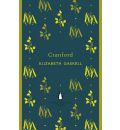 In the first place, Cranford is in possession of the Amazons; all the holders of houses above a certain rent are women. If a married couple comes to settle in the town, somehow the gentleman disappears; he is either fairly frightened to death by being the only man in the Cranford evening parties, or he is accounted for by being with his regiment, his ship, or closely engaged in business all the week in the great neighbouring commercial town of Drumble, distant only twenty miles on a railroad. In short, whatever does become of the gentlemen, they are not at Cranford. What could they do if they were there? The surgeon has his round of thirty miles, and sleeps at Cranford; but every man cannot be a surgeon. For keeping the trim gardens full of choice flowers without a weed to speck them; for frightening away little boys who look wistfully at the said flowers through the railings; for rushing out at the geese that occasionally venture in to the gardens if the gates are left open; for deciding all questions of literature and politics without troubling themselves with unnecessary reasons or arguments; for obtaining clear and correct knowledge of everyone’s affairs in the parish; for keeping their neat maid-servants in admirable order; for kindness (somewhat dictatorial) to the poor, and real tender good offices to each other whenever they are in distress, the ladies of Cranford are quite sufficient.
So begins Cranford by Elizabeth Gaskell. This opening nicely foreshadows what is to come, as Gaskell lightly and gently describes the country life of the women, and occasional men, in this small English town. It quickly emerges that the ladies of Cranford are nearly all in tight to dire financial straights, and while they are ever concerned about living in properly genteel ways, they also make aristocratic virtues of the extensive lengths to which they must go to economize.
After this promising opening passage, I briefly rolled my eyes and thought, “Really, another 19th century novel of manners?” But then I came to appreciate the features that make this novel unique, and began to agree with its place in all editions of the 1001 Books list. This is a novel that deals with social class in gentle and observant ways, which acknowledges the gossip and small town rivalries that are inevitable in a social microcosm, but which also celebrates a tremendous spirit of basic human kindness that does the ladies of Cranford proud.
There is a section toward the end of the book in which a bank fails, and the behavior of one of the ladies involved and victimized by the failure is a lesson in ethics from which we could only wish that modern bankers and financiers would learn. I came to love this little book, after my initial skepticism, and am glad for my general commitment to seeing (at least well-reviewed) books through to their conclusions.
My rating: 4 out of 5 stars
Quote of the Week
“Reading is the sole means by which we slip, involuntarily, often helplessly, into another’s skin, another’s voice, another’s soul.”
The Thin Man – Dashiell Hammett
Book #652
Reviewer: Ms Oh Waily
 I have discovered a love affair with the hard-boiled detective fiction from the 1920s and 1930s. The stories are snappy, the dialogue is pithy and sometimes full of colourful, outdated idioms. The Thin Man fits in beautifully, showing all of these features.
We meet Nick Charles, retired detective, and his younger, glamorous wife Nora in New York for the Christmas season. While waiting in a speakeasy for Nora to finish her shopping he is approached by a young lady, Dorothy Wynant, the daughter of a man for whom he did some work eight years earlier. And there starts the downward spiral of the Charles’ quiet Christmas in New York.
Meeting Dorothy eventually embroils the couple in multiple murders, an absolutely dysfunctional family and some very interesting police and insalubrious ex-convicts.
We are taken through the process of trying to find Dorothy’s father, Clyde Miller Wynant, thought to be responsible for the murder of his assistant Julia Wolf. He is the eponymous Thin Man of the title. We learn all about Clyde’s manipulative ex-wife Mimi and her new husband Chris Jorgensen, and his two very odd children – Dorothy and Gilbert. Throw in Wynant’s lawyer Herbert Macauley, police detective John Guild and ex-con Studsy Burke and an array of other minor characters and we have a very colourful story in the making.
It is quite an eye-opener looking in to life in the 1930s with the speakeasy culture and the pithy language. The idea of characters that wake up at lunchtime and stay out till the middle of the morning is quite decadent in an era of deprivation and poverty.
I thoroughly enjoyed reading this and at a little over 200 pages in my Penguin Classic version, it was fairly quick even for a slow reader like myself. I certainly plan to read the remainder of Hammett’s books on the 1001 Book List.
To give you a taste of the style of writing and the sorts of characters to be found in the novel here is an excerpt of Mimi Jorgensen (the ex-Mrs Clyde Wynant) trying to manipulate Nick Charles:
‘Nick, what can they do to you for concealing evidence that somebody’s guilty of murder?’
‘Make you an accomplice – accomplice after the fact is the technical term – if they want.’
‘Even if you voluntarily change your mind and give them the evidence?’
‘They can. Usually they don’t.’
She looked around the room as if to make sure there was nobody else there and said: ‘Clyde killed Julia. I found proof and hid it. What’ll they do to me?’
‘Probably nothing except give you hell – if you turn it in. He was once your husband: you and he are close enough together that no jury’d be likely to blame you for trying to cover him up – unless, of course, they had reason to think you had some other motive.’
She asked coolly, deliberately: ‘Do you?’
‘I don’t know,’ I said. ‘My guess would be that you had intended to use this proof of his guilt to shake him down for some dough as soon as you could get in touch with him, and that now something else has come up to make you change your mind.’
She made a claw of her right hand and struck at my face with her pointed nails. Her teeth were together, her lips drawn far back over them.
I caught her wrist. ‘Women are getting tough,’ I said, trying to sound wistful. ‘I just left one that heaved a skillet at a guy.’
Well worth the effort and a nice slice of early 20th Century writing. Happy Reading everyone.
Quote of the Week
“If one reads enough books one has a fighting chance. Or better, one’s chances of survival increase with each book one reads.”
 1001 Books to Read Before You Die