Cold Comfort Farm – Stella Gibbons

Book #650
Reviewer: Tall, Short & Tiny
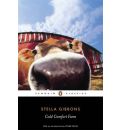
Cold Comfort FarmOne reviewer said of Cold Comfort Farm, “Very probably the funniest book ever written” (Julie Burchill, Sunday Times), while another touted it as having “comic aplomb”.

I tend to agree; this is an amusing story. The characters, the situation, the language – I found myself chuckling outwardly on many occasions. The names of the cows on the farm were especially amusing: Graceless, Aimless, Feckless and Pointless, and served to highlight this as a parody on the usually romanticised portrayal of rural life in the 1930s.

Following the death of her parents, Flora Poste is left wondering how she is going to make enough money to survive. In talking to her friend, Mrs Smiling, she decides to contact her various relatives, because “no limits are set, either by society or one’s own conscience, to the amount one may impose on one’s relatives”. She decides to visit distant relatives on Cold Comfort Farm, in Sussex, saying,

“I think if I find that I have any third cousins living at Cold Comfort Farm who are named Seth, or Reuben, I shall decide not to go….because highly sexed young men living on farms are always called Seth or Reuben, and it would be such a nuisance. And my cousin’s name, remember is Judith. That in itself is most ominous. Her husband is almost certain to be called Amos; and if he is, it will be a typical farm, and you know what they are like.”

The inhabitants of the farm – Aunt Ada, the Starkadders (Judith, Amos, Seth, Reuben and Elfine) and assorted workers – are all aware of a wrong done to her father in the past, and thus feel obligated to welcome Flora to their home. Each of the farm’s inhabitants has some kind of emotional problem, and the farm is badly run. Flora sets out to solve their problems, with the aid of her handbook, The Higher Common Sense. She introduces some of her relatives to professionals who can help them; she teaches them how to act in a modern and socially appropriate way, and enables romantic relationships (including her own) to form.

Gibbons’ writing is very relaxed and cheeky; she captures each situation and character perfectly, with humour and insight. She gives characters lines such as, “She has a brittle, hare-like quality…”, which is apparently a good thing.

With comments such as, “I propose to send a letter to the relatives I have mentioned…asking them if they are willing to give me a home in exchange for my beautiful eyes and a hundred pounds a year”, and “…I think we ought to dine out – don’t you? – to celebrate the inaugurations of my career as a parasite”, the story’s heroine initially seems self-centred and spoiled, but as the novel unfolds, it becomes apparent that she is a very good person indeed.

An amusing, easy read that will have you smiling, if not laughing, and deserving of 4 out of 5 stars.

Quote of the Week

“Being a writer is a very peculiar sort of a job: it’s always you versus a blank sheet of paper (or a blank screen) and quite often the blank piece of paper wins.”
― Neil Gaiman

And I think we all agree that it’s great when the writer wins the battle.

The Summer Book – Tove Jansson

Book #352

Reviewer: Ms Oh Waily


TSBWhere do you start when you read the adult works of an author you enjoyed reading as a child?  That was my puzzle when I picked up Tove Jansson’s The Summer Book.
As a child I had read the Moomin stories and still have my copy of Finn Family Moomintroll on my children’s bookshelf.  This, however, was the first time I had read one of her six adult novels.  I wasn’t sure what to expect from a book that is hailed as a “modern Scandinavian classic”.

What we get is a series of vignettes of life lived on a small, remote island in the Gulf of Finland.  The characters, Grandmother, Papa and Sophia are inspired by Tove Jansson’s own family, her mother, brother and niece.  The island she describes is her family’s.

It is, on the surface, an interesting look into the relationship between Grandmother and Sophia as they live their lives through summer on their tiny island.  Interspersed there is a commentary on death, and life, that is unsurprising considering that Jansson wrote this in the year following the death of her own mother.  It is a lovely, simple, series of uneventful events that occur over a summer.  It is also an interesting look at a different way of living – remote, basic and yet quite fulfilling.

The writing is as simple and straightforward as you could expect.  The descriptions of the island and the environment hold you, like these passages taken from the chapter ‘Sophia’s Storm’.

The walls of the house trembled steadily with the thundering of the sea, and it began to get cold.  Spume from the breakers covered the windowpanes and ran over the sill and across the floor.  Every now and then Papa would get up and go out to see to the boat.

The seas breaking against the sheer outer side of the island had grown.  One after the other, the waves rose up in their white immensity to a tremendous height, and foam hissed against the rocks like the blows of a whip.  Tall curtains of water flew across the island sailed on west.  The storm was titanic!

[…]

Sophia climbed up into the tower.  The tower room was very small and had four windows, one for each point of the compass.  She saw that the island had shrunk and grown terribly small, nothing but an insignificant patch of rocks and colourless earth.  But the sea was immense: white and yellow and grey and horizonless.

At 172 pages, split into nice short observations of events, it is a relaxing and easy read. If you are interested, the image of the island on the book cover above is the Jansson’s island.  A round trip, walking, of about four and a half minutes.  It’s amazing what you can observe of human nature when you physically shrink your world and your mind is your source of inspiration.  This book is a testament to that.

Animal Farm – George Orwell

Book #564

Reviewer: Inspirationalreads

animal farm

There are not many unfamiliar (well, many readers) with this allegorical tale of farm animals rising up to overthrow their human owner and install a new regime in which all animals are equal and whatever goes upon two legs are the enemy.  With clear lines able to be drawn from this novel to the Russian revolution and the rise of Communism and Stalin, this novel has long been a popular staple of English curricula the world over.

Old Major, the ageing prize winning boar, calls all the animals of Manor Farm to a meeting, where he tells them of his thoughts on how animals are unfairly treated, that they are slaves to unworthy humans. When Old Major dies, his message is taken up by some of the younger pigs, who rally the animals into action, rising up against their particularly inept farmer and claiming the farm as their own.  With the pigs behind the brains of the operation, the animals successfully make the farm their own, creating Animalism, a mandate that follows seven commandments;

  1. Whatever goes upon two legs is an enemy.
  2. Whatever goes upon four legs, or has wings, is a friend.
  3. No animal shall wear clothes.
  4. No animal shall sleep in a bed.
  5. No animal shall drink alcohol.
  6. No animal shall kill any other animal.
  7. All animals are equal.

However, this idealism is short lived and not all continues on in Animal Farm as initially hoped for, especially when some animals become “more equal” than others.

Written in 1945, Animal Farm is of a certain time and yet timeless in what it is trying to say and how it is being said.  Criticised at the time for being too heavy handed in its obvious views on Communism, particularly Stalinism,  by its author, this novel is short and clearly written.  This direct allegory allows for easy identification of its themes, even specific historical figures and events, making this ideal for younger readers and an obvious choice for English teachers.

Having never had to read it in this environment, I did not suffer for having to analyse and nit-pick at it over  a few months.  I was drawn into the story, sympathising with the well defined characters; rallying with them against their human oppressors, becoming horrified at the actions of the pigs as the story progressed.  I was entertained and enjoyed the time I spent in this  fable.  I will be passing it on to my 13 year old son to read, not knowing if it will be in any of his English classes as a set text, but I will be brushing up on my Russian Revolution knowledge.

Beasts of England is the rallying song of the animals movement.  I am off to see if I can find a youtube clip of it.

Beasts of England, Beasts of Ireland, Beasts of every land and clime, Hearken to my joyful tidings Of the Golden future time.
Soon or late the day is coming, Tyrant Man shall be o’erthrown, And the fruitful fields of England Shall be trod by beasts alone.
Rings shall vanish from our noses, And the harness from our back, Bit and spur shall rust forever, Cruel whips no more shall crack.
Riches more than mind can picture, Wheat and barley, oats and hay, Clover, beans and mangel-wurzels, Shall be ours upon that day.
Bright will shine the fields of England, Purer shall its waters be, Sweeter yet shall blow its breezes On the day that sets us free.
For that day we all must labour, Though we die before it break; Cows and horses, geese and turkeys, All must toil for freedom’s sake.
Beasts of England, Beasts of Ireland, Beasts of every land and clime, Hearken well, and spread my tidings Of the Golden future time