Sputnik Sweetheart – Haruki Murakami

Book #78

Reviewer: Angelo
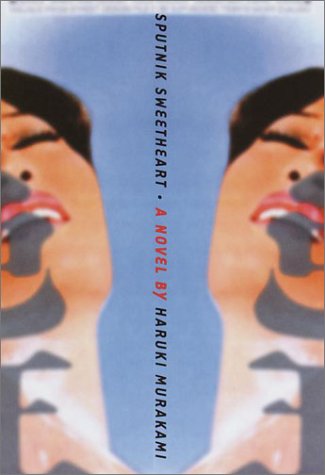
1sputknik

Please welcome our newest reviewer Angelo.  We haven’t had a new addition to the team in a while and we look forward to many more insightful reviews.

“No man should go through life without once experiencing healthy, even bored solitude in the wilderness, finding himself depending solely on himself and thereby learning his true and hiddenstrength.”  – Jack Kerouac

Sputnik Sweetheart (translated from  the Japanese by Philip Gabriel) is the second Murakami novel I’ve read after Kafka on the Shore, which was my baptism of fire into Murakami’s perplexing world filled with unusual characters and dream-like events. And as it turned out,Sputnik Sweetheart hinges on the uncanny, and lonely.  If I did not make up my mind to deal with the theme of loneliness like it’s my closest neighbor knocking at my door., however, I would have had a nervous breakdown out of empathizing with the characters.

Sumire is an aspiring writer, who falls in love for the first time with, not a man, but another woman, Miu, Korean, seventeen years her senior. K, her close male friend who is infatuated with her, calls Miu her Sputnik Sweetheart. K, as the narrator, sees through what is happening to Sumire and Miu in the entire novel, and as such has a healthy sense of balance with the world and himself, his feelings, his philosophies. Miu, on the other hand, is poised and sophisticated, a businesswoman and knows French and Italian, is married but lonely.

Sumire’s relationship with Miu intensified when she accepted the latter’s offer to work for her. On their trip to Europe,  Sumire got lost (and in the end came back) leaving as clues two documents she wrote and hid, which K discovers and deciphers. The platonic relationship between K and Sumire makes it unbearably difficult for K whose feelings for Sumire never gets reciprocated. Sadly, Miu’s entrance into Sumire’s life slowly changed the seemingly misfitting Sumire, and her output as a writer waned.

The entire novel is told from the point-of-view of K, but  Murakami gave enough space for the two other characters. And, typical of him, Murakami meshes together disparate narratives that adds mystery to the entire novel. Just when the novel is about to end, that is when Sumire could not be found, K encounters a boy, his student, whose mother happens to be one of his girl friends, who steals things for no clear reason in the same way that Sumire gets lost and later comes back with no explanation for her disappearance.

The question this novel makes me ask is: Is loneliness so scary that it has to be removed from life? I can remember the lonely times of my life as a child, but I barely recall the intensity as much as that of loneliness in the adult life. Upon reflecting, I realized that loneliness relies on one’s dependency on another individual, thinking that such a complimentary association makes us feel complete when in fact, it is when we are alone  that we feel its power over us. We feel lonely when we do not get what we want from someone, another soul, undeniably a feeling so much stronger and longer-lasting than the loneliness we feel for things we can’t have.

Sputnik Sweetheart is neither for the faint of heart nor for those looking out for a predictable story. It is for those who are brave enough to embrace their loneliness, and hoping to make sense of their lives whenever solitude confronts them.

One Flew Over The Cuckoo’s Nest – Ken Kesey

Book #436

Reviewer: Ms Oh Waily


OFOTCNThis is the second of two Ken Kesey novels on the 1001 list. Kara reviewed the other, Sometime a Great Notion back in October 2012.

I’m not quite sure how I made it to adulthood without having read or sat through the film version of this novel. It meant that I came to the novel with some trepidation as my hazy impression was that it was going to be a rather grim read.

As it turns out I need not have worried.  So all two of you who haven’t read this classic piece of fiction, take it from me, you will enjoy it.  I most certainly did.

The setting is a ward in a psychiatric hospital in Oregon, USA.  It is the 1960s and electric shock therapy is still in vogue, as is the frontal lobotomy.  We are taken in to this world by our narrator, and main witness to events, a native American known as “Chief” Bromden.  Bromden has been in the ward since the end of the war.  He had stopped talking and had hidden himself behind people perceiving him to be deaf and mute.  He is an astute observer of people and their motivations.

Bromden introduces us to the Big Nurse, Miss Ratched, and to all of the other inmates on her totally controlled ward.  The Big Nurse is a stickler.  There is to be no disturbance, no making waves or creating disorder and certainly no going against ‘ward policy’.  She runs a tight ship and brings down anyone who tries to mess with her control, patient and staff alike.  This is how Bromden describes her at the start of the novel.

What she dreams of there in the center of those wires is a world of precision efficiency and tidiness like a pocket watch with a glass back, a place where the schedule is unbreakable and all the patients who aren’t Outside, obedient under her beam […]

Bromden’s descriptions of the ward and the inmates are brutal to read.  This, describing the morning routine.

The Wheelers swing dead log legs out on the floor and wait like seated statues for somebody to roll chairs in to them. The Vegetables piss the bed, activating an electric shock and buzzer, rolls them off on the tile where the black boys can hose them down and get them in clean greens….

Six-forty-five the shavers buzz and the Acutes line up in alphabetic order at the mirrors, A, B, C, D….  The walking Chronics like me walk in when the Acutes are done, then the Wheelers are wheeled in.  The three old guys left, a film of yellow mold on the loose hide under their chins, they get shaved in their lounge chairs in the day room, a leather strap across the forehead to keep them from flopping around under the shaver.

Then one day Randle Patrick McMurphy arrives and a titanic struggle for the hearts and minds of the patients, and the ward, begins.  McMurphy is puzzled by the behaviour of ‘the Acutes’ – those men, mostly there by their own choice, who the medical officials believe are capable of being cured – and he sets about nudging and cajoling them into rebellion against the Big Nurse.

Kesey incorporates some very sound comments on the state of our mental health, especially our ability to see humour in darkness, through McMurphy’s determination to get the men to laugh.  Here are two quotes, a few pages apart, that show this emphasis.

Maybe he couldn’t understand why weren’t able to laugh yet, but he knew you can’t really be strong until you can see a funny side to things.

And,

While McMurphy laughs.  Rocking farther and farther backward against the cabin top, spreading his laugh out across the water – laughing at the girl, at the guys, at George, at me sucking my bleeding thumb, at the captain back at the pier and the bicycle rider and the service-station guys and the five thousand houses and the Big Nurse and all of it.  Because he knows you have to laugh at the things that hurt you just to keep yourself in balance, just to keep the world from running you plumb crazy.  He know there’s a painful side; he knows my thumb smarts and his girl friend has a bruised breast and the doctor is losing his glasses, but he won’t let the pain blot out the humor no more’n he’ll let the humor blot out the pain.

I found the story to be full of humour and yet profoundly moving.  I would find myself smiling as I read passages, only to be deeply saddened and ponderous a few pages later.  The balancing of these two aspects was done terrifically well.  This is easily a five star read, in my opinion.  My only negative comment is that I found it incredibly slow going through the first two thirds of the book.  I have no idea why.  The language is easy to read and the descriptions are very clear, and yet I felt like I was walking through treacle.  It was slow and sticky, and slightly frustrating.  If you find yourself with the same problem, do stick with it, it is definitely worth it in the end.

And now, maybe, I can shake that rather wild-eyed image of Jack Nicholson and replace it with my own inner image of McMurphy.

Happy reading everyone.

Quote of the Week

“There is nothing to writing. All you do is sit down at a typewriter and bleed.”
― Ernest Hemingway

That’s why it pays to be a little gentle in your reviewing; there’s a person at the other end.

The Wind-Up Bird Chronicle – Haruki Murakami

Book #125
Reviewer: Tall, Short & Tiny

The Wind-Up Bird ChronicleTo say that I enjoy the work of Haruki Murakami is an understatement; since my first encounter with his work (Kafka on the Shore), I have been eager to read more of his stories.

Picking up The Wind-Up Bird Chronicle, I didn’t know whether it would follow a similar pattern to the previous Murakami I have read, but I did expect to be left wondering, often, what was going on.

The story is narrated by Toru Okada, a 30-year-old man who has resigned from his job and is keeping house for his young wife, Kumiko. When the couple’s cat goes missing, Kumiko enlists the help of a young medium and her sister.

While looking for the cat, Toru befriends a teenage girl; they drink beer in her backyard and she talks often of death. Through her, Toru learns about an abandoned house in the neighbourhood, where bad luck and tragedy has befallen every person who has lived on that plot of land. As Toru’s search for the cat continues, his life begins to take some unexpected turns, where the line between reality and dreams becomes blurred.

The story has just a handful of characters; some we learn more about as the story unfolds, and some appear important but in fact have only “bit parts”. In typical Murakami-style, the first-person narrative is the perfect fit for such a story, where everything and nothing unfolds at the same time.

Such an ambiguous comment needs explanation: Murakami novels are compelling and confusing, and it is often unsettling to be reading with the nagging feeling that you really don’t know what’s going on. I occasionally wondered about the purpose of some chapters, but it does all tie together (somewhat!) in the end. Murakami himself has admitted that when he writes, the story unfolds – he rarely plans the direction his novels will take.

This novel is full of twists and turns, passages that are open to interpretation and passages that are impossible to interpret. It weaves back and forth, yet on a strange level, it makes sense. It is hard to describe this feeling to those who might not have read any other Murakami novels – feeling as though you “got” the story, at the same time as knowing that you only “got” a small portion of it.

Murakami’s ability to create intriguing character histories is spell-binding. In this novel, one character tells of wartime atrocities he witnessed; one such instance is described in such graphic detail that I found quite disturbing, which only served to make it seem so much more real.

A brain-twisting, mind-boggling, intriguing read that I give 4/5 stars.

The Secret History – Donna Tartt

Book #147
Reviewer: Tall, Short & Tiny

The Secret History


“The snow in the mountains was melting and Bunny had been dead for several weeks before we came to understand the gravity of our situation.”

When a novel draws me in from the opening line, I know that chances are, the rest of the story is going to deliver. The Secret History did not disappoint in that regard, and despite its sheer size (over 600 pages), I managed to finish it in record time.

The story is narrated by Richard Papen, a student at an elite New England college who finds himself involved with a group of eccentric Classics students who are living a slightly different way to the usual student life. The opening line reveals the murder of Edmund “Bunny” Corcoran, and from there, we are drawn into the most fascinating of stories.

It is a mystery in reverse; the crime is revealed on the first page, but the motives and circumstances behind it are revealed page by page. As the story unfolds, we are left wondering how such intelligent young people have failed to live up to their potential; how they became caught up in such a tragic event that has ruined their lives.

Even though the story is quite fast-paced, none of the details are lost; Donna Tartt has a truly evocative style and paints a wonderful picture of the wintery woodland scenes, the chilly student accommodation, and the university way of life.

The Secret History is, in many ways, like a modern soap opera. There is unrequited love, latent homosexuality, hidden love, backstabbing and alcoholism. The cast of characters are extremely easy to relate to, but also highly dramatised and often amusing. I found myself liking a character one minute, then feeling frustrated with him or her the next; Tartt has depicted her characters so perfectly and they are very believable, at the same time as often seeming outlandish and atypical.

As I said at the beginning, I raced through this book, neglecting my children and my housework* in order to just keep reading.

It is a gripping read; clever and superbly written, I give it 5/5 stars.

*I didn’t really neglect my children….I may have neglected the housework a little though!