The Bluest Eye – Toni Morrison

Book #365

Reviewer: Inspirationalreads

the-bluest-eye-by-toni-morrison-profile

There is a commonly held belief that a reader will live a thousand lives in a space of one lifetime.  Sometimes those lives are fun, sometimes morbidly fascinating.  But sometimes they are important, they are necessary and it is here where The Bluest Eye firmly lies.

Pecola Breedlove is a young black girl, growing up in a small town in a post-Depression USA.  History dictates that this was not a great time to be any of the things that Pecola is – poor, a girl and black.  Her parents are locked in a bitter disdain-fuelled marriage; her mother only happy when she is at work as a maid for an affluent white family, her father an alcoholic who turns to abusing his daughter.  In this, the most horrific of childhoods, looked down upon everywhere she turns, Pecola takes to praying and wishing to be white with blue eyes, because surely life would be better if she were those things.

A majority of the story is told through the eyes of Pecola’ s peer, nine-year old Claudia MacTeer, whose family take Pecola in after her father burns down their house.  She is Pecola’s counterpart.  Claudia’s family life is stable, enabling a confidence and fierceness that allows her to defend herself, her sister and by extension her friend Pecola who is passive and run down and unable to do these things for herself.  The contrast is most blatant in how Claudia questions a blue-eyed , yellow haired baby doll and why it was loveable.  No wishing for blue eyes for Claudia.  Also in Claudia we see how Pecola is viewed as ugly, something to be pitied but also as a comparison to make one feel better about themselves.

This is no tale of the triumph of the human spirit, no tale of redemption through self-realisation.  Pecola’s life is horrible, becomes more horrible through factors that are beyond her control.  She is a victim, but not because of her ethnicity.  Claudia too is poor, and black and female but her home life enables her to be strong. This is where the difference is between her and Pecola, Breedlove being a farcical name.  Cholly and Pauline, Pecola’s parents,  are the villains in this story, are also victims,  victims of their upbringing, their stories told to humanise these “monsters” not as a way of excusing them but by as a way to ground this story.  This happened, does happen still, everyday, everywhere.

This is a powerful and moving book.  Morrison’s first and my first Morrison, it is an eye-opening introduction to an author who plays around with language, time, even grammar to bring her own refreshing touch.  I did not find this “poetic license” a distraction, but can see how some might do.  For example, the opening passage is of Dick and Jane and their ideal life, repeated again in the following paragraph word for word except without any punctuation, no full stops, capital letters, commas etc.  The following paragraph is a repeat again but with all the words running together, no spaces.  Her manipulation of the structure in this book adds a surreal touch, poetic and lyrical at times.  The themes though are clear; obviously race is a big one in a story of a black girl wanting to be white. But self-hatred and that hatreds influence on those around you also plays a major part here.

This is not an easy read, but is an important one.  Going back to my opening sentence, there is a resulting empathy that comes from reading stories like these, even if it is on some minor level, that can only work towards a greater awareness of the the world outside of yours, and an appreciation of the world in which you occupy.  Highly recommended.
Quote of the Week

“In the case of good books, the point is not to see how many of them you can get through, but rather how many can get through to you.”
Mortimer J. Adler

(Although in the case of this blog…the more you get through, the better!)

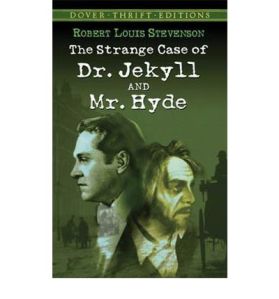
Strange Case of Dr. Jekyll and Mr. Hyde – Robert Louis Stevenson

Book #820

Reviewer: Ms Oh Waily


DJMHI think it is almost impossible to have reached adulthood without having seen one version or other of Dr. Jekyll and Mr. Hyde, and I am no exception.  That means that I took in quite a few unfounded assumptions about the novella.

It was first published way back in 1886 and has become firmly embedded in our culture where we sometimes find people described as “Jekyll and Hyde” in character.  So what is this slight, 75 pages in my edition, novella all about?

Gabriel Utterson is a London lawyer and friend of Dr Henry Jekyll.  It is through him we learn the terrible tale of the doctor and his experimentation.  He is taking his regular weekly walk with his cousin, Richard Enfield, when they pass by a door that evokes a disturbing story from his companion.

Two doors from one corner on the left hand going east, the line was broken by the entry of a court; and just at that point a certain sinister block of building thrust forward its gable on the street.  It was two stories high; showed no window, nothing but a door on the lower story and a blind forehead of discoloured wall on the upper; and bore in every feature the marks of prolonged and sordid negligence.

And there begins the sinister overtones that continue throughout.

The story that Enfield relates is about one Edward Hyde and his callous treatment of a child in the street.  It arouses Utterson’s interest as he has in his possession the very unusual and recently amended will of his friend, Dr Jekyll, in which Edward Hyde is now a beneficiary.  Out of concern that Jekyll is being blackmailed, Utterson seeks out Hyde, and despite the sinister overtones Stevenson manages to put in a small dose of humour.  I wonder if he smirked to himself as he wrote this line.

“If he be Mr. Hyde,” he had thought, “I shall be Mr. Seek.”

Upon confronting Edward Hyde, Utterson like all who come in to contact with him find him to be repellent and in some way deformed.  Utterson describes him thus.

Mr. Hyde was pale and dwarfish.  He gave an impression of deformity without any nameable malformation, he had a displeasing smile, he had borne himself to the lawyer with a sort of murderous mixture of timidity and boldness, and he spoke with a husky, whispering and somewhat broken voice;  all these were points against him, but not all of these together could explain the hitherto unknown disgust, loathing, and fear with which Mr. Utterson regarded him.

We follow Utterson as he takes us through the varying behaviour of his friend Jekyll, and that of Hyde.  Eventually Hyde’s behaviour becomes so outrageous that the inevitable happens and a man is murdered.  It is only the last twenty-six pages that we finally get to find out about Dr. Jekyll’s experimentation and experiences as well as his musing on what his transformation is about.

It is very easy to say that this novella is about humanity’s duality – good vs evil, civilised vs primitive – and no doubt there is a lot to read in to it should you wish to.  Personally I found that it spoke more to our own conscience and how we come to control those aspects of our character which are ‘base’, wild or, putting it mildly, antisocial.
For modern readers it is also the foundation of our ‘superhero’ dual lives, and more than one ‘superhero’ character.

It is not the easiest of the Stevenson works that I have read.  The language feels much more Victorian than Treasure Island, which I wrote about briefly on my own blog a few years ago, and required me to work a little harder while reading, but at a mere 70-odd pages it is a very quick and interesting iconic story to read.  If you’re looking for a quick and easy ‘classic’ for a few hours of your time, then this one would be a good choice.

Happy reading!

The Shining – Stephen King

Book #312

Reviewer: Beth’s List Love (first published March 2013)


The ShiningI haven’t been scared of a lot of movies, but The Shining freaked me out pretty well. That meant that when I went to pick up the novel, it took me awhile to get going, since I kept saying to myself “oh, man, this is going to start getting really scary!” But of course I kept going and was rewarded by a very well-crafted and scary novel that is actually quite unlike the movie in some interesting ways (e.g. no maze, but some very scary topiary hedges). I’ll have to watch the movie again now, just to refresh myself on the differences.

Marvelously suspenseful! Also NOT entirely similar to the excellent movie you have probably already seen. Written from the perspective of 3 family members and one other character, this novel explores the frightening things that unfold in the off-season when the family sign on as caretakers for the posh but infamous Overlook Hotel in an isolated mountainside location in Colorado.

The father, an English teacher and promising writer has just lost a job at a private school due to his alcoholism and violence, and the same factors have threatened his family. His five year old son has some eerie psychic abilities that give him visions of evil events likely to transpire should they actually take up residence at the hotel. Knowing all this up front keeps a reader on the edge of his/her seat from the very start.

Stephen King builds the suspense steadily while giving little breaks to lull the reader in between. He shows us the battle the father wages with his weaknesses, the struggle the mother has with whether to trust his recent sobriety and seeming return to the personality of the man she fell in love with, and tremendous difficulties the son has trying to be a willing participant in something he fears will go terribly wrong very soon because of how necessary the job is to maintaining the family’s status as an intact unit.

Meanwhile, far away in Florida the cook for the resort, who has made a deep connection with the little boy, wonders if he can reach the family in time to save any of them. Add snow, terrifying things happening in and around the hotel, and you have the novel.

Rating: 4 out of 5 stars.