Never Let Me Go – Kazuo Ishiguro

Book #1

Reviewer: Inspirationalreads

NLMG

So I want to start out by saying that I am going to be deliberately vague about the finer points of this novel.  Like others on this list, I have avoided any kind of advance knowledge about the plot of this book because I wanted to go in and come out again having experienced the book as a whole, not tainted by any pre-conceived ideas about it.  And I am so thankful that did this.  All I knew was that it has been classified as a British Science Fiction novel about three people who grew up in a private boarding school establishment who grow to be more aware of their significance and contribution to the world they live in.   From this point onwards  as said earlier, I will be vague but still will give more specific details so if you want to go into this book like I did, which by the way I recommend, then STOP READING NOW!

Kathy is a thirty-one year old carer, of which she has been for the past eleven years. When a patient learns that Kathy is from the esteemed and now defunct school Hailsham, he asks Kathy to let him know all of her memories and experiences.  With this, it sets Kathy to reminiscing, about her time at Hailsham, in particular her relationship with two of her school mates Tommy and Ruth and how the path for their life was laid out .

Despite shielding myself from any spoilers, I did go into this novel with high expectations, and these were easily exceeded.  Having seen it described as “a tale of deceptive simplicity” it is hard to find anything more apt to describe it myself.  Kathy’s tale slowly unfolds, one memory leading to another in an almost conversational recollection.  This never becomes confusing, rather the reader is taken along, snippets revealed here and there.  There is no complex weaving of multiple narratives, the timeline despite being a recollection moves in a linear manner, the language is clear and straight forward.  But this simplicity is deceptive, because this story is full and layered.  There is a analogy here, about what we as humans do for the supposed greater good.  Does the end always justify the means?  Also the question of destiny, if the destination is known does it matter what we do on the path towards it?  Does that journey matter at all?

I currently have the movie waiting beside my player, all ready for me to watch.  Much is made of the love story on the DVD cover that has already made me so wary to watch it and so if you have seen the movie but not yet read the book I implore you to rush give it a read as it will be well worth your time.  As is generally the case of any movie (or TV show ) adapted from a novel.

Ishiguro is truly a masterful storyteller, entwining these questions, these comments on destiny and purpose, into a story that is enthralling as much as it gives the reader much to mull over.  The simplicity is the way it is told, the deception is in what is being told. I can see this story not letting me go for quite a while yet.

One more thing – yay for number one being done and dusted!

Absalom, Absalom – William Faulkner

Book #622

Reviewer: Beth’s List Love (first published January 2013)


AASo I braved more Faulkner for my Mississippi read and was not sure at first that it was a good idea, but I have been converted. The Sound and the Fury will never truly be my friend, but one of its characters, the male Quentin who kills himself in his freshman year at Harvard, is still alive and well and telling a story of Southern life to his roommate from Alberta in Absalom, Absalom!, and I like him much better now. He and his roommate stay up all night discussing this complex tale of the Sutpen family, and by the time you realize you are in the Harvard dorm room, you are willing to stay up to hear the rest too. That doesn’t mean this is an easy read, but there is a beauty and tragedy to this tale that makes it compelling. Here is what I said about the book on Goodreads:

My rating: 5 of 5 stars

From a little after two oclock until almost sundown of the long still hot weary dead September afternoon they sat in what Miss Coldfield still called the office because her father had called it that–a dim hot airless room with the blinds all closed and fastened for forty-three summers because when she was a girl someone had believed that light and moving air carried heat and that dark was always cooler, and which (as the sun shone fuller and fuller on that side of the house) became latticed with yellow slashes full of dust motes which Quentin thought of as being flecks of the dead old dried paint itself blown inward from the scaling blinds as wind might have blown them. There was a wistaria vine blooming for the second time that summer on a wooden trellis before one window, into which sparrows came now and then in random gusts, making a dry vivid dusty sound before going away: and opposite Quentin, Miss Coldfield in the eternal black which she had worn for forty-three years now, whether for sister, father, or nothusband none knew, sitting so bolt upright in the straight hard chair that was so tall for her that her legs hung straight and rigid as if she had iron shinbones and ankles, clear of the floor with that air of impotent and static rage like children’s feet, and talking in that grim haggard amazed voice until at last listening would renege and hearing-sense self-confound and the long-dead object of her impotent yet indomitable frustration would appear, as by outraged recapitulation evoked, quiet inattentive and harmless, out of the biding and dreamy and victorious dust.

That is the first paragraph of Absalom, Absalom! by William Faulkner – please note that the whole thing is just two sentences – and it was nearly enough to make me run screaming for something else from my bookshelf. My introductory psychology classes taught me that human working memory can hold on to 7 plus or minus 2 “chunks” of information before becoming overloaded. There is no way that Faulkner’s prose respects this limitation. And yet, by the end of this book (unlike with my last Faulkner experience), I had somehow become a huge fan anyway. Sick with the flu last night, I was desperately trying to keep my eyes open and make it to the end, not only of sentences, but of the whole book, because I really had been captured by this Shakespearean tragedy of a family saga set in Civil War era Mississippi. I have discovered that the strategy is to simply let the prose wash over you and not struggle too hard for meaning. Eventually the successive waves of narration begin to build a coherent narrative that is compelling. Faulkner also adds chronology and genealogy sections in the back that help provide scaffolding when you are lost, but also contain spoilers, so while I used them, I was a little ambivalent about doing so. I will say that despite understanding some basic facts that were not known to the characters for much of the book, I nonetheless found myself riveted as the plot unfolded, but I should also say that it took about a third to halfway into the book to feel this commitment to it. So stick with it, I think you will find it is worth it. At the start of this book, I was seriously considering giving up on further Faulkner, but now I look forward to future Faulkner novels with a pleasant anticipation.

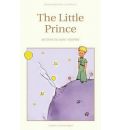
The Little Prince – Antoine de Saint-Exupéry

Book #574

Reviewer: Ange from Tall, Short & Tiny

The Little Prince​My copy of The Little Prince was bought for £1.99 in 2009, just days before we left London to return to New Zealand, and was immediately sealed in a box, ready to be shipped home. There it stayed, for almost four months, until being unpacked when we moved into our new house. Once it was unpacked, I read it over a few hours while putting things in their new places, and when I’d finished, I sat with a smile on my face.

It is a beautiful story, magical, poignant, sad, poetic​​; I only wish I could read it in its original French, as I imagine that would simply enhance its beauty.

The Little Prince is essentially a children’s story, but it has massive appeal for adults too. It is quite complex in its themes and metaphors which I think many (perhaps most?) children would not get, but its simplicity and imagery ​would be enough to capture and hold young imaginations. The story begins with the narrator lamenting the fact that adults often lack imagination, which children would identify with,

“All grown-ups were once children… but only few of them remember it.”

“Grown-ups never understand anything by themselves, and it is tiresome for children to be always and forever explaining things to them.”

and the little prince himself comments that,

“Grown-ups are very strange/really very odd/certainly absolutely extraordinary”.

The basic story is of the narrator, a pilot who crashes his plane in the desert, meeting a young boy (the little prince) from a distant planet. Over eight days, the narrator attempts to repair his plane, while the little prince tells stories about his home planet, and the places he has been. He tells of his tiny home planet, with its three little volcanoes (which he cleans) and a variety of plants. He tells of his love for a beautiful rose that suddenly appeared growing; he tended the rose until he began to feel that she was taking advantage of him, and although she apologises for her vanity, he decides to travel and explore the universe.

He tells of the interesting characters he has met along the way (including a king with no subjects, and a man who believes himself to be the most admirable person on a planet inhabited by no other), and that he first believed Earth to be uninhabited due to landing in the desert. When he discovers a whole row of rosebushes, he is sad, because he’d believed his rose was unique. He meets a fox who explains that his rose really is special, because she is the object of the prince’s love. The fox is wise, and asks the prince to tame him; he is given many of the story’s most profound, memorable lines:

“I shall look at you out of the corner of my eye, and you will say nothing. Words are the source of misunderstandings.”

“To me, you are still nothing more than a little boy who is just like a hundred thousand other little boys. And I have no need of you. And you, on your part, have no need of me. To you I am nothing more than a fox like a hundred thousand other foxes. But if you tame me, then we shall need each other. To me, you will be unique in all the world. To you, I shall be unique in all the world….”

“Goodbye,” said the fox. “And now here is my secret, a very simple secret. It is only with the heart that one can see rightly. What is essential is invisible to the eye.”

When the narrator has fixed his plane, it is time for the little prince to return home. Their farewell is quite emotional but sweet and beautiful:

“When you look up at the sky at night, since I shall be living on one of them and laughing on one of them, for you it will be as if all the stars were laughing. You and only you will have stars that can laugh!”
And as he said it he laughed.
“And when you are comforted (time soothes all sorrows) you will be happy to have known me. You will always be my friend. You will want to laugh with me…”

The story is supposedly based on aspects and experiences of de Saint-Exupéry’s own life; the rose is said to represent his wife, whom he loved but was unfaithful to. It is a story rich with beauty and imagination, and I never grow tired of flicking through its pages.

I look forward to the time when I can read this with my sons, and I hope they will enjoy it as much as I do. The Little Prince deserves 5/5 stars – there is nothing I can fault with it, and I loved it.