Gargantua and Pantagruel – François Rabelais

Book #995

Reviewer: Arukiyomi (First published May 2012)


Urghh… took me an age to read this. It was partly my fault and partly the book’s. Long ago, I realised during the first book of this five book tome that I wasn’t going to enjoy lengthy sections of this. I’ll explain why in a bit. But rather than bite the bullet and get it over with, I decided, somewhat subconsciously influenced by Rabelais himself, to not leave the toilet until I had read at least a chapter. Granted the chapters are tiny. But there are 299 of them. Sigh…

So, a combination of bowel movements and Rabelaisian prose meant that, a year later, I was still plodding through this and wishing that either I was dead or Rabelais had never lived. Time travel precluded the latter and so I had to content myself with the former. And it didn’t help that I felt the victim of some huge literary practical joke upon reading quotes like this:

If you say to me: ‘It does not seem very wise of you to have written down all this gay and empty balderdash for us,’ I would reply that you do not show yourselves much wiser by taking pleasure in the reading of it.

Well I didn’t take pleasure in the reading of it. So there!

The story, if there is one in this the world’s most rambling satire (please God let it be so), is that Gargantua and his son Pantagruel are a couple of characters who travel widely and meet as many different characters as there are chapters. Each of the episodes they end up relating are side-splittingly funny… if you’re a 16th century French polyglot playing fast and loose with the rules of monastic living. I’m not. Nuffsed.

Rabelais subjects everything to scathing satire: history, literature, politics, religion, philosophy, culture, medicine. The Roman Catholics get a particular spanking. And there’s an entire book (oh, that I spoke in jest) on whether or not a particular character should get married. Each chapter is an argument either way until, at the very end of that particular book 52 chapters later, they decide to leave the matter undecided. Aaaargh!

Yes, yes, satire is meant to be like this: a literary insider’s joke. But, and I’ve made this complaint before, that’s as feeble an excuse as a postmodernist painter telling you that his entirely black canvas is “Whatever you want it to mean.” Life’s too short. This is going on my list of 1001 Books You Don’t Have to Read but Should Know About.

The Driver’s Seat – Muriel Spark

Book #363

Reviewer: Ms Oh Waily

This novella by Muriel Spark was published first in 1970 and is a smidgen over 100 pages long, and disturbing all the way through.  As John Lanchester says in his introduction to this work, “It isn’t possible to discuss the book without giving away what happens.”  So quite how I am to go about giving you a review of a book that does not essentially turn out to be one giant spoiler, I’m not sure.  Bear with me as I try.

The main character is Lise, a 34 year old woman who has worked in the same accountant’s office for the past sixteen years.  We first meet her as she is out shopping for clothes destined to be worn on her upcoming holiday to somewhere in the south.  This is presumably somewhere in the southern Mediterranean, but we are never explicitly told where.

It is clear that she is not stable from the get-go.  She acts irrationally, her interactions with people are all off-beat, and for the first short part of the book you wonder just where this is all headed.  Clearly it isn’t going to go well, but just how unwell things go is revealed very early on in the novella.  The rest of your time reading is spent reviewing what is happening and how it plays in to the ending.

Personally I began to see the significance of most of her choices and behaviours as soon as the “reveal” was read and the motivations of certain characters became crystal clear.  I was only really left with the who of this crime story to work out.  That, thankfully, was not completely obvious from early on.  I apologise for the vagueness of my comments.  Anything otherwise would simply be me revealing the entire plot to you.

Other characters you will come across – Bill, a cultish macrobiotic Enlightenment Leader who meets Lise on the flight to the southern city and is doing his level best to get her into bed; Mrs Fiedke, an elderly woman she meets at the hotel and spends the afternoon with; Carlo, a garage proprietor who crosses paths with Lise when she is forced by rioting students to take refuge in his garage; and, Mrs Fiedke’s nephew.

This was one of the more unusual and extremely disturbing stories I have read in a little while.  It is beyond dark in it’s subject matter and Lise is in no way sympathetic, although clearly she is suffering from some sort of madness.  Although it is a very lucid seeming madness.  I can recommend it, as I don’t think I have ever come across another book with the same subject matter written about from the same point of view.  It is gripping, insofar as you want to work out just what happens and how things come to the conclusion they are earmarked for.  It does not make for pleasant reflection, and even at the end we are left hanging with unanswered “whys”.

I will leave you with some examples of the prose, and madness of Lise.

On the occasion of shopping for her new clothes and the opening few paragraphs:

‘And the material doesn’t stain,’ the salesgirl says.
‘Doesn’t stain?’
‘It’s the new fabric,’ the salesgirl says. ‘Specially treated.  Won’t mark.  If you spill like a bit of ice-cream or a drop of coffee, like, down the front of this dress it won’t hold the stain.’
The customer, a young woman, is suddenly tearing at the fastener at the neck, pulling at the zip of the dress.  She is saying, ‘Get this thing off me. Off me, at once.’

On the moments before embarking on to the aircraft:

A small crowd has gathered waiting for embarkation.  More and more people straggle or palpitate, according to temperament, towards the group.  Lise surveys her fellow-passengers, one by one, very carefully but not in a manner to provoke their attention.  She moves and mingles as if with dreamy feet and legs, but quite plainly, from her eyes, her mind is not dreamy as she absorbs each face, each dress, each suit of clothes, all blouses, blue-jeans, each piece of hand-luggage, each voice which will accompany her on the flight now boarding at Gate 14.

This last passage suggests an attention to details and observation that will come back to importance as the novella is read.  And, in closing, I must say that the title is well chosen, and in my opinion – Lise was most certainly in The Driver’s Seat.

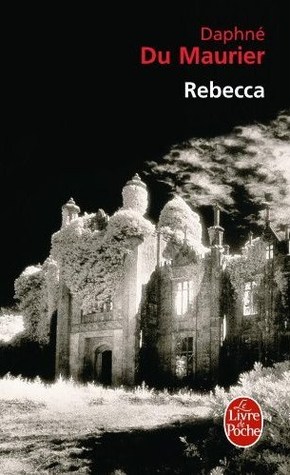
Rebecca – Daphne du Maurier

Book #603

Reviewer: Inspirationalreads

Having always known that one day I would read Rebecca, I have avoided absolutely everything and anything spoilerish to do with it.  It is a novel that has so seeped into pop culture that it has been hard to do so.  Vague knowledge of what I assumed was a Pemberley-type Manderley along with that famous first line and an awareness of some sinister hag named Mrs Danvers was all that broke through my barrier.  Jayne Eyre, Wuthering Heights and Persuasion have all been left on the shelf, suffering for my costume-drama movie and television addiction and having seen someone else’s interpretation rather than read straight from the source.  How thankful am I that this self-imposed ban on all and any interpretations of Rebecca meant I had an unsullied read and got to appreciate it in all its gothic, spooky beauty.

Our narrator is Mrs de Winter, whose first name is never revealed to the reader. Opening with that famous line about her dream of Manderley, this first passage sets the tone straight away for what is to follow.  This dream, of the once majestic homestead of her husband, renders the house overrun by nature, sinister and at the closing of this passage we learn;

We would not talk of Manderley.  I would not tell my dream. For Manderley was ours no longer.  Manderley was no more.

From there we go to the beginning.  Our unnamed heroine recounts how she first meets Maxim de Winter.  She is a companion for a wealthy older woman who treats her as a general dogsbody and is obsessed with seeing and been seen.  When the debonair Mr de Winter walks into the hotel they are staying at, he immediately becomes the focus of both of their attention.  But it is the younger, more innocent of the pair who catches his eye.  When they get the opportunity to spend some time together, it escalates to more and very quickly our young narrator moves from lady’s companion to the wife of wealthy, older, sophisticated Maxim de Winter.  After an idyllic honeymoon where the new Mrs de Winter begins to finally overcome her disbelief at being married to such a man, they return to his home, the beautiful and famous Manderley.  Home to the overwhelming grandeur of the house, a house that is intertwined with the memory of the first Mrs de Winter, Rebecca. Having died in a tragic and horrific boating accident a year earlier, she is in every room; the carefully selected room adornments, physical mementoes in the form of handwritten notes and invitations, the memories of those in the house .  If this is not enough to intimidate our young bride, the formidable housekeeper, Mrs Danvers, is on hand to further drive home the memory of the more beautiful, captivating Rebecca.  That Mrs Danvers loved Rebecca is obvious as is her dismay at the new marriage and thus her disapproval of the new mistress of Manderley.  But there are secrets here at Manderley, secrets that begin to unravel despite the intentions of those trying to cover them up.  And at the centre of it all Rebecca, casting a shadow on everything even from the grave.

I can be quite the sceptic when reading older books.  I have had to learn to appreciate them for their language and style and also take into account how novel an idea is for it’s time, how it was the precursor to a lot of those that have followed.  I do not necessarily need it to be a page turner, for the story to keep me hooked with a lot of twists and turns and shocking developments.  The more I read about reading and writing, the more I read about how these things are dismissed as cheap and an easy way to sell something to the masses, the undiscerning.  But there is something in the art of storytelling, the tradition of sitting around telling a tale and entertaining those around you that will never get old for me and will always make me appreciate at the very least the effort that goes into it.  What this off-track ramble means in this context is that I thoroughly enjoyed the tale that is Rebecca.  There are a few well-trod literary paths here; young, docile, insecure young woman with the more urbane older man; stern older woman influencing and manipulating; an ever-present ex-wife.  But the tale itself is so interesting, it really was a page turner.   What surprised me was how this was not a supernatural tale, but a psychological one.  How insecurity and naiveté can be twisted, how love and admiration can become blinding, how everything is not what it seems.

That is not to dismiss the writing here.  Through our narrator, du Maurier creates an atmosphere that is impressive and intimidating all at once. On her approach to Manderley:

The length of it began to nag at my nerves: it must be this turn, I thought, or round that further bend: but as I leant forward in my seat I was for ever disappointed, there was no house, no field, no brand and friendly garden, nothing but the silence and deep woods.  The lodge gates were a memory, and the high-road something belonging to another time, another world.

Achieving with words what a movie would use low-lights and a tense soundtrack, the reader immediately feels the building tension.  The new Mrs de Winter is in awe of her surroundings and true to character, is easily cowed by Mrs Danvers.  That she is frustratingly quick to think less of herself and to give in to Mrs Danvers machinations is in keeping with that of a young woman, who previously was  thought of nothing more than a servant herself.  The 21st century  woman in me could not help but want to go in and shake her by the shoulders, but for her to be any more or to react any differently would be completely out of character and would not let events play out in the anxiety-ridden manner it did.

I am grateful that I was so severe in my pre-read ban of all things Rebecca related.  It did not stop the story from being familiar but it did allow me to be absolutely entertained and to understand what all the hoopla is about.  This is a great, old-fashioned tale elevated by the setting of tone and atmosphere by its author.  The characters can be harshly judged as one-dimensional, but they are each a dimension of the story as a whole.  A great addition to the gothic-romance genre and to this list.