Schindler’s Ark – Thomas Keneally

Book #275

Reviewer: Beth, of Beth’s List Love (first published March 2012)

In 1980, Thomas Keneally was in LA looking for a briefcase. A Holocaust survivor named Leopold Pfefferberg, may or may not have actually sold him one, but he gave him something much more valuable, a tale of holocaust heroism of which he had been one of thousands of fortunate participants. Pfefferberg introduced Keneally to others who had been a part of the story, and took him to the locations critical to the tale. The result was this novel, Schindler’s Ark also known as Schindler’s List, and the movie which we have probably all seen (and should see, if we haven’t).

Most books on the 1001 Books You Must Read Before You Die list aren’t there for the plot. They are there for the amazing prose, the literary innovation, the depth of psychological insight. This one, while its prose is fine, is there for the plot. So if you know the plot, since you’ve seen the movie, do you really need to read the book? Yes. Definitely, yes. The book contains the level of documentation and detail, in novel form, but not fictionalized, that helps a reader begin to fully grasp the immensity of what Schindler’s miraculous acts of heroism involved. The book does not paint a saint. Among other things, Schindler was an unapologetic philanderer. According to Keneally, “sexual shame was, to him, a concept like Existentialism, very worthy but hard to grasp.” But Schindler committed years and immense sums of money to protect over a thousand Jews from starvation, abuse, and death, all via an absurd con–a munitions factory that never produced a useful shell.

Schindler walked a high wire, using bribes, charm, and an incredible instinctive ability to read the characters of others, all to protect the Jews in his care and even to rescue his women workers from the bowels of Auschwitz when they were waylaid there on the way to his factory in Moravia. The question you have to ask yourself in reading this book is “Could I have had the courage to act in this way? Faced with Schindler’s choices and risks, could I have been a Righteous Person?” I wish I could confidently answer yes. I am certain of this: reading this book can only make that “yes” more likely.

Top 10 Opening Lines

Once again an interesting snippet has crossed my virtual desk, this time it is a top 10 list.  And I’m sure you can see that I just love lists.
According to Robert McCrum in The Observer, these are the top 10 opening lines in fiction.

At the number one position:

“Stately, plump Buck Mulligan came from the stairhead, bearing a bowl of lather on which a mirror and a razor lay crossed.”
James Joyce, Ulysses (1922)

Number 2.

“It is a truth universally acknowledged, that a single man in possession of a good fortune, must be in want of a wife.”
Jane Austen, Pride and Prejudice (1813)

Number 3.

“There was no possibility of taking a walk that day.”
Charlotte Brontë, Jane Eyre (1847)

Number 4.

“You don’t know about me, without you have read a book by the name of The Adventures of Tom Sawyer, but that ain’t no matter. That book was made by a Mr Mark Twain, and he told the truth, mainly.”
Mark Twain, The Adventures of Huckleberry Finn (1884)

Number 5.

“Into the face of the young man who sat on the terrace of the Hotel Magnifique at Cannes there had crept a look of furtive shame, the shifty, hangdog look which announces that an Englishman is about to talk French.”
PG Wodehouse, The Luck of the Bodkins (1935)

Number 6.

“It was the afternoon of my eighty-first birthday, and I was in bed with my catamite when Ali announced that the archbishop had come to see me.”
Anthony Burgess, Earthly Powers (1980)

Number 7.

“I write this sitting in the kitchen sink.”
Dodie Smith, I Capture the Castle (1948)

Number 8.

“It was a queer, sultry summer, the summer they electrocuted the Rosenbergs, and I didn’t know what I was doing in New York.”
Sylvia Plath, The Bell Jar (1963)

Number 9.

“The snow in the mountains was melting and Bunny had been dead for several weeks before we came to understand the gravity of our situation.”
– Donna Tartt, The Secret History (1992)

Number 10.

“Squire Trelawnay, Dr Livesey, and the rest of these gentlemen having asked me to write down the whole particulars about Treasure Island, from the beginning to the end, keeping nothing back but the bearings of the island, and that only because there is still treasure not yet lifted, I take up my pen in the year of grace 17– and go back to the time when my father kept the Admiral Benbow inn and the brown old seaman with the sabre cut first took up his lodging under our roof.”
Robert Louis Stevenson, Treasure Island (1883)

What do you think?  Are they your best opening lines, or do you have other favourites you would like to share with us?

In A Free State – V.S.Naipaul

Book #356

Reviewer: Ms Oh Waily (first published 2010)


This is the 1971 Booker Prize winner by V.S.Naipaul, who sounds like quite an interesting character in his own right.

Having visited his Wikipedia entry, I now have a better understanding of this work.  I was a bit perplexed by it at the beginning, but at least two of the five sections make a great deal more sense.

Okay, let me begin at the beginning.

This is a book in five parts.  There are three separate stories bookended by two, supposed entries from the author’s own journals, although more likely to be in the voice of a narrator.  I found the bookends odd.  The first “journal entry” sets the tone for the next two stories, One Out of Many and Tell Me Who To Kill.   The narrator is travelling on a ship to Egypt and relates the story of the short voyage, in which a very odd passenger is noted and eventually tormented by his three room-mates.
If you are an aspiring writer who wishes to learn the skill of writing menace then you can find no better example than this volume.  I cannot give Naipaul enough praise for the ability to convey menaces and fear in the written form.

Following on from the initial journal entry is One Out of Many which conveys the story of an Indian manservant brought to the United States and Washington D.C. by his employer – a minor government official. The fear of differences, cultural and societal are touched on in this story.  There are some funny moments, when viewed as an outsider, but there is the ever present sense of fear, menace and just waiting for the shoe to drop.  The ending of the story is not what I expected at all, and while unconventional it was not wholly satisfying either.  It almost left me with more questions than answers about the changes in the lead character’s inner life. 

The second story is nothing but menace, fear and ultimately sadness.
It is the tale of two brothers from the Caribbean and their experience living in England.  The older brother is the narrator of the story, telling it in slices of flashback mixed with current events.   In current time he is travelling to his younger brother’s wedding.  He is accompanied on this journey by a man who’s relationship to the narrator is never openly acknowledged or clearly expressed.  He is named, and discussed in small snippets but you know that there is something amiss with the relationship.
In flashback you are taken through the emotional ups and downs of a very poor family’s relationship with their “better off” cousins, and then on to a poor, illiterate immigrant’s experience in England.  And, as a West Indian in the late 1960s and early 1970s, this clearly would not have been a positive one.
Many aspects of this story are pitiful, sad, poignant and downright annoying.  But, once again, the overarching sensation while reading is fear, menace and waiting for the axe to fall.  I was too dim to make the connection at the time of reading the story, so the ending was vaguely unsatisfactory.  It makes much more sense to me now, once I connected the narrator to his travelling companion in the manner the author intended.

The third story, and the namesake of the book, In A Free State is set in some anonymous African country after the colonial power has gone.  This story went on and on and on and on, with seemingly no real point.  Perhaps I missed it.  Perhaps I need to be an African to understand it.  As bad as I found reading Barbara Kingsolver’s The Poisonwood Bible I would still find her discussion of post-colonial Africa and the mess that was made there far more understandable and palatable than this rather vague story.
The only “free” state that seems under discussion here is that of whose bed you prefer, and why that is so much easier to do in an African expatriate community.  The world around the main character here seems barely trimming on his lifestyle and that of his travelling companion.  Perhaps I’m of the wrong generation, wrong upbringing, or just plain dim.  I didn’t get it.  I didn’t get the point.  I didn’t even really enjoy the writing of this piece.  The previous two were much more evocative and created great mood, even though I have no connection to India or the West Indies either.

Frankly on the back of In A Free State, I’m damned if I know how this got a Booker.  On the back of the first two – I do get it.  Great writing, taking you in to the characters and their inner lives and thoughts, even so far as to draw you into their fears.  The rest of it…  uh, no.  Not a prizewinner from where I sit.

If you’ve read it, I’d love to know what you thought about it.  What did I miss in my understanding of the writer’s objectives?

So this one I’d have to call a half-and-half.  Half great stuff, half “what the??”
Tackle it if you dare.

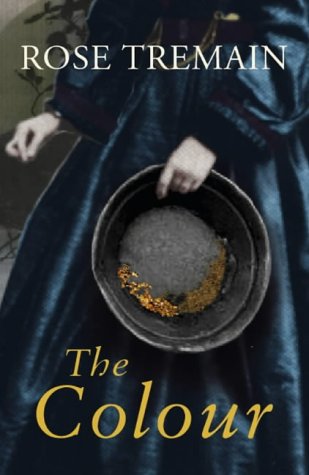
The Colour – Rose Tremain

Book #15

Reviewer: Inspirationalreads

‘Twas inevitable that this book was going to be reviewed early on on a blog that is edited by two Kiwi lasses.  Set in New Zealand in the mid-nineteenth century, Tremain’s The Colour is a historical fiction that displays the beauty and hardship of a newly colonised land.  Beautifully desperate, this is a highly entertaining read which I found hard to put down.

Our story opens with the arrival of newly-weds Joseph and Harriet, along with Joseph’s mother in New Zealand.  Recently colonised, it is a harsh and hard place, brimming with excitement over the recent discovery of gold.  It is viewed very differently by our three new arrivals.  Joseph sees it as a new beginning; he is in New Zealand not because he wants to be but because he had to leave England.  He views New Zealand as a necessary hardship to endure if he is to be successful financially and successful at forgetting what drove him from England.   Harriet is escaping too, but it is the restrictive life of an ageing governess.  Through Harriet we see New Zealand as hopeful and beautiful.  The open landscapes represents the freedom that is now available to Harriet.  Lillian is Joseph’s mother and is there because she has recently been widowed.  This is not an adventure for her, not a new beginning because she is there under duress.  Through her eyes we see the savagery of this new land, a lack of civility, a bleakness in the surroundings where the open space is oppressive, directly in contrast to the views of her new daughter-in-law.

The relationships between the three of them are tenuous; Lillian is resentful of Joseph for bringing her to New Zealand and wary of Harriet and her enthusiasm.  Joseph and Harriet barely know one another and are unsure of what it is they feel for one another.  Disappointment and resentment simmer beneath the surface for them all, hidden beneath a veneer of hope, of trying to make the best of this new opportunity. Harriet seems to grow and adapt well to their new surroundings, Joseph and Lillian the opposite.  When Joseph discovers gold, or “The Colour” of our title, the cracks in the trio become gaping.  Joseph becomes frenzied, believing this to be the answer to all his worries.  He can appease a miserable mother, show his new wife that he too can be resourceful, start making a way towards atoning for what he did back in England.  Believing that this is just the beginning, Joseph leaves his new wife and his mother to venture into the gold fields, revealing much in this decision which would see his new wife and his elderly mother to rough it out on their own.

There is a lot going on in this novel.  Around our new arrivals, there is a number of minor characters who also have their own distinctive voices and developments.  Tremain  neatly ties them all together and manages to never let all the emotions and actions become too overwhelming.  And not to bang on, but there really is a lot happening. Death, birth, destruction, flooding, gold, near drowning, rent boys, Chinese men, miners, a mystical Maori nanny…  Actually, about that last one.  This was the one aspect of the story that didn’t quite work for me.  In amidst all the harsh realism, Tremain introduces the character of Pare, a young Maori woman who is taken on as a nanny by a neighbouring couple.  I appreciate what Tremain was trying to do with Pare; the Maori culture is a very big and important part of New Zealand.  And the magical realism could have proven a nice counter-point to all the harshness.  But it never really felt like it was part of the story, rather that it was running along side, then falling behind and eventually I found myself wanting to skim over those parts.  It felt forced and did not add anything to the story. However, with all the other exciting parts going on, it is overshadowed by what is a big story told with a quiet eloquence.   I needed to know the fate of our three and I was not disappointed with the outcome.  I couldn’t predict what was going to happen at any stage of their journey with the ending being the biggest surprise of all.

I highly recommend this to fans of historical fiction.  I highly recommend this to fans of great writing.  Frankly, I highly recommend it to everyone who loves a fantastic, unpredictable tale; well, those not too squeamish as there are a few squirmy parts in there. A 4 out of 5 star-rating.