Jane Eyre – Charlotte Brontë

Book #904

Reviewer: Sharmin @ A Battalion of Words


Today we are welcoming a new member of the Review Crew. Please give a warm welcome to Sharmin.

JE

Charlotte Brontë’s Jane Eyre is not in the least a glamorous love story. However, in this elegantly written novel, there lives a seemingly ordinary young woman who is spirited, and righteous in nature. Although continuously told throughout her life to suppress her passionate disposition, first by her family, next by the institution which – ideally — should have nurtured her intellect and independent nature, she still refuses to compromise her life. Though at first Jane’s physical plainness is associated with mediocrity by almost everyone around her and while their opinion of her physically lacking appearance doesn’t change much, she still comes to be respected as an honest and intelligent individual.

We first meet Jane Eyre as an abused, young orphan living with her only known relatives by whom she is sent off to Lowood School for girls. She spends a number of years there being further abused before taking a position at Thornfield Hall as the governess of a young girl. Upon helping the man who is the heir of Thornfield Hall one night, their relationship grows into something more than the average one between a superior and an employee. From here we see Jane and Mr. Rochestor’s love live through the passage of time in their attempts to deny each of the other or secure their love through more ideal methods.

Brontë’s novel, although a love story at its core, is also a study of beauty and poverty. Her criticism of physical beauty and its’ irrelevancy proves strong as does her thoughts on the rigid nature of the wealthy English class. Brontë lets her heroine describe herself as a “plain, quakerish girl”. Jane’s physical “plainness” is harmonized by her lover, Mr. Rochester, who is described as someone widely disregarded as unattractive. In the following passage we get a few thoughts on Mr. Rochestor in Jane’s voice:

“I am sure most people would have thought him an ugly man; yet there was so much unconscious pride in his port; so much case in his demeanour; such a look of complete indifference to his own external appearance; so haughty a reliance on the power of other qualities, intrinsic or adventitious, to atone for the lack of mere personal attractiveness, that in looking at him, one inevitably shared the indifference; and even in a blind, imperfect sense, put faith in the confidence.”

Mr. Rochester is arguably one of the most charismatic love interests I have read about in a long time. Despite my initial impression of him as thick-skinned and bitter, he turned out to be intense, intelligent and flawed.

I’ve also read somewhere that the images she paints of the boarding schools are very accurate and that she draws knowledge from her own experiences of residing and working in one early in life. And surely enough, poverty is a force captured fully by Brontë’s beautiful writing style. The passage below showcases Jane’s experiences during the beginning of her time at Lowood.

“…but within these limits we had to pass an hour every day in the open air. Our clothing was insufficient to protect us from the severe cold; we had no boots, the snow got into our shoes, and melted there; our ungloved hands became numbed and covered with chilblains, as were our feet. I remember well the distracting irritation I endured from this cause every evening, when my feet inflamed, and the torture of thrusting the swelled, raw, and stiff toes into my shoes in the morning. Then, the scanty supply of food was distressing: with the keen appetites of growing children, we had scarcely sufficient to keep alive a delicate invalid.”

Even harboring all the hardships of her life, Brontë makes Jane a resilient and morally robust protagonist who, even in her misfortune, finds satisfaction and love. Unlike her sisters’ novel, which is just as dark and profound as Charlotte Brontë’s if not more, the characters are hopeful, optimistic and redeeming in nature. They also have more in common than their passion for each other, a mutual respect for one another—a trait lacking between the two main protagonists in Wuthering Heights.

If you are a first time reader of Brontë, be warned if you go into this novel expecting another Pride and Prejudice as I did, than you will be slightly put off because while I love Austen, Brontë has a more brooding tale to tell. While it is not as biting in its dialogue or humor as Pride and Prejudice, it is just as satisfying. However, the most delightful of lines from Brontë’s Jane Eyre is most probably the first line in the very last chapter, “Reader, I married him” which concludes the entire story as simply and straightforwardly as it began.
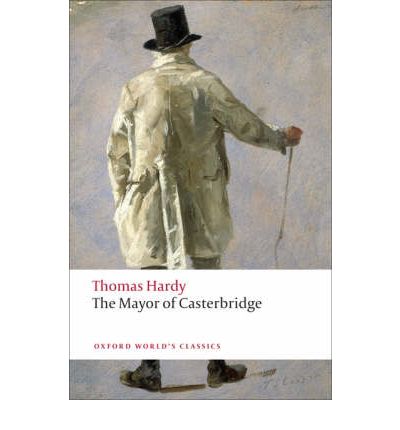
The Mayor of Casterbridge – Thomas Hardy

Book #821

REVIEWER: Naomi, of Create-Believe-Dream

TMCThomas Hardy is the master of the missed moment. If one were to make a pie chart of the plot elements of a novel such as The Mayor of Casterbridge the sum of the parts would be infinitely greater than the whole.

Essentially The Mayor of Casterbridge turns on one crucial moment where Michael Henchard in a fit of drunken pique auctions his wife (Susan) and daughter (Elizabeth-Jane) off to a sailor in a bar at a fair. As a result Henchard resolves not to drink again for as many years old as he is (21) and we return to his story 18 years later when he is the Mayor of Casterbridge, and a successful business man. Susan and Elizabeth-Jane return to Casterbridge after the death at sea of the sailor who bought them and has husbanded and parented them since that moment. What follows is a tangled web of events where Henchard ‘marries’ Susan, after breaking off the engagement he had with a younger woman Lucette Le Sueur. At the same time Henchard takes into his employ Donald Farfrae who develops an attachment to Elizabeth-Jane. He makes an enemy of the man he had promised the job to, Joshua Jopp and his business starts to decline, Susan dies, Lucette returns, Henchard’s sobriety ends and the ensuing events would be a soap opera in the hands of just about any other writer.

When you start to read a Hardy novel, you do so in full knowledge that most of the characters will be left unhappy and full of regret, if they are alive, by the last page. However his work is not maudlin or sentimental and one of the main reasons his work never descends to this is his pithy, reportage style of writing. His descriptive passages are taut and real, the landscape comes alive around you as do the multitude of minor characters who colour the landscape. The plot while complicated and full of twists is, at its most essential, the tale of a flawed man trying to redeem himself for one glaring mistake and getting caught in the net woven from the smaller ones he makes in the process.

Having read a number of Hardy’s novels and short stories I knew what I was getting in to. However, although Casterbridge is regarded by some critics as Hardy’s greatest novel it was not, for me, his most appealing or moving. This could be for a number of reasons. Firstly the protagonist, Henchard, is not an overly sympathetic character. He is arrogant, argumentative and cold. And in addition I found the women characters quite weak, especially Elizabeth-Jane who was downright insipid. Maybe I’m just geared to the higher levels of injustice and melodrama in Tess of the d’Urbervilles and Far From the Madding Crowd. However, it justifiably earns its place on the list, along with most of his other character based work. Hardy is a writer, reporter, anthropologist, moralist and psychologist rolled into one and as a result, quite a worthwhile person to spend several hours of your time with.

Silas Marner – George Eliot

Book #875

REVIEWER: Ange, of Tall, Short & Tiny

SM

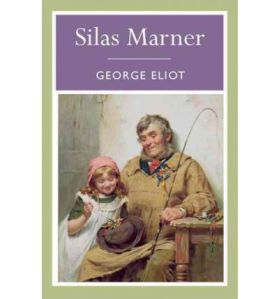
Silas Marner is a story about redemption, sin and repentance, love, honesty, loyalty and prejudice. It tells the story of Silas, an unimposing and unfortunate (in looks as well as experience) young man who is unfairly run out of his home village, Lantern Yard, for a crime he did not commit. He begins a new, reclusive life for himself in Raveloe, where the villagers consider him to be a rather enigmatic, unusual character. Silas is a weaver by trade, and spends every possible moment at his work; he weaves when he is sad, he weaves when he is lonely; he weaves. Consequently, he amasses quite a fortune, which brings him great joy. However, when his fortune is stolen, he finds himself aided and finally accepted by the village; when a young child is left orphaned and appears on his doorstep, he is desperate to adopt and raise her, believing his golden fortune to have been symbolically exchanged for this golden-haired toddler.

He raises Eppie alone, and she grows up to be a beautiful, sweet young woman. As she promises herself in marriage, she also promises Silas that she will never leave him alone.

When the thief is discovered, 16 years later, Eppie’s real father, and brother to the thief, wishes to do right by Silas and the daughter he failed to own previously. The story ends with he and his wife proposing to Eppie that she live with them, expecting her to choose their higher position in society over that of her adoptive father.

The blurb on the back of my copy touts Silas Marner as one of Eliot’s most successful and admired works, but I’m not sure I agree. I enjoyed it, but found it very predictable, and there were some chapters that I thought quite irrelevant and unnecessary. Eliot writes in the typically and excessively descriptive style of the 1800s, and I am a little ashamed to admit that I actually fell asleep whilst reading on more than one occasion.

None of the characters really gripped me. Silas was sweet and slightly endearing; I felt for him and the injustices he faced, but was never fully drawn to him. Eppie was bland, although her love for Silas and her strength of conviction for him did give her an extra edge not often found in 1800s heroines. However, the only characters I thought had any real substance were the young cad, Dunstan Cass, and Silas’ motherly neighbour, Dolly Winthrop.

The bonus with this story is that it’s very short, so there isn’t too much time for real boredom to sink in; if it had been longer, I think I would have struggled to get through it in one piece. However, the beginning meandered so slowly that I found my mind wandering quite often. In saying that, it’s not that I didn’t like Silas Marner…I just felt it didn’t live up to my expectations, which were based solely on the blurb on the back of the novel. A good friend of mine loved it, so it obviously has its appeal for some.

I’ll give it 3/5 stars.

Wuthering Heights – Emily Brontë

Book #902

Today’s book has the privilege of being a first for this blog – two reviews at the same time!  Many thanks to Ange P and Sweetp for the dual review.

Reviewer: Ange P

Warning 1: probably not a very helpful review, for reasons I explain below
Warning 2: there is a spoiler in one paragraph, which I have labelled.
Plot
The Earnslaw family brings up a young foundling, Heathcliff.  The daughter of the house, Cathy, and Heathcliff form a romantic attachment/grand passion, however, gradually Heathcliff finds that he is badly treated by all around him and he gradually becomes surly and sullen to all but Cathy.  When he believes that Cathy fails to return his love he runs away.  Cathy marries a neighbour, Edward Linton.
Heathcliff returns and sets himself up as a man of substance in the neighbourhood.  He plays on Cathy’s love for him regardless of her marriage and contributes to her gradual decline, followed by her death, giving birth to Linton’s child.
Heathcliff ardently resents Linton and in an effort to hurt Linton, marries his little sister, Isabella Linton.  In time, it is Heathcliff’s intention to revenge himself on all who have harmed him by completely damaging and destroying the next generation so that they are beyond redemption or happiness.
 Wikipedia’s Wuthering Heights entry has a selection of reviews from the time the novel was published and these were quite fascinating for people who like this type of thing.
Negative comments
Full of people being nasty to each other (gets a bit depressing).
Lacks a gripping climax.
Occasionally, I found the narrative techniques confusing so I wasn’t sure who was saying what.  There is a lot of indirect narration where the housekeeper tells a 15 year old story to a convalescent patient.
Positive comments
Amazing love story – never seen its like in literature before (and I’ve seen a read a lot of romantic fiction).  I just love this monologue from Cathy:
‘It would degrade me to marry Heathcliff now; so he shall never know who I love him; and that, not because hi’s handsome, Nelly, but because he’s more myself than I am.  Whatever our souls are made of, his and mine are the same.’
Well written with few plot holes.
Atmospheric.
In many cases Wuthering Heights relies on human foibles such as kindness, or sympathy or a desire for material gain for plot development and this is a strength.  The foibles of Heathcliff, though, are so awful and unyielding that he is inhuman.
Summary:
I can’t get a grip on it, and I suspect that this is my failure rather than Emily Bronte’s.  It was a good read and I wanted to know what happened with it.  But I’m not sure I fully understood it all. Hence the general nature of this review.
[SPOILER:  I am particularly confused about why Heathcliff had a sudden change of heart about his revenge in the final two or three chapters. Was it because he knew he was going to be with Cathy again soon and he couldn’t bring himself to destroy the happiness of a young couple when he knew he would be restored to his love soon?  It seems so out of character.]
I’d love to know what other 1001 book people think of this novel and any guidance to help me get a grip on it will be gratefully received!

Reviewer: Sweetp

I actually finished this book sometime ago but have found myself procrastinating on writing a review -it’s somewhat intimidating to be writing a review for such a well-known classic!

Even if you have never read Wuthering Heights, you may well still recognize the names Heathcliff and Cathy. This dark and angst-ridden gothic novel is one of the most famous of the Bronte sisters’ works, and is perhaps the one that divides readers the most. If you do a quick internet search of reviews, you’ll find most people either fall into the love it, or the loathe it, camp.

Synonymous with windswept moors, heartbreak and misery, Wuthering Heights is not a happy book. The love story is not a sweet or ardent chaperoned romance, but a stormy obsessive love that consumes the lives of all involved. Heathcliff is not a gracious romantic figure, but is brooding, often cruel and is driven to the edge of insanity by his love for Cathy. Cathy is selfish, has a wicked temper and is often just as unlikeable as Heathcliff, and yet, despite often reflecting on how totally despicable all the characters in this novel are, I couldn’t help being swept away on their passion.

Because Wuthering Heights is at the heart of it, a novel about passion. Even if you hate everyone involved, it is hard not to be moved by the powerful emotions that make the characters who they are. Take Cathy’s speech about her love for Heathcliff:

If all else perished, and he remained, I should still continue to be; and if all else remained, and he were annihilated, the universe would turn to a mighty stranger: I should not seem a part of it…Nelly, I am Heathcliff! He’s always, always in my mind: not as a pleasure, any more than I am always a pleasure to myself, but as my own being.

Quite a declaration! Heathcliff too is totally consumed by Cathy, and when she decides to marry someone else it sets in motion a series of events that will see characters dying of broken hearts, driven to madness and the engineering of a most dreadful revenge on the next generation. Hate is just as a powerful motivator as love.

Dark and melodramatic this book certainly is  – with liberal sprinklings of violence and narcissism too. If you appreciate a bleak and gothic atmosphere, and flawed characters then this could be the classic read for you.

While I gave it 4 out of 5 stars, I can see why some people find this book difficult. The storytelling device itself is a little odd – an elderly housekeeper, Nelly, is telling the story to a visiting Mr Lockwood. Written before the use of third person omnipresent narrators, the style is a little clunky and at times confusing, and removes the reader somewhat from the intimacy of the story. This will be a roadblock for some readers. Add to the confusion the fact that there are two Cathys, the Linton and Heathcliff names are used both as a first name and as a family name and the similarities of the names Hindley, Heathcliff and Hareton, and it is easy to see why at times it is hard to keep it all straight.

Those that cannot get past the violence and the selfish nature of most of the characters will also find this book infuriatingly bleak. Others, like myself, will read it again, purely to wallow in the misery and angst. Perhaps it is one of those classics you simply have to read for yourself and decide whether it’s love or loathe. Either way, there is no denying that Wuthering Heights is a true classic, rightfully earning it’s place on the 1001 books list.

The Sorrow of Young Werther – Johann Wolfgang von Goethe

Book #959

Reviewer: Arukiyomi  (first published June 2012)

Heard that this is one of the most accessible Goethe’s and so it made sense to start with it. I’ve not read any of the German classic writer before. How was it? It was okay, but my reading of it was somewhat tainted by having already read Armstrong’s Conditions of Love in which he illustrates archetypal romance and infatuation with reference to Werther.

That Armstrong would do this illustrates the legacy of this short novel. It’s depiction of the dramatic and extreme emotions that Werther goes through were a break with tradition at the time of Goethe’s Germany. If Werther’s behaviour seems extreme to us now, they probably seemed even more so to Goethe’s contemporary readers.

That’s not to say that his readers could not relate to the character of Werther in real life. After all, the novel is based, in part, on Goethe’s own romantic experiences. I think what made the book revolutionary was that someone was putting it down in print and being so frank about it. The literary age was dominated by a conservatism in feeling that made Goethe’s work a sensation. Even Napoleon loved praised it and we all know how hard a man he was to please.

The novel has definitely lost some of its original impact. Of that there is no doubt. Readers ignorant of its place in the history of the novel will be tempted to just say it is yet another overblown romance. I certainly was.

But the novel is worth reading more than simply for its place in history. Werther lives in all of us as we get caught up in feelings that make rational sense to us while all around us people think we’re off the wall. And his solution to the dilemma of unrequited love is something I think most of those honest enough to admit would say we ourselves have considered from time to time. If we haven’t, we’re either lying or not really allowing ourselves to experience life to the full.

And that’s where the novel makes an important contribution to our world, questioning as it does so, the notion that we are in control and that by attempting to be so, we are somehow able to actually live. I very much appreciated this challenge.