Steppenwolf – Hermann Hesse

Book # 684

REVIEWER: Kara


SSteppenwolf is the story of Harry Haller, a man who is miserably struggling to deal with two very different aspects of his personality – one of these he views as a man and the other as a wolf. He finds his ‘man self’ excited by the trappings of the bourgeois lifestyle he more or less leads, but his ‘wolf self’ hates it and finds it ridiculous. He is only really happy in the moments where he can feel completely man, or completely wolf. These moments are few and far between.

Soon Haller meets Hermine, a woman who tells him she is just like him, and spends an unforgettable night in a theatre “for madmen only.”  The bulk of the novel is Haller’s experiences in the theatre and their impact on the condition of his dual soul.

I was surprised at how accessible and digestible this novel was, based on what I’ve heard and read about Hesse in general. Though I will admit it did give me a few nights of very intense dreams, especially the night I put the book up and went to sleep in the middle of Harry’s theatre visit.

While I know very little about philosophy, Eastern or Western, and have just a basic understanding of Jung’s work, it’s easy to see their influence here.

The multiplicity of the soul:

“In reality, however, every ego, so far from being a unity is in the highest degree a manifold world, a constellated heaven, a chaos of forms, of states and stages, of inheritances and potentialities.”

Humans as a grand experiment:

Man is “nothing else than the narrow and perilous bridge between nature and spirit. His innermost destiny drives him on to the spirit and to God. His innermost longing draws him back to nature, the mother.”

The unimportance of physical objects:

Experiences are our “life’s possession and all its worth.”

And the fluidity of the soul:

“My personality was dissolved in the intoxication of the festivity like salt in water.”

I was very impressed with Harry as a character. His struggles, while extreme, make a lot of sense and express what I know that I certainly feel occasionally – that life can lack a sense of progress or greater purpose, leaving dissatisfaction and lack of motivation. In the end, and I don’t think this is a spoiler, Hesse’s answer for Harry is this:

Just like the radio spoils and beslimes music “and yet cannot altogether destroy its spirit, just so does life, the so-called reality, deal with the sublime picture-play of the world and make a hurley-burley of it…All life is so, my child, and we must let it be so; and, if we are not asses, laugh at it.

Easier said than done, and difficult to wrap the mind around, of course. Seeing as how we’re alive, living life and have been as long as we’ve had consciousness, we can’t really get an outside perspective on this the way we can on music. But it is helpful as a reminder to relax and remember that not everything is rational, nor does it need to be.

My favorite part of the book was the surreal, bizarre culminating scene (the last third of the book, really) because I was very intrigued and impressed with how Hesse took the conscious thoughts and actions of Harry and developed a fitting subconscious dream-world that served as both a source of and an outlet for who Harry is and what he believes. It’s an impressive feat of writing.
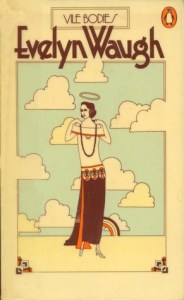
Vile Bodies – Evelyn Waugh

Book # 659

Reviewer: Ms Oh Waily


Vile BodiesI first laid eyes on Vile Bodies back in 1989 while travelling through Europe on my OE with a friend from university.  It was my first time reading the very English wit of one of the Waugh family and I remember absolutely loving it.  It fit in with my penchant (then and now) for stories written or set between the two world wars.

This was all brought back to me when I pulled my copy off the bookshelf in order to revisit it this year.  As I opened the page, out fell two tiny pieces of paper.  One was for the Casa del Libro in Madrid and the other for the Paperback Exchange in Florence.  After so many years, I am unsure which was the supplier of my Waugh but I am grateful to whichever it was.

This satirical look at the era and goings-on of The Bright Young Things was first published in 1930.  It is the story of two young lovers, Adam Fenwick-Symes and Nina Blount.   They are part of the crazy, hedonistic set of young aristocrats known as the Bright Young People.  It is raw satire, with seemingly ridiculous goings-on and brilliantly silly character names.  I mean, you can’t go wrong with names like Miles Malpractice, Fanny Throbbing, Lottie Crump and Mrs Melrose Ape, can you?

At the very start of the novel we find Adam aboard the Channel ferry during a rough crossing and it is here that Waugh begins introducing us to some of the colourful characters he has created,

Other prominent people were embarking, all very unhappy about the weather; to avert the terrors of sea-sickness they had indulged in every kind of civilized witchcraft, but they were lacking in faith.
Miss Runcible was there, and Miles Malpractice, and all the Younger Set.  They had spent a jolly morning strapping each other’s tummies with sticking plaster (how Miss Runcible had wriggled).
The Right Honourable Walter Outrage, M.P., last week’s Prime Minister, was there.  Before breakfast that morning (which had suffered in consequence) Mr Outrage had taken twice the maximum dose of a patent preparation of chloral, and losing heart later had finished the bottle in the train.

Throughout the work there are passages of wonderfully expressive writing and the crossing of the Channel is one of them. Waugh describes it thus,

Sometimes the ship pitched and sometimes she rolled and sometimes she stood quite still and shivered all over, poised above an abyss of dark water; then she would go swooping down like a scenic railway train into a windless hollow and up again with a rush into the gale; sometimes she would burrow her path, with convulsive nosings and scramblings like a terrier in a rabbit hole; and sometimes she would drop dead like a lift.  It was this last movement that caused the most havoc among the passengers.

The main line of the story follows the ups and downs of Adam’s attempts to wed Nina.  As a writer he is hoping to get published until the customs men decide to confiscate and burn the one and only copy of his manuscript.  His great intention of being able to support a wife evaporates in that instant.  We then chase along behind him as he gains employment and then loses employment, approaches his future father-law for assistance and gets embroiled in all sorts of unexpected adventures.  All the while he and Nina are ‘on’ and ‘off’ again, before he faces the ultimate challenge of a rival in the form of Ginger Littlejohn.

It is at once cutting and full of caricatures.  The behaviour is over the top, the reckless abandonment of several of the characters and the whimsical choices made are both ridiculous and poignant.  It is as though the aftermath of World War I seemed to imbue a spirit of living totally in the moment with little regard for the outcome.  As a young woman I certainly thought it was extremely funny and crazy, but as an older adult I can now see a huge depth of poignance in the behaviour of the Bright Young Things.  I can now see the underlying sadness and the carelessness with life, as well as the humour.

At 220 pages, it is a snip of a read.  If you are a fan of writing about or during the Interwar period, then you will most probably appreciate this.  If you are not, you may still enjoy it as a somewhat exaggerated view of a time of past glories and excess.  The huge dose of humour will help it go down, but don’t be expecting a Wodehouse-style read, as it is nowhere near as gentle.

Happy reading.

Regeneration – Pat Barker

BOOK #170
Reviewer: Beth’s List Love (review previously published February 5, 2014)

RegenerationThe books in this trilogy have received awards and huge critical acclaim, but I was having trouble getting excited about starting them.

Once again I have learned that I irrationally fear historical fiction, but love it once I begin to read. This book was particularly interesting to me as a psychologist and faculty member teaching psychology. I am far from psychoanalytic in orientation, but this novel does a marvelous job of illustrating how some of the techniques of psychoanalysis can be tremendously useful in understanding psychological phenomena.

The novel also beautifully illustrates the many potential psychiatric manifestations of war trauma. It is written with tremendous compassion for the men whose lives it portrays, soldiers suffering shell shock in the first world war and the doctors treating them. This was a very moving account of the impact of combat in WWI on both the men at the front and those who treated them after the psychologically traumatic events they lived through. It’s based on real people and real events.

It is beautifully written, combining some of the real poetry written by soldiers in their time convalescing in a military psychiatric hospital with the author’s own equally well-crafted prose. This novel, which is the first of the trilogy, explores questions about the morality of war, about the ways in which the military and political aims of those safe and in power are played out at great cost by those who actually do the fighting, about the morality of returning psychologically traumatized individuals to relative mental health only to send them back into the trauma.

It juxtaposes two very different ways of treating conversion symptoms which translate conflicts about returning to combat into debilitating physical symptoms, and provides excellent examples of psychodynamic psychotherapy complete with analysis of dreams. I used it to teach my personality theories course the day I started reading it, because it was so perfect for illustrating some of what I was teaching about.

I am really looking forward to the rest of the series! 5 out of 5 stars.

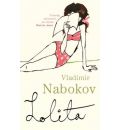
Lolita – Vladimir Nabokov

BOOK #496
Reviewer: Tall, Short, Tiny & a Pickle

LolitaLolita is one of those books that I’d heard of, but knew very little about before picking it up from our local library. It is considered one of the best novels of the 20th-Century, and therefore I had high expectations….which sadly, weren’t met.

Lolita tells the story of Humbert Humbert, a 38-year-old scholar with an obsession for young girls (“nymphets”), who, after a failed marriage and a stint in a mental hospital, falls for his landlady’s 12-year-old daughter. He is infatuated with young Dolores (who he nicknames Lolita), partly because she reminds him of his childhood sweetheart who died prematurely.

“I knew I had fallen in love with Lolita forever; but I also knew she would not be forever Lolita.”

Humbert takes every opportunity to be alone with his Lolita, and when they aren’t alone, he finds ways to watch her inconspicuously, or touch her in a seemingly paternal way. While she is away on summer camp, her mother, Charlotte, gives Humbert an ultimatum: marry her, or move out. Humbert doesn’t want to be away from Lolita, and agrees to marry Charlotte; she has no idea of his feelings for Lolita until she reads his diary. She threatens to expose Humbert, but before she can take any action, she is struck by a car and dies.

Charlotte’s death gives Humbert the opportunity to become more than just a step-father to Lolita; they begin a sexual relationship and spend a couple of years on the road, until settling in a town where Lolita can attend a girls’ school (Humbert is possessive and jealous, refusing to allow her anything to do with boys of her own age). While at the school, Lolita becomes involved in drama, and her quest for freedom from Humbert begins here.

The subject matter of Lolita is uncomfortable at times, but it is less so than I thought it might be. The novel is written in such a way that the language and humour took a prominent position for me – this might not be the case for everyone, however, and if you do plan on reading this book, please go into it knowing it has been classified by some as “erotic fiction”. Nabokov’s style is typical of other Russian authors, but unusually, his novel is set in America, not Russia.

I think that the main reason, however, that I didn’t find Lolita as uncomfortable as I expected is that the underlying theme of love, regardless of societal norms:

“Lolita, light of my life, fire of my loins. My sin, my soul. Lo-lee-ta: the tip of the tongue taking a trip of three steps down the palate to tap, at three, on the teeth. Lo. Lee. Ta. She was Lo, plain Lo, in the morning, standing four feet ten in one sock. She was Lola in slacks. She was Dolly at school. She was Dolores on the dotted line. But in my arms she was always Lolita. Did she have a precursor? She did, indeed she did. In point of fact, there might have been no Lolita at all had I not loved, one summer, an initial girl-child. In a princedom by the sea. Oh when? About as many years before Lolita was born as my age was that summer. You can always count on a murderer for a fancy prose style. Ladies and gentlemen of the jury, exhibit number one is what the seraphs, the misinformed, simple, noble-winged seraphs, envied. Look at this tangle of thorns.”

There was just something about Lolita that missed the mark for me. It was poetic, and beautifully-written, but it didn’t grab me, and I found reading it a bit of a chore. This novel wasn’t for me, but I accept that others have and will love it, in order for it to take its place on the 1001 Books list.

Trainspotting – Irvine Welsh

BOOK #134
Reviewer: Tall, Short, Tiny & a Pickle

TrainspottingIt has been a number of years since I read Trainspotting, but both the novel and the movie have stuck with me with unsurprising clarity. If you have read the book, you will know exactly what I am talking about: it is memorable in both content and style, and while I don’t know that it’s  book you necessarily enjoy, it is one you will urge others to read, if only to have someone to discuss it with.

Trainspotting is written as a series of short stories, collated to become an oft-incoherent but certainly cohesive novel. The stories revolve around a group of young adults living in Edinburgh, who all are heroin users, friends of heroin users, or engage in other self-destructive, addictive behaviours.

There’s Mark Renton, the depressed, intelligent main character who sometimes appears “normal” and at other times is stealing to support his drug habit. His tales are darkly-funny, full of crazy anecdotes and abhorrence of many of his friends. One of Mark’s oldest friend is Sick Boy, who indulges in frequent sex with random women for whom he feels nothing but contempt. He thinks very highly of himself, even when binging on heroin, and appears to have no morals whatsoever. Another childhood friend of Mark’s is Tommy, who doesn’t use heroin but dabbles in speed. When his girlfriend leaves him, however, he begins to experiment with heroin, and his experiments do not end well.

Spud is perhaps the most likeable of all the characters in this novel, despite being sent to prison for theft; he is a sweet character with a kind heart, who unfortunately will never have the skills or opportunity to make anything of himself. In stark contrast to Spud is Franco Begbie, a violent character who constantly bullies his “friends”, despite being quite loyal. He is an alcoholic, and addicted to speed. Davie Mitchell is the complete opposite to all the other characters in the book; he has a university degree and a job, and is seemingly “normal”. However, being part of such a group of friends can not leave someone unscathed, and unfortunately, Davie is no exception.

Each chapter is told from differing perspectives (with Mark’s being the constant voice throughout), and this makes it challenging to read: Welsh has written in the varying “dialects” of Edinburgh, which takes quite some time to get used to. A lack of quotation marks to identify speech also adds to the challenging nature of the story, but I think these quirks merely serve to accentuate the difficulties and horrors faced by the characters.

The subject matter isn’t pleasant, and there are scenes that are uncomfortable and difficult to read, but overall, I think Trainspotting is worthy of its place on this list. It may not be a story you enjoy, but it’s likely to make you think, and it will undoubtedly register on some level.