Gabriel’s Gift – Hanif Kureishi

Book # 38

Reviewer: Inspirationalreads
Rex and Christine lived their hey-days in 1970’s London, heavily involved in the rock and roll scene.  Rex, a guitarist, played in a successful band and Christine was a costume designer, creating outfits for popular bands and rock stars.  For various reasons, Rex stopped playing guitar but his band continued on to great success and fame, particularly the lead singer, Lester Jones.  When they begin their family, Christine too becomes less involved.  Twin boys Archie and Gabriel are born to them, but tragically Archie dies at 2 years old, leaving his brother Gabriel growing up with parents who remain caught up in their past, the free-love, authority-loathing tenets of their glory days.  Our story with them begins with Gabriel at 15 years old; sensitive, creative and who still “talks” with Archie.  Christine has finally tired of Rex who remains jobless and unmotivated, forcing him from the family home.  In a bid to move on in her life she gets a job and appears to be moving towards responsibility and adulthood, something Rex still seems loathe to do.

Rex and Christine seem so familiar to me and yet I can’t say I know anyone truly like them.  At least not parents that I know.  But in my wider circle of friends and acquaintances there are those who have held on to the ideals and dreams of their youth, so that their approaching middle age and all the responsibilities that come with it seem to be something to avoid, mock and at some level, abhor.  With Rex, his dream was quashed not through a lack of talent but through circumstances not entirely of his own making, makes him cling to a dream of not what-could-have-been but what-should-have-been.  Christine’s attempt at moving towards responsibility appears to be more about getting rid of Rex and a certain freedom that she attains through this.  The voice of maturity and clarity comes from Gabriel.  He felt a lot younger than the 15 years he was supposed to be but still more mature than his parents.

On paper, the story seems to be quite run of the mill; estranged parents helped towards personal growth by their special child.  However, there is a freshness and unexpectedness that Kureishi has brought to this tale that I thoroughly enjoyed.  The character of Gabriel is a study in contrasts; childlike and innocent but aware enough to steer his parents and to be able to handle some other, more odious characters.  It is truly a modern story in feel; situations arise that are unpredictable, not quite organic in feel but not working to a formula either.  Not an unpredictability due to twists but an unpredictability that arises from impetuous and impulsive humans doing impetuous and impulsive things.  It is this that I found refreshing and combined with its short length made it a quick, easily enjoyed read.

It would be hard to categorise this novel.  It is a family drama but it is also funny in parts.  A comment on parenthood not necessarily equating with maturity, particularly if the focus is too much on the past, not on the present or the future.  There is even the smallest touch of magical realism which is the only part I felt really didn’t fit, which in a novel where there are lots of different experiences and aspects to make up the full human experience, just left me feeling a little confused.

Enjoyable therefore for the unique reading experience for me resulting in a clear 3/5 star rating.

The White Tiger – Aravind Adiga

Book #6b

Reviewer: Ms Oh Waily (first published August 2011)


The White Tiger
is the winner of the 2008 Man Booker Prize, and was easily the most enjoyable Booker that I have read to date.  It is also the third Booker set in India or about Indians which I have read; the other two being In A Free State which has a story about an Indian manservant in the US, and The Siege of Krishnapur which is set during the Indian Mutiny.
This book is set in modern India, starting out in Laxmangarh, moving briefly to Dhanbad  then through to Delhi and finally resolving in Bangalore.  It follows the life of Balram Halwai, also known as the white tiger.  Balram is the son of a rickshaw puller, whose father wants him to be the first in the family to get an education.  Sadly for Balram he does not get to remain in school, and considers himself to be half-baked because of it.

The story is told in the form of a conversational letter written by Balram to the soon to be visiting Premier of China, Wen Jiabao.  Balram recounts his life from Laxmangarh to Bangalore and how he is a great example of an Indian entrepreneur.    The humour is all pervasive.  All the way through the book the descriptions and language are full of it.  But it isn’t straightforward humour, it is the sort that is full of very large porcupine quills.  From a distance it looks sleek, but get too close and it will poke you firmly in your soft bits.

It is crammed full of social observations, and shows the dichotomy of country and city, rich and poor, and traditional ways versus technology driven modernisation.   It was highly entertaining while being quite enlightening about the life of the crushingly poor of India. Social commentary in humorous form.

So, here are a few examples of Adiga’s writing, the first is about the way elections are bought from the illiterate and the poor by coercion:

“It’s the way it always is.” my father told me that night.  “I’ve seen twelve elections – five general, five state, two local – and someone else has voted for me twelve times.  I’ve heard that people in the other India get to vote for themselves – isn’t that something?”

The “other India” is a reference to those who do not dwell in the Darkness – the poor, rural communities where the landlords are rulers of all and decide just about everything.

Then, a tongue in cheek commentary on the life of a city driver, which Balram becomes.

You can develop the chauffeur’s habit – it’s a kind of yoga, really – of putting a finger in your nose and letting your mind go blank for hours (they should call it the ‘bored driver’s asana‘).

And some irony to finish.

The dreams of the rich, and the dreams of the poor – they never overlap, do they?
See, the poor dream all their lives of getting enough to eat and looking like the rich.  And what do the rich dream of?
Losing weight and looking like the poor.

Part of me feels badly about enjoying this so much.  There is so much injustice, mistreatment and general dishonesty and nastiness described in this story that you really feel that you shouldn’t be enjoying it at all.  You should be feeling some sort of ire, anger or horror.  But you don’t.  Maybe it’s the irrepressible way that Balram looks at life that allows you to read his story without wallowing in the misery of the lifestyle he describes.

I really loved reading this.  If you want to read a Booker this year, then choose this one.  I don’t think you’ll be disappointed.

The Book of Illusions – Paul Auster

Book #37

Reviewer: Inspirationalreads

After his wife and two young sons die in a air plane crash, David Zimmer descends into a crippling grief.  Suicidal and using alcohol as a way to numb his pain, one night he catches a silent movie and it makes him laugh, something he thought he was incapable of doing.  With his interest piqued, Zimmer, who is also a teacher and a professor, researches the star of the film Hector Mann.  He discovers that in 1929, Mann disappeared and was never heard from again.   To add to the mystery, Mann only made less than a dozen movies, all of which also disappeared and then years later were slowly given one by one to various film institutes for posterity.  Zimmer then goes on to write a biography about the actor and his work.  Forward to 18 months after publication and Zimmer receives a letter advising him that Mann is still alive and wishes to meet him.

The mystery of Herman Mann is an interesting one and kept me wanting to read more to find out what happened to our silent film star.  And Auster did not fail to meet expectations, keeping the twists and turns unpredictable.  In Zimmer, he created a character who from the start elicits sympathy and as a result places the reader in a empathetic role which extends beyond the tragedy of his loss.  We continue on beyond his grief into firstly the intrigue of  the vanishing Mann and then the need to know what happened. There are a few moments where the need to suspend your disbelief is pushed to their limits.  These instances are where I felt you could see the strings so to speak, parts that didn’t feel like a natural occurrence but were there just to move the story along.

However, there is a question in here that is more than what happened to Mann.  The theme of the book is around art – Why do you create?  Who do you create for?  When we learn of what did eventuate with Mann, we are told that he is punishing himself, that he has to make movies but he stops his creations being viewed by anyone to prevent them becoming more real.  Can an idea become more tangible, take on meaning only through others experiencing it?  Is the appreciation of an audience the ultimate goal of any artist? It is an intriguing thought and one that Auster didn’t really approach in a subtle manner; the forced nature I wrote of above was really evident for me in the second half of the novel where this theme of art and its audience is raised.  I’m appreciative because I’m not fully up with the play thematically with a lot of the novels I read, especially ones from the 1001 list, but this one was clearly obvious.  I’m not saying heavy handed, but… well, yes I am actually.  Heavy handed.

I enjoyed the actual story in this book and in putting in more thought into it for this review, the theme was an interesting one to mull over .  I particularly relished the way Auster was able to render a movie from a moving picture into word form; he is obviously a fan of this art form and the technical aspects of it.  And yet for all this, if I didn’t have to write this review I probably wouldn’t remember what it was about a few months down the track.  This is probably more revealing of my ageing brain than anything else, but for want of a better clichè, I am going to have to damn it with faint praise.  It was ok but not great and certainly not memorable.  So a miserly 2.5 out of 5 from me.

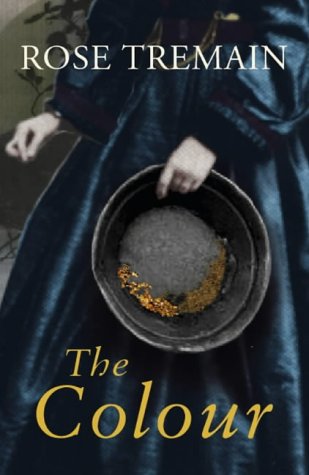
The Colour – Rose Tremain

Book #15

Reviewer: Inspirationalreads

‘Twas inevitable that this book was going to be reviewed early on on a blog that is edited by two Kiwi lasses.  Set in New Zealand in the mid-nineteenth century, Tremain’s The Colour is a historical fiction that displays the beauty and hardship of a newly colonised land.  Beautifully desperate, this is a highly entertaining read which I found hard to put down.

Our story opens with the arrival of newly-weds Joseph and Harriet, along with Joseph’s mother in New Zealand.  Recently colonised, it is a harsh and hard place, brimming with excitement over the recent discovery of gold.  It is viewed very differently by our three new arrivals.  Joseph sees it as a new beginning; he is in New Zealand not because he wants to be but because he had to leave England.  He views New Zealand as a necessary hardship to endure if he is to be successful financially and successful at forgetting what drove him from England.   Harriet is escaping too, but it is the restrictive life of an ageing governess.  Through Harriet we see New Zealand as hopeful and beautiful.  The open landscapes represents the freedom that is now available to Harriet.  Lillian is Joseph’s mother and is there because she has recently been widowed.  This is not an adventure for her, not a new beginning because she is there under duress.  Through her eyes we see the savagery of this new land, a lack of civility, a bleakness in the surroundings where the open space is oppressive, directly in contrast to the views of her new daughter-in-law.

The relationships between the three of them are tenuous; Lillian is resentful of Joseph for bringing her to New Zealand and wary of Harriet and her enthusiasm.  Joseph and Harriet barely know one another and are unsure of what it is they feel for one another.  Disappointment and resentment simmer beneath the surface for them all, hidden beneath a veneer of hope, of trying to make the best of this new opportunity. Harriet seems to grow and adapt well to their new surroundings, Joseph and Lillian the opposite.  When Joseph discovers gold, or “The Colour” of our title, the cracks in the trio become gaping.  Joseph becomes frenzied, believing this to be the answer to all his worries.  He can appease a miserable mother, show his new wife that he too can be resourceful, start making a way towards atoning for what he did back in England.  Believing that this is just the beginning, Joseph leaves his new wife and his mother to venture into the gold fields, revealing much in this decision which would see his new wife and his elderly mother to rough it out on their own.

There is a lot going on in this novel.  Around our new arrivals, there is a number of minor characters who also have their own distinctive voices and developments.  Tremain  neatly ties them all together and manages to never let all the emotions and actions become too overwhelming.  And not to bang on, but there really is a lot happening. Death, birth, destruction, flooding, gold, near drowning, rent boys, Chinese men, miners, a mystical Maori nanny…  Actually, about that last one.  This was the one aspect of the story that didn’t quite work for me.  In amidst all the harsh realism, Tremain introduces the character of Pare, a young Maori woman who is taken on as a nanny by a neighbouring couple.  I appreciate what Tremain was trying to do with Pare; the Maori culture is a very big and important part of New Zealand.  And the magical realism could have proven a nice counter-point to all the harshness.  But it never really felt like it was part of the story, rather that it was running along side, then falling behind and eventually I found myself wanting to skim over those parts.  It felt forced and did not add anything to the story. However, with all the other exciting parts going on, it is overshadowed by what is a big story told with a quiet eloquence.   I needed to know the fate of our three and I was not disappointed with the outcome.  I couldn’t predict what was going to happen at any stage of their journey with the ending being the biggest surprise of all.

I highly recommend this to fans of historical fiction.  I highly recommend this to fans of great writing.  Frankly, I highly recommend it to everyone who loves a fantastic, unpredictable tale; well, those not too squeamish as there are a few squirmy parts in there. A 4 out of 5 star-rating.

Middlesex – Jeffrey Eugenides

Book # 33

Reviewer: Sweetp

I first heard about this book around the time it won a Pulitizer in 2003, and remember thinking I would like to read it. Skip forward some years and I stumbled across a copy at the library with some excitement. Now I should explain that “somehow’ I was under the misguided  assumption that this was some sort of sci-fi or futuristic novel where there is no longer male and female gender. I have absolutely no idea where I got this idea from, since the book is definitely not of that nature; though from reading other reviews of this novel, it appears others have assumed it was about seafaring or shipping (the cover picture) so at least I am not alone in my confusion.

From pretty much the first page I realized that this novel wasn’t going to be anything along the lines I had assumed but soon found myself swept away on the story of Desdemona and Lefty. Having already established there was an incestuous relationship, I was intrigued to know how this would be handled and I quite enjoyed the exploration of the struggles of the couple having escaped death in Greece and their hopes in starting a new life in America. It was about halfway that I began to get a bit twitchy. This is supposed to be a novel about Cal – the grandchild of Desdemona and Lefty – a hermaphrodite who is raised as a girl but later lives his life as a man. Cal is there in the background for the first half/two-thirds of the book as an ominpresent narrator who, I have to say, can be a little intrusive. I can forgive the “risky” narration (where Cal tells of events he wasn’t alive to see ) but found some of the third person/first person shifts a little choppy. FINALLY towards the end of the novel we see the events that lead to the discovery of Cal’s condition – the exploration of the teenage years was really well done – very real in the insecurities and fears of that age about growing up, sexuality, finding oneself. This is about when I began to really enjoy the book and finished it quickly after getting to this point.

In essence this is an epic novel.It spans almost a century and covers events in Greece and Turkey, the struggles of immigrant families in the US, the depression, the history of Detroit, black activism, the Vietnam War etc etc but what I guess my main gripe with the book is that while Desdemona’s life is catalogued pretty much from childhood through to old age, Cal’s life from 17 to 41 is entirely missing ! I want to know why he never sought out the Object again, how he came to terms with his new body, and of course WHY HE CHOSE TO LIVE AS A MAN. I really feel like this was a weak point of this book- up to the point where there is medical intervention Calliope is a girl, exploring her feelings for other girls, but with a body that is slowly altering to that of a male. Then she writes a note to her parents saying she wants to be a boy and runs away! I would have liked to have seen some more emotional connect – some sort of revelation for Cal that would explain everything he had been feeling confused about and the ‘answer’ presenting itself (not an epiphany per se but more than just a decision seemingly out of the blue). I also thought the ending was weak and wish there was more about Cal and Julie and how a couple might overcome the issues and have a functioning relationship.

I really struggled with some of the book and at times it felt a bit like a literary slog, however it has given me plenty to think about and though I wavered between 3 and 4 stars, I think there were moments of brilliance in the writing and some brave choices in subject and writing style so 4 stars it is.