Rickshaw Boy – Lao She

Book # 626a

Reviewer: Kara


RB“The life of a poor man…was like the pit of a date, pointed on both ends and round in the middle. You’re lucky to get through childhood without dying of hunger, and can hardly avoid starving to death when you’re old. Only during your middle years, when you’re strong and unafraid of either hunger or hard work, can you live like a human being.”
This is the essence of Lao She’s Chinese classic novel Rickshaw Boy. Xiangzi is an impoverished rickshaw puller in his twenties who is ambitious enough to make sacrifices and save up to improve his lot in life, only to have his hopes and dreams dashed over and over again. The moment things are going right for Xiangzi, another misadventure befalls him. Despite this endless tragedy, Lao She’s story is comical, if painfully so. The sheer unfairness of the ups and downs and the matter-of-fact tone of the writing force the reader to laugh with a grimace.

The city of Beiping (now known as Beijing) plays a critical role in the book.  As a rickshaw man, Xiangzi knows every nook and cranny. Despite the poverty and lack of opportunity he faces, Xiangzi never has a negative thought about his city. In fact, “Xiangzi had but one friend: this ancient city.” He can’t imagine ever leaving it, even if leaving might improve his situation. Beiping is home for Xiangzi in the fullest sense of the word.

Ultimately, Rickshaw Boy is the story of the hopelessness that results from extreme poverty. Without the slightest chance to ever live comfortably, Lao She makes clear that a rickshaw man has little reason to work any harder than he must to survive the day:

“Sloth is the natural result of unrewarded hard work among the poor, reason enough for them to be prickly.”

He also has little reason to even think about the future. After all, any gains he makes will be taken from him:

“Experience had taught him that tomorrow was but an extension of today, a continuation of the current wrongs and abuses.”

Rickshaw Boy is a quick and fairly easy read, with a very overt message. What I enjoyed most about it reading it was the fact that it took me well outside the usual realm of literary classics from America and Great Britain. Rickshaw Boy is a Chinese story and a successful portal into 1930s China. But it’s also a universal story of the hopelessness that extreme economic disparity breeds; this is a very relevant message in our world today.

Thérèse Raquin – Émile Zola

Book # 864

Reviewer: Ms Oh Waily


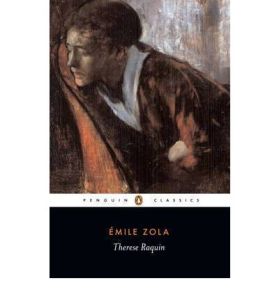
TRThérèse Raquin is the first of Émile Zola’s five entries on the 1001 Books list to be reviewed here and my first contact with his work.

As a novel it was first published in 1867 and it caused quite a scandal, which is unsurprising considering the subject matter.  It is apparently considered to be an example of naturalism, and there is plenty of detail to be had throughout my translation (the Penguin Classics edition).  I would be slightly dubious as to the true reality of the world described by Zola it has to be said, however.

The novel follows Thérèse Degans, a young woman who is brought back to France by her father Captain Degans in order to be raised by her over-bearing aunt, Mme Raquin.  She grows up in the company of her aunt and sickly cousin, Camille.

Thérèse grew up sleeping in the same bed as Camille and wrapped in the warm tenderness of her aunt.  She had an iron constitution and was treated like a sickly child, sharing her cousin’s medicine and kept in the warm atmosphere of the sick boy’s room.  She stayed for hours crouching in front of the fire, lost in thought, staring straight into the flames without blinking.  This convalescent life that was imposed on her drove her back into herself.

Mme Raquin eventually sells her small haberdashery business and retires to a little house by the water, which suits Thérèse’s nature but not Camille’s egotism.  Eventually Mme Raquin decides to marry Thérèse to Camille, feeling that her niece is the perfect person to take care of him as part sick nurse, part guardian angel.  The two children grow up with this idea as a foregone conclusion.
A week after they marry, Camille insists that they will move to Paris, thus upsetting his mother’s nicely planned out life of retirement.  But resilience wins through and Mme Raquin heads to Paris and buys a small and dingy haberdashery shop in the Passage du Pont-Neuf and the family duly move there.  Camille finds himself a place in the offices of the Orléans Railway Company and they begin their life in Paris.

The shop and apartment are where everything changes in Thérèse’s life, and this is foreshadowed in the description of it.

When Thérèse entered the shop where she was to spend her life from then on, she felt as though she were going into the clammy earth of a pit.  She shuddered with fear and a feeling of nausea rose in her throat.  She looked at the damp, dirty passageway, toured the shop, went up to the first floor and examined each room; these bare rooms, without furniture, were terrifyingly lonely and decrepit.

For three years she lives in a dank and dreary world.

Every week the family entertain old friends, and the head clerk from Camille’s office.  Then one week Camille brings with him “a tall, square-shouldered young fellow”, an old school friend from their time in Vernon.  Laurent is pretty much everything that Camille is not and catches Thérèse’s eye straight away.

Laurent amazed her: he was tall, strong and fresh-faced. She looked with a kind of awe at his low forehead with its rough black hair, at his plump cheeks, his red lips and his regular features with their sanguine beauty.

Unsurprisingly Thérèse enters into an adulterous affair with Laurent.  But that is only really the start of the story.

It was quite suspenseful and I found myself on the edge of my seat waiting for the inevitable moment of discovery.  It was a long wait.  It was a long, drawn-out wait.  There was lots of passion, hatred, madness and plenty of very evocative passages.  But it was a long, long, long piece of character description that could have done with a bit of editing down, in my opinion.

I enjoyed the translation that I read.  There were plenty of gems amongst the psychological observations of an adulterous affair gone wrong.  Especially the passages describing Laurent’s visits to the morgue.

One morning, he got a real fright.  For some minutes, he had been looking at a drowned man, short in stature and horribly disfigured.  The flesh of this body was so soft and decayed that the water running over it was taking it away bit by bit.  The stream pouring on the face was making a hole to the left of the nose.  Then, suddenly, the nose collapsed and the lips fell off, revealing white teeth.  The drowned man’s head broke into a laugh.

I hope I haven’t put you off your breakfast, lunch or dinner with that passage.  There are plenty more where that came from if I haven’t.

While I found this fairly short novel to be a bit too drawn out for my liking, it has not put me off reading more of Zola’s work.  The observations are interesting, if stretched out, and in a good translation the descriptiveness of his characters’ lives and environment are very well done.  I will definitely be seeking out the others on the list to see how they fare by comparison.  I think you would not be too disappointed if you did so too.

1984 – George Orwell

Book #547
Reviewer: Angela Noelle, of Striking Keys (review previously published 8 February, 2013)

1984Long before Katniss became a household name, I was passionately poring over dystopian fiction — it’s been around a long time, after all…long enough that a pioneer in the sub-genre painted a future assigned to a date that is almost three decades passed.  Sadly (and I wanted to be pleased by it, I did),  I was disappointed when I finally read this George Orwell “classic.”

1984 is the wartime novel which spawned the overused coinage, “Big Brother,” and so unsurprisingly, much of the text centres on surveillance, mass manipulation and mind games.  The narrative follows the protagonist’s journey — from participating in writing and re-writing propaganda for distribution to his pursuit of writing his own history very differently from what has been prescribed.

While I respect Orwell’s foresight, imagery, and poignant analogies, I never looked forward to reading more of this book.  That was a bad sign.  Respecting an author but not enjoying their work.  I found what was initially mysterious and mildly suspenseful became slow and tiresome.  

It didn’t help that I found so many of the key tenets of the attempted utopia so flawed (I am not convinced that abstinence and submissiveness are so intrinsically connected, quite the opposite, actually), and consequently felt the crux of the character’s development and greater story would serve better as moot for a debate I was negating than a theme in speculative fiction.  

In many other author dystopias, I can see how facets of our current society, if allowed to thrive, could persuade us to initially welcome what would become an oppressive nightmare — I’ve always been drawn to dystopia because I felt it presented the more plausible science fiction; the probable skeletons of future closets.  1984 had the potential to do this (the inception of “Big Brother” is utter brilliance), but it failed to strike the chord I am so fond of in this sub-genre — that moment that I shudder and think one of the following: “I can see how this would seem appealing,” (Matched, Uglies, and The Giver) OR “I can imagine us ending up this way” (Fahrenheit 451, The Children of Men, Left Behind, The House of the Scorpion and Delirium) OR “This is so darn entertaining I will suspend my disbelief,” (The Hunger Games, The Host, Pure and Divergent); 1984 didn’t quite achieve any of these for me.

If you are fond of dypstopia, this book is a worthy exploration — if only to acquaint yourself with a common source for so many other works.

2.5 / 5

Moll Flanders – Daniel Defoe

Book #985
Reviewer: Tall, Short, Tiny & a Pickle

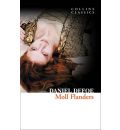
Moll FlandersWhen I began Moll Flanders, I thought I may have already read it for an English class at high school, but I soon realised that my semi-conservative all-girls school would have been hesitant about a novel about prostitution, bigamy and crime. Indeed, if the novel was known by its full title, it may cause more of a stir than it already does:

The Fortunes and Misfortunes of the Famous Moll Flanders, Etc. Who was born in Newgate, and during a life of continu’d Variety for Threescore Years, besides her Childhood, was Twelve Year a Whore, five times a Wife (whereof once to her own brother), Twelve Year a Thief, Eight Year a Transported Felon in Virginia, at last grew Rich, liv’d Honest and died a Penitent. Written from her own Memorandums.

What better plot summary can there be? Moll Flanders was indeed a prostitute and thief, numerous-times married (once, unknowingly, to her brother).

Moll’s mother is a convicted felon; shortly after Moll’s birth, her mother is transported to America, and Moll is raised by a kindly woman. She grows to be a beautiful young woman, and is seduced by a young man who promises they will be married; however, he has no intention of marrying her, and begins to leave money for Moll after each of their encounters. When he abandons her, she marries his younger brother, a sweet young man who truly loves her. He dies after a few years, and she quickly marries again; however, her new husband flees England as a fugitive from the law. Moll marries again and moves to America with her new husband, but discovers that he is actually her half-brother. She is horrified, and returns to England, where she becomes mistress of a man whose wife has gone insane. Their relationship ends after he experiences a religious epiphany of sorts, and she begins a relationship with a banker whose wife is cheating on him. Moll agrees to marry him if he will get a divorce; while awaiting his decision, she travels north and marries a rich gentleman, who turns out to have as little money as Moll. They discover each others “fraud” (having let everyone believe that each was very rich), and separate. Moll returns to marry her divorced lover, but he is poorly and dies soon after.

Moll is thrust back into a life supporting herself and soon becomes an expert thief with a reputation for being talented at her trade. Eventually she is caught and sentenced to death; in prison at Newgate, she is reunited with her “rich” husband, who has also been arrested. They are both transported to America, where they become plantation owners, and return to England in their old age, finally rich and successful.

This was a surprisingly easy read, although initially I struggled with the first-person female character being written by a man. The characters were colourful, believable and natural, while still a little larger-than-life – typical of the era, of course. I enjoyed Defoe’s plain, simple style, and his ability to create such strikingly vivid imagery of dark and dangerous nights without an overuse of literary elements.

There were many moments of darkness in the story, and that helped temper the slightly comic nature of Moll’s many relationships and marriages. Each step in her life was both tragic and exciting; as a reader, I found myself caught up in wondering just where she was taking me next. Interestingly, I found myself sympathising and celebrating with Moll more than chastising her; Defoe has created a strong character who, despite her lack of morals, is self-sufficient, strong and smart.

It frustrated me slightly that the entire novel was written as one chapter (called, rather cleverly, Chapter One); there were no natural pauses or breaks for finishing those late-at-night readings…my issue more than the novel’s! I thoroughly enjoyed Moll Flanders, and give it 4.5 out of 5 stars.

The Hobbit – J.R.R.Tolkien

Book #610

Reviewer: Ms Oh Waily


THSuch a terrible task I have taken on.  To review one of the worlds most loved stories. Before we begin, you may be aware of the incredible amount of love that a great number of people have for the works of J.R.R.Tolkien, or not as the case may be.  If you are a long time admirer and have read his entire canon, then this is not a review you need to be reading.  This is for those thinking of dipping their toes in to the world of Middle Earth.

Published back in 1937 The Hobbit, or There and Back Again has since been revised many times in order to bring it in to line with its sequel, The Lord of the Rings.  It is a tale for children, but has many themes that are worthy of an adult’s attention.

Essentially this is the tale of the hobbit, Bilbo Baggins.  Like all hobbits, he’s a home-loving sort, with a great appreciation of food and peacefulness.  He is highly respectable until one day the wizard, Gandalf, appears at his little round hobbit hole.  As a result of Gandalf’s brief visit Bilbo finds himself inundated with dwarves for afternoon tea the following day.  Thirteen of them, in fact.

Led by Thorin, son of Thrain, son of Thror, King under the Mountain, these thirteen wish to reclaim their treasure from the Lonely Mountain and from under the belly of Smaug the dragon.  Gandalf proposes Bilbo as the fourteenth member of the party and chief burglar.

In this way, the stay-at-home Bilbo is led into an arduous, dangerous and even humorous series of adventures as the fourteen, plus Gandalf, make their way from the safe and secure Shire to the halls of the Lonely Mountain.
Along the way we meet trolls, goblins, wargs, Gollum, the Eagles, Beorn, the Elvenking of Mirkwood, the Master and men of the laketown Esgaroth and finally Bard the Bowman.  Each promising adventure, danger and bravery in equal measure.

It is beautifully realised, and perfectly pitched for children.  It does not shy away from the grimness of life, but also allows for it to be described in such wonderful language as to soften many of the harder aspects.  It really is an excellent read.

Descriptions of the terrible travels in the mountains,

He knew that something unexpected might happen, and he hardly dared to hope that they would pass without fearful adventure over those great tall mountains with lonely peaks and valleys where no king ruled.  They did not.  All was well, until one day they met a thunderstorm – more than a thunderstorm, a thunder-battle.  You know how terrific a really big thunderstorm can be down in the land and in a river-valley; especially at times when two great thunderstorms meet and clash.  More terrible still are thunder and lightning in the mountains at night, when storms come up from East and West and make war.  The lightning splinters on the peaks, and rocks shiver, and great crashes split the air and go rolling and tumbling into every cave and hollow; and the darkness is filled with overwhelming noise and sudden light.

Descriptions of the fighting, in this case with the goblins,

Just at that moment all the lights in the cavern went out, and the great fire went off poof! into a tower of blue glowing smoke, right up to the roof, that scattered piercing white sparks all among the goblins.
The yells and yammering, croaking, jibbering and jabbering; howls, growls and curses; shrieking and skriking, that followed were beyond description.  Several hundred wild cats and wolves being roasted slowly alive together would not have compared with it.

Yes, no backing away from grimness.  But done so poetically.

And as for poetry, the book is scattered with it, often in the form of songs.  The dwarves love to sing and make music, as do the other inhabitants of Middle Earth and Tolkien shares this regularly throughout.  My favourite being the song sung by the dwarves in Bilbo’s hobbit hole on the night they meet to discuss the adventure ahead.  For the sake of brevity I will only quote a small amount.

Far over the misty mountains cold
To dungeons deep and caverns old
We must away ere break of day
To seek the pale enchanted gold.

The dwarves of yore made mighty spells,
While hammers fell like ringing bells
In places deep, where dark things sleep,
In hollow halls beneath the fells.

For a wonderful adaptation of this song*, and for a fair (in my opinion) retelling of The Hobbit so far, you can’t go wrong with the film released last year.  In the meantime, here is a Youtube version of Misty Mountains for you to get a feel for the ambiance of the film and, I think, of the book.

All in all, this is definitely a book to read to your children and for yourself.  If you have not read The Lord of the Rings, then starting here is a nice, light way in to the world and peoples of Middle Earth.

A definite five-star read for me.  I hope you enjoy it too.


* they chose two verses, with minor alterations to one line of the original song.

For more Hobbit and Lord of the Rings discussions and information, you cannot go past The One Ring website.
And a final disclaimer, yes I do proudly live in Middle Earth.  In fact I live in the middle of Middle Earth where these stories have been brought to another generation through the films.  So perhaps I am a little biased.