The Sorrow of Young Werther – Johann Wolfgang von Goethe

Book #959

Reviewer: Arukiyomi  (first published June 2012)

Heard that this is one of the most accessible Goethe’s and so it made sense to start with it. I’ve not read any of the German classic writer before. How was it? It was okay, but my reading of it was somewhat tainted by having already read Armstrong’s Conditions of Love in which he illustrates archetypal romance and infatuation with reference to Werther.

That Armstrong would do this illustrates the legacy of this short novel. It’s depiction of the dramatic and extreme emotions that Werther goes through were a break with tradition at the time of Goethe’s Germany. If Werther’s behaviour seems extreme to us now, they probably seemed even more so to Goethe’s contemporary readers.

That’s not to say that his readers could not relate to the character of Werther in real life. After all, the novel is based, in part, on Goethe’s own romantic experiences. I think what made the book revolutionary was that someone was putting it down in print and being so frank about it. The literary age was dominated by a conservatism in feeling that made Goethe’s work a sensation. Even Napoleon loved praised it and we all know how hard a man he was to please.

The novel has definitely lost some of its original impact. Of that there is no doubt. Readers ignorant of its place in the history of the novel will be tempted to just say it is yet another overblown romance. I certainly was.

But the novel is worth reading more than simply for its place in history. Werther lives in all of us as we get caught up in feelings that make rational sense to us while all around us people think we’re off the wall. And his solution to the dilemma of unrequited love is something I think most of those honest enough to admit would say we ourselves have considered from time to time. If we haven’t, we’re either lying or not really allowing ourselves to experience life to the full.

And that’s where the novel makes an important contribution to our world, questioning as it does so, the notion that we are in control and that by attempting to be so, we are somehow able to actually live. I very much appreciated this challenge.

Family Matters – Rohinton Mistry

Book #23

Reviewer: Inspirationalreads

Set in modern day Mumbai, the family matters at hand are those of Nariman Vakeel, his two step-children, his daughter and her family.  Currently living with his step-children Coomy and Jal, the ageing Nariman falls and breaks his ankle causing an increase in his care and an increase in resentment from Coomy and Jal, with Coomy becoming more and more desperate to be rid of the old man.  Roxana, Coomy and Jal’s half sister and Nariman’s daughter, lives with her husband and two children in a tiny apartment, and it is here that the scheming Coomy successfully off-loads Nariman.

When the two week stay becomes four and then six, family relations become strained.  Roxana’s husband Yezad becomes increasingly suspicious of Coomy and Jal.  Roxana is torn between the love and obligation she feels towards her father and understanding her husband’s frustration, their living arrangements less than ideal before Nariman arrived and the strain of another mouth to feed and body to house proving too much.  For Coomy, it is the desperation at stopping her step-father from returning that takes her schemes to new heights and her brother Jal, an unwilling participant in all of these plans is guilt-ridden about the whole thing.  At the centre of it all is Nariman; with his body betraying him, it is his mind that he lets wander, remembering his past and the road to his current situation.

There is so much that is familiar in this story and so much that is exotically foreign to me.  Mistry’s words creates so vividly the colour, smell and feel of Mumbai.  Beyond the physical surroundings,  the Zoroastrian religion plays a big part, what it means to them to maintain their Parsi heritage and all that this involves.  In creating this setting we also have our colourful side characters adding levity with their humourous idiosyncrasies and each playing their role in contributing to the turn of events.  The world created is full and distinct, where I felt that I was plunged into somewhere that I could clearly imagine despite never having stepped foot in India, never having known about the  Zoroastrian religion, so much of it alien to what I know and have experienced.

For all this difference to me and my physical world, there is much of the actual family issues that I could relate to. Nariman also has Parkinson’s and as he ages and starts to fail physically it isn’t rage and anger he feels but the need for reflection and from this regret.  His awareness of how burdensome he has become is heartbreaking, as is the toll that his presence is taking on Roxanna and her family.  The financial struggle of this family is all too familiar.  As is the idea of dashed dreams, wanting more for your children and being worn down by the daily grind.  These are not themes particular to this part of the world; these are some of the most basic of human concerns. Yet for all this understanding of their situation, it is never allowed to become mundane and too commonplace as there are still touches of melodrama, especially with Coomy and her scheming. She is a great character, faintly ridiculous but ultimately proving to be the antagonist of our story.

This is a very full and rich novel.  Complex in some respects but simple and familiar in others, all things that can describe families everywhere.  Highly recommended to those who love India, enjoy great characterisation or who have family matters of their own.

The Grass is Singing – Dorothy Lessing

Book #538

Reviewer: Kara

The Grass is Singing is Doris Lessing’s first novel, and it is fantastic. It chronicles one woman’s psychological disintegration in the context of poverty and white rule in 1940s and 1950s Southern Rhodesia. This woman is Mary, who grew up poor (hating her father, watching her mother suffer) and as a young adult has a good secretarial job, and a decent single life. Mary marries Dick Turner and becomes suffocated and depressed by her new life on a poverty-stricken farm with a man she doesn’t love. Over the years, both Mary and Dick weaken and become more and more frustrated and ill, leading up to the murder that frames the novel at its beginning and end. This heartbreaking story is embedded in a swirl of social, racial and gender tension and inequality. In 1950s Southern Rhodesia, white rule is in full force, and the pressure of fulfilling her gender role leads Mary into her miserable situation in the first place.

If you’re looking to read something light and fun, this isn’t it. But it will expand your literary horizons and open your eyes. The Grass is Singing is a compact and powerful story that makes clear how destructive racial and gender inequities without becoming a treatise and nothing more. Lessing demonstrates right from the start of her career her amazing talent for intense prose that is thought-provoking and cuts like a knife.

I was really impressed by the way Lessing weaves social criticism of race relations and social expectations (i.e. women marry and bear children) at the time into a deeply psychological narrative. Both Mary and Dick are sympathetic characters, and both are fraught with ugly flaws especially, but not only, when it comes to race relations. Both Mary and Dick completely fall apart over the course of the novel. Dick becomes nervous, frustrated and miserable, which doesn’t help his inability to complete anything he starts. Mary becomes a mere shell of herself – spending hours staring at the wall in a deep depression.

The Grass is Singing is a closely attuned depiction of the destructive power of socially-mandated hatred and expectations. My edition also included a supplement at the end with Doris Lessing’s Nobel Prize for Literature acceptance speech. It is fascinating! She discusses how in Africa people yearn for books and literature and education, even when they’re hungry and exhausted. She also talks about how these places are the future of literature – great writing comes from experiencing hardship and we in the western world have pretty easy lives.

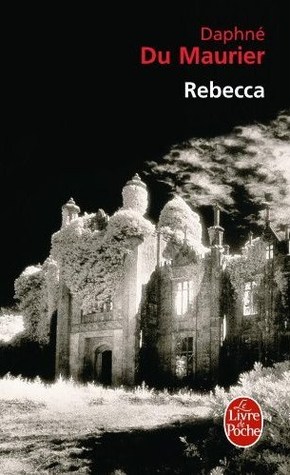
Rebecca – Daphne du Maurier

Book #603

Reviewer: Inspirationalreads

Having always known that one day I would read Rebecca, I have avoided absolutely everything and anything spoilerish to do with it.  It is a novel that has so seeped into pop culture that it has been hard to do so.  Vague knowledge of what I assumed was a Pemberley-type Manderley along with that famous first line and an awareness of some sinister hag named Mrs Danvers was all that broke through my barrier.  Jayne Eyre, Wuthering Heights and Persuasion have all been left on the shelf, suffering for my costume-drama movie and television addiction and having seen someone else’s interpretation rather than read straight from the source.  How thankful am I that this self-imposed ban on all and any interpretations of Rebecca meant I had an unsullied read and got to appreciate it in all its gothic, spooky beauty.

Our narrator is Mrs de Winter, whose first name is never revealed to the reader. Opening with that famous line about her dream of Manderley, this first passage sets the tone straight away for what is to follow.  This dream, of the once majestic homestead of her husband, renders the house overrun by nature, sinister and at the closing of this passage we learn;

We would not talk of Manderley.  I would not tell my dream. For Manderley was ours no longer.  Manderley was no more.

From there we go to the beginning.  Our unnamed heroine recounts how she first meets Maxim de Winter.  She is a companion for a wealthy older woman who treats her as a general dogsbody and is obsessed with seeing and been seen.  When the debonair Mr de Winter walks into the hotel they are staying at, he immediately becomes the focus of both of their attention.  But it is the younger, more innocent of the pair who catches his eye.  When they get the opportunity to spend some time together, it escalates to more and very quickly our young narrator moves from lady’s companion to the wife of wealthy, older, sophisticated Maxim de Winter.  After an idyllic honeymoon where the new Mrs de Winter begins to finally overcome her disbelief at being married to such a man, they return to his home, the beautiful and famous Manderley.  Home to the overwhelming grandeur of the house, a house that is intertwined with the memory of the first Mrs de Winter, Rebecca. Having died in a tragic and horrific boating accident a year earlier, she is in every room; the carefully selected room adornments, physical mementoes in the form of handwritten notes and invitations, the memories of those in the house .  If this is not enough to intimidate our young bride, the formidable housekeeper, Mrs Danvers, is on hand to further drive home the memory of the more beautiful, captivating Rebecca.  That Mrs Danvers loved Rebecca is obvious as is her dismay at the new marriage and thus her disapproval of the new mistress of Manderley.  But there are secrets here at Manderley, secrets that begin to unravel despite the intentions of those trying to cover them up.  And at the centre of it all Rebecca, casting a shadow on everything even from the grave.

I can be quite the sceptic when reading older books.  I have had to learn to appreciate them for their language and style and also take into account how novel an idea is for it’s time, how it was the precursor to a lot of those that have followed.  I do not necessarily need it to be a page turner, for the story to keep me hooked with a lot of twists and turns and shocking developments.  The more I read about reading and writing, the more I read about how these things are dismissed as cheap and an easy way to sell something to the masses, the undiscerning.  But there is something in the art of storytelling, the tradition of sitting around telling a tale and entertaining those around you that will never get old for me and will always make me appreciate at the very least the effort that goes into it.  What this off-track ramble means in this context is that I thoroughly enjoyed the tale that is Rebecca.  There are a few well-trod literary paths here; young, docile, insecure young woman with the more urbane older man; stern older woman influencing and manipulating; an ever-present ex-wife.  But the tale itself is so interesting, it really was a page turner.   What surprised me was how this was not a supernatural tale, but a psychological one.  How insecurity and naiveté can be twisted, how love and admiration can become blinding, how everything is not what it seems.

That is not to dismiss the writing here.  Through our narrator, du Maurier creates an atmosphere that is impressive and intimidating all at once. On her approach to Manderley:

The length of it began to nag at my nerves: it must be this turn, I thought, or round that further bend: but as I leant forward in my seat I was for ever disappointed, there was no house, no field, no brand and friendly garden, nothing but the silence and deep woods.  The lodge gates were a memory, and the high-road something belonging to another time, another world.

Achieving with words what a movie would use low-lights and a tense soundtrack, the reader immediately feels the building tension.  The new Mrs de Winter is in awe of her surroundings and true to character, is easily cowed by Mrs Danvers.  That she is frustratingly quick to think less of herself and to give in to Mrs Danvers machinations is in keeping with that of a young woman, who previously was  thought of nothing more than a servant herself.  The 21st century  woman in me could not help but want to go in and shake her by the shoulders, but for her to be any more or to react any differently would be completely out of character and would not let events play out in the anxiety-ridden manner it did.

I am grateful that I was so severe in my pre-read ban of all things Rebecca related.  It did not stop the story from being familiar but it did allow me to be absolutely entertained and to understand what all the hoopla is about.  This is a great, old-fashioned tale elevated by the setting of tone and atmosphere by its author.  The characters can be harshly judged as one-dimensional, but they are each a dimension of the story as a whole.  A great addition to the gothic-romance genre and to this list.

Gabriel’s Gift – Hanif Kureishi

Book # 38

Reviewer: Inspirationalreads

Rex and Christine lived their hey-days in 1970’s London, heavily involved in the rock and roll scene.  Rex, a guitarist, played in a successful band and Christine was a costume designer, creating outfits for popular bands and rock stars.  For various reasons, Rex stopped playing guitar but his band continued on to great success and fame, particularly the lead singer, Lester Jones.  When they begin their family, Christine too becomes less involved.  Twin boys Archie and Gabriel are born to them, but tragically Archie dies at 2 years old, leaving his brother Gabriel growing up with parents who remain caught up in their past, the free-love, authority-loathing tenets of their glory days.  Our story with them begins with Gabriel at 15 years old; sensitive, creative and who still “talks” with Archie.  Christine has finally tired of Rex who remains jobless and unmotivated, forcing him from the family home.  In a bid to move on in her life she gets a job and appears to be moving towards responsibility and adulthood, something Rex still seems loathe to do.

Rex and Christine seem so familiar to me and yet I can’t say I know anyone truly like them.  At least not parents that I know.  But in my wider circle of friends and acquaintances there are those who have held on to the ideals and dreams of their youth, so that their approaching middle age and all the responsibilities that come with it seem to be something to avoid, mock and at some level, abhor.  With Rex, his dream was quashed not through a lack of talent but through circumstances not entirely of his own making, makes him cling to a dream of not what-could-have-been but what-should-have-been.  Christine’s attempt at moving towards responsibility appears to be more about getting rid of Rex and a certain freedom that she attains through this.  The voice of maturity and clarity comes from Gabriel.  He felt a lot younger than the 15 years he was supposed to be but still more mature than his parents.

On paper, the story seems to be quite run of the mill; estranged parents helped towards personal growth by their special child.  However, there is a freshness and unexpectedness that Kureishi has brought to this tale that I thoroughly enjoyed.  The character of Gabriel is a study in contrasts; childlike and innocent but aware enough to steer his parents and to be able to handle some other, more odious characters.  It is truly a modern story in feel; situations arise that are unpredictable, not quite organic in feel but not working to a formula either.  Not an unpredictability due to twists but an unpredictability that arises from impetuous and impulsive humans doing impetuous and impulsive things.  It is this that I found refreshing and combined with its short length made it a quick, easily enjoyed read.

It would be hard to categorise this novel.  It is a family drama but it is also funny in parts.  A comment on parenthood not necessarily equating with maturity, particularly if the focus is too much on the past, not on the present or the future.  There is even the smallest touch of magical realism which is the only part I felt really didn’t fit, which in a novel where there are lots of different experiences and aspects to make up the full human experience, just left me feeling a little confused.

Enjoyable therefore for the unique reading experience for me resulting in a clear 3/5 star rating.