Marya – Joyce Carol Oates

Book #226

Reviewer: Inspirationalreads

Much as the title advises, this novel is about Marya Knauer and her life.  Told in her own voice, the novel opens with Marya as a child, her father recently dead and her mother abandoning and her two brothers.  They move in with her Aunt and Uncle and cousins, one of which abuses her.  She is poor and from the wrong side of town but all this gives her is an incentive to be better than everyone else, to be smarter, more ambitious and to get out of her small home town.

We move through Marya’s life in leaps to significant times each marked by a significant relationship; her dying priest while in high school, a frenemy at college, her professor/mentor/lover.  And each chapter shows us how she is moving away from her humble beginnings and maturing into an acknowledged intellectual and published author.

This is my second Oates, my first being a short story compilation of hers.  I enjoyed the short stories, they were a bit off-kilter and bizarre.  But Oates had a way of breaking off a story at crucial times and leaving the rest to the readers imagination. OK for the first few stories but became increasingly annoying when every story ended the same way.  I have come to realise that this seems to be her MO, as Marya’s story ends the same way.  However, in this circumstance it seemed to fit perfectly.  This novel reads more like Marya’s diary; it is not just an account of her every day actions but an insight to her inner-most thoughts, her emotions, her motives.  There is also a progression of the writing style as it moves from child-Marya to adult-Marya.  The first chapter jumps from topic to topic, seeming to be a bit more stream-of-consciousness, less structured then the later chapters.  And so, in respect to the ending, it stops at the end of a certain chapter of her life, but not at the end of her life.  The end of one diary but we don’t have access to the next one.

Because the writing is so deeply personal, all through the book I kept thinking that this must be Oates’s autobiography.  Although there are a few similarities (they are both writers and teachers) I was disappointed that her real life was not more like Marya’s as it felt like I had gotten to know her so well.  That so much of the thoughts and feelings laid bare had to come from her own personal experience.  For instance, the following passage;

Lately her ‘serious’ writing frightened her  not just the content itself – though the content was often wild, disturbing, unanticipated – but the emotional and psychological strain it involved.

In my opinion, this is why this book is on the list and why Oates is such a widely-heralded author.  Of her skill as a writer there is no doubt; that clear progression from child to adult Marya, the emotion she can evoke with just one sentence.  Oh, and the fact that she has been teaching creative writing at Princeton University since the late 1970’s (Interesting sidenote:  She taught Jonathan Safran Foer and was an advisor for his early development of Everything is Illuminated, number 26 on this very list).

I am a confirmed fan of Ms. Oates and with three more books on the list and over 50 novels to her name, I have a lot more to enjoy.  I can appreciate that this book may not be to everyone’s tastes, but based on my personal enjoyment and admiration of the author herself, I do recommend this and give it a 3.5/5.
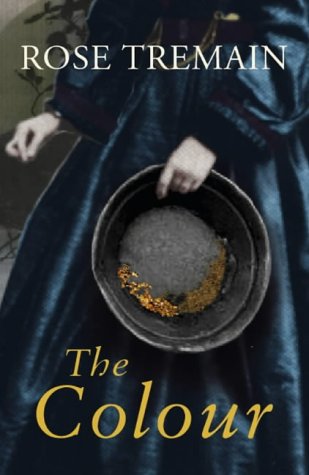
The Colour – Rose Tremain

Book #15

Reviewer: Inspirationalreads

‘Twas inevitable that this book was going to be reviewed early on on a blog that is edited by two Kiwi lasses.  Set in New Zealand in the mid-nineteenth century, Tremain’s The Colour is a historical fiction that displays the beauty and hardship of a newly colonised land.  Beautifully desperate, this is a highly entertaining read which I found hard to put down.

Our story opens with the arrival of newly-weds Joseph and Harriet, along with Joseph’s mother in New Zealand.  Recently colonised, it is a harsh and hard place, brimming with excitement over the recent discovery of gold.  It is viewed very differently by our three new arrivals.  Joseph sees it as a new beginning; he is in New Zealand not because he wants to be but because he had to leave England.  He views New Zealand as a necessary hardship to endure if he is to be successful financially and successful at forgetting what drove him from England.   Harriet is escaping too, but it is the restrictive life of an ageing governess.  Through Harriet we see New Zealand as hopeful and beautiful.  The open landscapes represents the freedom that is now available to Harriet.  Lillian is Joseph’s mother and is there because she has recently been widowed.  This is not an adventure for her, not a new beginning because she is there under duress.  Through her eyes we see the savagery of this new land, a lack of civility, a bleakness in the surroundings where the open space is oppressive, directly in contrast to the views of her new daughter-in-law.

The relationships between the three of them are tenuous; Lillian is resentful of Joseph for bringing her to New Zealand and wary of Harriet and her enthusiasm.  Joseph and Harriet barely know one another and are unsure of what it is they feel for one another.  Disappointment and resentment simmer beneath the surface for them all, hidden beneath a veneer of hope, of trying to make the best of this new opportunity. Harriet seems to grow and adapt well to their new surroundings, Joseph and Lillian the opposite.  When Joseph discovers gold, or “The Colour” of our title, the cracks in the trio become gaping.  Joseph becomes frenzied, believing this to be the answer to all his worries.  He can appease a miserable mother, show his new wife that he too can be resourceful, start making a way towards atoning for what he did back in England.  Believing that this is just the beginning, Joseph leaves his new wife and his mother to venture into the gold fields, revealing much in this decision which would see his new wife and his elderly mother to rough it out on their own.

There is a lot going on in this novel.  Around our new arrivals, there is a number of minor characters who also have their own distinctive voices and developments.  Tremain  neatly ties them all together and manages to never let all the emotions and actions become too overwhelming.  And not to bang on, but there really is a lot happening. Death, birth, destruction, flooding, gold, near drowning, rent boys, Chinese men, miners, a mystical Maori nanny…  Actually, about that last one.  This was the one aspect of the story that didn’t quite work for me.  In amidst all the harsh realism, Tremain introduces the character of Pare, a young Maori woman who is taken on as a nanny by a neighbouring couple.  I appreciate what Tremain was trying to do with Pare; the Maori culture is a very big and important part of New Zealand.  And the magical realism could have proven a nice counter-point to all the harshness.  But it never really felt like it was part of the story, rather that it was running along side, then falling behind and eventually I found myself wanting to skim over those parts.  It felt forced and did not add anything to the story. However, with all the other exciting parts going on, it is overshadowed by what is a big story told with a quiet eloquence.   I needed to know the fate of our three and I was not disappointed with the outcome.  I couldn’t predict what was going to happen at any stage of their journey with the ending being the biggest surprise of all.

I highly recommend this to fans of historical fiction.  I highly recommend this to fans of great writing.  Frankly, I highly recommend it to everyone who loves a fantastic, unpredictable tale; well, those not too squeamish as there are a few squirmy parts in there. A 4 out of 5 star-rating.

The Prime of Miss Jean Brodie – Muriel Spark

Book #450

Reviewer: Inspirationalreads

It is the 1930s and Miss Jean Brodie is a teacher at the Marcia Blaine School in Edinburgh, a traditional all girls school and all that being a traditional all-girls school in the 1930s entails. Miss Brodie however is far from the conventional teacher one would expect of Marcia Blaine. When a group of 10 year old girls are assigned to Miss Brodie, she sets out to give them an education of her own fashioning, that is not necessarily based on any school curiculum but that of her life and her interests. For the following eight years at Marcia Blaine, “Brodie’s Set” continue to be tutored and influenced by Brodie in her efforts to make them the crème de la crème of their generation.

Do not be fooled by this familiar sounding premise, this is no Dead Poets Society.

In Miss Brodie, Muriel Sparks has created a unique character. Brodie’s cause is a noble one, the moulding of a child’s mind to think against the current norms, to see beyond what society dictates for you, particularly that of a female at that time. But there is a self-obsessed and manipulative woman beating at the heart of this story. And moulding is the key word, because it is in her image that Brodie wants to make these girls. There seems to be some division amongst readers of whether Brodie is a heroine or something more sinister and I definitely fall in the latter category. Yes, she is to be admired for her free-thinking and encouragement of the girls to embrace more. But at times she is unnecessarily cruel, she holds one girl at fault more than the others, and she places importance on the physical beauty of another. Her idea of education is what she deems important; art, classical studies, drama while ignoring maths and science. And as the girls become older, she begins to use them as pawns in her life, particularly her love life.

Sparks also has an interesting approach to the timeline. We are introduced to the girls as they are at 10 years old but also as they are as adults, looking back on their time with Miss Brodie, at the same time. In Spark’s hand, this never becomes clunky but played into clever foreshadowing as we learn about a betrayal of Brodie by one of the girls. So, from early on we know of what has happened, but it is the why and the how that needs to be discovered.

So interesting characters in Miss Brodie and a number of the key girls in the Set. Interesting plot; I love a bit of underhanded manipulation. Interesting, non-linear approach to the temporal aspect of the story. So why didn’t I like it?

I grabbed this as another quick read (I had The Walking Dead compendium waiting for me, judge me not) and I found it hard going. Spark has a sparseness of prose in some aspects but a repetitiveness in others, that in combination left me cold. Miss Brodie was in her prime. The title told me, Miss Brodie told me, most of her Set also told me. And what I can only guess (being that of your humble, everyday plebian reader) was an attempt at ensuring each of the Set was easily pictured and remembered, their characteristics were repeated ad nauseum; Rose is sexy, Sandy has small eyes, Eunice is good at gymnastics. I got it and then got over it very quickly.

To be fair, these are only minor gripes, particularly when they are held up against some pretty sterling reasons why this book is on the list, and if you look at the era that it was set in and the era it was written in. Writing reviews for this blog has given me greater appreciation for the books I read, making me look at things other than just the entertainment I derived from them. But sometimes you just don’t like something no matter the amount of introspection you apply or sound logic there is as to why you should.

So, a purely personal rating of 2 out of 5. And I am well aware of this being somehow a failing on my part rather than that of Muriel Spark. She has another three books on the list and dozens more that are not, so I am willing to give it another go with Ms. Spark. We will have to see if our relationship extends beyond that.

The Invisible Man – H. G. Wells

Book #791

Reviewer: inspirationalreads

H. G. Wells is synonymous with Science Fiction. As a fan of sci-fi I have to shamefully admit that this is my first Wells for he is often referred to as one of the Fathers of this genre.  It is clearly evident why he is heralded as such.

Wells opens his story not with an introduction to the Invisible Man and how he came to be in this incredible state, but with a stranger seeking lodging in a small English village in Iping.  He is curt and highly secretive and when strange occurances, including an odd burglary coincide with his arrival, local tongues are sent wagging and suspicions are aroused.   It is not long before the Invisible Man is revealed and he soon escapes leaving chaos and many victims behind him.

When he finds an old school acquaintance in the neighboring village, it is to this man Kemp that he pours his story out to.  He is Griffin, who left their mutual medical school to study in the field of optics.  Here is where Wells’s strength as a science fiction writer is clear. Griffin’s incredible achievement is explained in an almost credible way; through the manipulation of light refraction.

But it isn’t only a tale of scientific achievement.  For although he is successful, Griffin is unable to enjoy any of the things he has so longed for.  He can get riches and he can achieve fame, but being invisible meant it was impossible to enjoy them.  The realisation of “…what a helpless absurdity an invisible man was” creates a manic desperation in Griffin that soon gives way to outright madness.  Because now what he wants, is to inflict his “Reign of Terror” on the country.

This was an interesting lay out for this story.  To have the Invisible Man enter as a shadowy, underhand character and to be introduced to him at the same time as the villagers of Iping appears to be an attempt at a tense vibe.  And in part he is successful.  We don’t know how this invisible man came to be but we read of how rude and demanding he is and then how his dubious activities increase until he is forced to escape.  However, and this is not a small however, this section of the book became bogged down by unnecessary description and even more unnecessary meanderings by the characters.  themselves.  Interactions with newspaper reading extras does not for interesting reading make.

When our Invisible Man escapes to Dr Kemp’s house and we learn of how he came about is where the story truly came alive for me.  Invisibility has been dealt with a lot through other books, movies, tv shows etc.  The common theme is that invisibility has a demoralising effect; if your actions aren’t visible to those who can judge you or hold you in check are you able to continue to do what is right or ethical?  This isn’t a question posed by Wells.  Griffin is soon revealed as having dubious morals before he achieved invisibility.  When his miraculous achievement doesn’t bring what he hoped for and he has to start scrambling for survival, Griffin looses what little ethics he has.  Stealing, destroying property, frightening children, all is revealed to Dr Kemp and the reader.

This book is satisfying on a number of levels.  It is entertaining, gives you a few things to mull over, tense in parts and even has moments of humour; “…the anglo-saxon genius for paliamentary government asserted itself.  There was a great deal of talk and no decisive action“. There is definitely enough to satisfy the science-fiction fans and is a great introduction to Mr. Wells.  A solid 3 out of 5.

Silk – Alessandro Baricco

Book # 101

Reviewer: Inspirationalreads

Translated from Italian and told over a scant 91 pages, Silk is the tale of 19th century French silk merchant Hervé Joncour. When a blight threatens the European and African silk worms, Joncour is sent further afield to source new worms to sustain not only his livelihood but that of his home town. Leaving behind a loving wife, it is to Japan that he travels; a country mysterious through it’s policy of self-isolation but renowned for their quality of silk. On this first trip he successfully negotiates and obtains silk cocoons from a Japanese baron amidst much secrecy; Joncour is led blindfolded to the village. It is on this first trip that he first encounters the Baron’s concubine and a mutual fascination develops.

Joncour returns to Japan less than a handful of times. On all these occasions, time spent with this woman is no less fleeting but the emotions at play are also no less intense or passionate but remain unfulfilled. After each trip, he returns to a wife not completely unaware of the change Japan has wrought on her husband. When civil war in Japan destroys the village and any chance at a more permanent and ongoing relationship with the concubine, Joncour’s tale becomes that of longing “…to die of nostalgia for something you will never live.”

Silk is physically brief – if 91 pages is not short enough, most of the pages were only half filled. I mention this only because I am still amazed at how much of a complete story is told, how much emotion is conveyed, how much there is to take a away from this novella.

There are historical facts here; a little about the silk worm industry; Japan and their self-imposed isolation; Joncour’s journey is mapped quite thoroughly and is able to traced. But alongside the historical aspects, there is a complete and satisfying story.  I’m not against books that leave things a bit open ended, allowing the reader to draw conclusions or imagine how they would like the characters to move on after the written part of their journey ends.  In some circumstances I actually prefer it and with novellas I expect it.  However, Baricco tells the full story of Joncour, his trips to Japan, his enthrallment with the concubine and the effects on his life in France particularly his marriage.   The characters are not able to be fully fleshed out but this does not affect the readers understanding of the motivations or actions of the characters involved.  The instant attraction leading to the ongoing obsession, the reasons behind the Joncour’s enduring marriage in the face of this, what both Hélene and Hervé do as individuals to see it out.

Which leads me to the thing that I enjoyed most about Silk – the writing.  Lyrical in feel, Baricco  renders this brief tale through the lens of strong imagery and such beautiful prose that it actually felt like I was consuming it;  if I could only use one word to describe it, the word would be delicious.  The only way to do Baricco any justice would be to provide a quote that struck me;

“He had once held between his fingers a veil woven out of Japanese silk thread. It was like grasping in your fingers… nothing.” pg. 14

When I first rated this, I gave it a 4/5, Goodreads not allowing me to give it that extra half a star I felt it deserved at the time.  After giving it the necessary musings in writing this review, I’m re-thinking my rating.  For all the reasons listed above, I thoroughly enjoyed this quick read.  But the amount of times that it has popped back into my thoughts since reading it means it really has resonated with me.  It is beautiful, sensual, desperate and heart-breakingly sad.    And so I’m bumping it up to 5/5.  Another reader commented that the length of this story allows you to read it one sitting and this is how I am recommending it.  Read it once in one sitting to appreciate the story. Read it again, slowly,  to appreciate the writing.