The Tale of the Bamboo Cutter – Anonymous

TToTBCThis is a very short folktale from 10th century Japan.  So short that it is rather hard to describe without telling you the whole tale.

At a whole 5 and a smidgen pages in length, in the only edition I could get my hands on, it had to share the book with stories from Cicero, Lucian and Voltaire amongst others.

Many of the motifs will be very familiar from folk tales and creation myths, far and wide.  It is also touted as one of the first, if not the first, science fiction story.

It starts with a poor bamboo cutter going about his daily work.  He and his wife have no children.  One evening, lo and behold, he sees a fabulous light shining nearby.  On investigation he finds a baby girl small enough to fit on the palm of his hand.  Naturally he takes her home and raises her as his daughter.  They name her Lady Kaguya.

Is this sounding familiar?  Lots of modern stories feature that particular motif, not looking at anyone in a funny suit and cape at all.

As she is not of this world we find that Lady Kaguya grows quickly (a few months) from a baby to a beautiful young woman.  Cue the romantic and quest section of the folktale.  Young men and their desire to see her beautiful face wears thin and in the end the bamboo cutter is left trying to dissuade only five noblemen.  Each is given an impossible quest.

Eventually the Emperor hears of her and requests that she come to the palace.  Unfortunately she will, apparently, die if she leaves the bamboo cutter’s home so the Emperor (bless him) comes to her.  Naturally, as folk tales go, he falls in love with her but she cannot leave her home and so he resigns himself to leaving.

After some time Lady Kaguya becomes pensive and sad whenever she looks up at the moon.  Eventually she explains that she is not from Earth, but from the Moon and is soon to have other Moon People come to take her home.

Mystified, her father asked her why she had come to Earth.  Lady Kaguya explained that there had been a great war on her world, and that she had been sent to Earth for her own safety.  Now that the war was over, she would have to go home.

Sound vaguely familiar, anyone?

And eventually this does come to pass.  Lady Kaguya’s people come down in a bright cloud, descend from a strange craft and with a little hey presto magic and an Elixir of Immortality she is whipped off back to her people.

I would not be exaggerating to say that it took longer to write this review than it did to read the tale.

To our modern ears the familiarity of extra-terrestrial beings as fictional characters makes it seem a small and unimpressive story, but in the context of 10th century Japan it must have been really quite radical to introduce other-worldliness into a tale.  If you find it in a book of folk tales, it is a nice way to see the beginnings of many themes that make their way through to modern science fiction.

Happy reading everyone.

Anna Karenina – Leo Tolstoy

Book #840
Reviewer: Tall, Short & Tiny

Anna KareninaAnna Karenina is the tragic tale of  Anna Karenina, a married aristocrat and socialite, who betrays her husband by having an affair with a count. The count, Vronsky, pressures Anna into making a decision about leaving her husband; if she does, he says he will marry her, but Anna is reluctant to leave. She feels the pressures of Russian society – she is, after all, the wife of a government official – and is rather insecure and vulnerable. After fleeing to Italy with Vronsky, they eventually return to Russia and Anna finds herself ostracised, which does nothing for her insecurities. This begins to take a toll on her relationship with Vronsky; she is convinced he is unfaithful, despite his assurances that he is not, and she becomes quite possessive. The story ends rather tragically, but it seems a fitting end to such a tale.

There are many themes to Anna Karenina: jealousy, faith, (in)fidelity, social change, the value of the country life​, death. These were important aspects of Russian society in the 1800s. It is suspected that there are elements of Tolstoy’s own life reflected in his writing of this novel; a quick delve into his history is enough to see why these themes occur again and again in his writing.

​It is a moving story, passionately and beautifully written. Some may find Tolstoy’s style cumbersome, but I enjoy it. I like the personalities he creates, their relationships and interactions. They tend towards the overly dramatic, but that was the style of the time, and such a tragic and passionate tale requires a style that reflects this. I found the character of Anna intriguing – such a beautiful woman with everything in her favour, yet she is incredibly insecure and lacking in confidence. Vronsky irritated and appealed to me, in equal measure.

There are some lengthy passages that left me feeling glassy-eyed; Tolstoy has a propensity for describing things in great detail (as with the military maneouvres described in War and Peace), but skim-reading them didn’t detract from the novel at all.

This is a classic that, in my opinion, is well worth reading; I give it 4/5 stars.

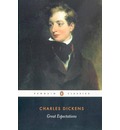
Great Expectations – Charles Dickens

Book #876
Reviewer: Lizzie C.

Great ExpectationsThis novel is focused around an orphan by the name of Pip. He lives with his sister and her husband Joe in Kent near the marshes. Joe is a fatherly figure that Pip feels affection, from whereas his sister is harsh and seems to just want to continually put a guilt trip onto Pip for her being so kind as to bring him up.

Pip’s life is not easy; what with his sister’s lack of affection and little money they live a fairly simple life with little pleasure. Joe is a blacksmith and ranked somewhat in the lower classes in society of which there is seemingly no escape from.

One night which I have to mention, Pip has a chance encounter with escaped convict Magwitch. This turns out to be of greater significance than previously thought, but this does not become apparent until later in the novel.

When Pip is introduced to Miss Havisham (a rich lady living in London) via his uncle, he begins to feel ashamed of his life, his clothes and social standing. Through Miss Havisham, he meets Estella who, whilst beautiful, is cold hearted and fairly dismissive of Pip whilst at the same time almost willing him to love her so that she can turn him down. She has been influenced heavily by Miss Havisham whose life more or less stopped some years ago. She is dressed in her wedding dress for a wedding that never happened. She stopped her clocks that day and has lived in the darkness of her house ever since. She is bitter and revengeful, a character you want to know more about in my opinion.

Pip falls in love with Estella due to her beauty but she forever holds him at arm’s length. Miss Havisham encourages Pip’s feelings; she knows Estella’s ways being her teacher and she seems to get pleasure out of the feelings not being returned Pip’s way. Estella is never far away from Pip’s thoughts throughout the novel, even when his life takes a drastic turn.

He is soon advised, as the novel progresses, that a benefactor wishes Pip to become a gentleman and to have a privileged life. Pip is to leave his current life and to move to London in order to advance. He allows this to occur but is not advised of who the benefactor is until further into the novel. He turns his back on his previous life and seems to wish to distance himself from it, and from Joe who cannot change his own social standing.

Pip encounters various characters in this time in London and makes some decisions that impact on the direction of his life. As the novel progresses you feel that Pip has let go of some of his values and has forgotten how good Joe was to him as a child – but only temporarily as events occur that push them together for a short time once more.

I also believe it could be seen as a portrayal of classes being high and low and how the two interacted in that era, especially through Pip’s change of status and how he realigns his relationship with his past life and Joe.

I would recommend this novel; it is not a complicated read but there are underlying story lines and characters of interest. I personally believe it could be read by a teenager but I still got enjoyment out of it as an adult. Perhaps I had the benefit of more insight into relationships and their workings, and perhaps a deeper understanding of class, but on a purely reading-for-pleasure level, it works well and is worth reading.

Celebrating our latest milestone

We have celebrated two milestones on this long and interesting reviewing journey and we would like to thank all of our reviewers for getting us there.

Now that we have made our way over the 150 review bump we would like to celebrate this in our usual style.

Here’s the exciting bit of this post.

We are having our latest competition at 1001 Books.  Here is what you have to do, and what you might be lucky enough to win…

Choose an unreviewed* book from the 1001 Books to Read Before You Die lists and write us a review for publication here on the 1001 Books blog.

What you will win?  The 1001 book of your choice, of course !

Now on to the not-so-fine print.
– Multiple entries per person = multiple entries in the draw.
– The book reward will be the paperback version.
– The competition opens today and will close on the 30th September, so get your reviews in early.
– We will use a small person, a suitably sized vessel and handwritten notes to choose the winner.
– The book reward you choose will need to be available from The Book Depository, as that is our preferred supplier.
– Our 1001 Book List page currently contains all but the latest edition of the books, entries from our current list are welcome.
– We will list the full entries in the comments section here as they are received.
– Your review does not need to have been published by the closing date, but does need to be with us and confirmed as ready to publish in an available slot.

And there ends the list of conditions.  We want to wish you all the very best of luck, and we are looking forward to receiving all of your lovely reviews.  In the meantime, happy reading everybody !

* Please note:  It is first in, first served for the unreviewed books.  As it is a competition, we will only mark off the book on the list once we have a review in our inbox.  So if you absolutely love a book, get your fingers flying…