The Princess of Clèves – Madame de Lafayette

Book #990

Reviewer: Ms Oh Waily
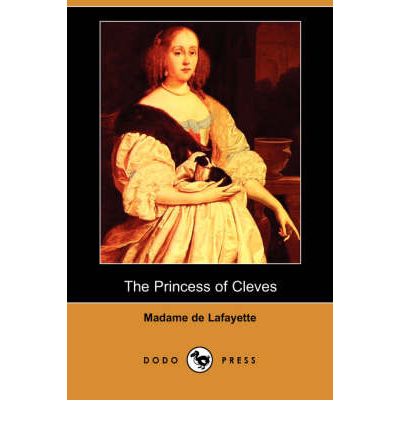
Welcome to the convoluted and twisted world of the French court in the time of Henri II, perhaps a man as well known for his wife, Catherine de Medici or his mistress, Diane de Poitiers.    It will help you to understand who is whom in the royal families of France, Spain and Scotland; as well as some grip on the varying positions at the court of France.

When I began reading this small work, I thought it was going to be a tooth-pulling experience.  A great part of the starting section is dedicated to identifying who is allied with whom, related to whom and wanting to do down whom.  You must also get used to the convention (in my translation, at least) of Madame XYZ or rather M.XYZ rather than the title of the person being described.  This is not quite as awkward as it sounds, but does take a little thought at first.

Nearly all the characters mentioned, with the exception of the eponymous Princesse de Cleves, is a real historical figure.  And seriously, it seems like life at court was one great big soap opera.  Modern day television writers are sure to be well inspired by reading this.

So, the characters here are the Prince and Princess de Cleves, the Duc de Nemours, the King, the Queen, the Queen-Dauphine (later Mary, Queen of Scots – all of 16 at the time of the novel’s setting), the Duchess of Valentinois (Diane de Poitiers), the Vidame de Chartres and sundry other characters who move the story along.

It is principally a love story, with a moral twist.   The Princess (as Mademoiselle de Chartres) marries the Prince at about the age of sixteen when her mother brings her to court to find a good husband (position and wealth).  Unfortunately for the young woman, after she is married she gets to meet the charming, witty, handsome and accomplished Duc de Nemours.  They fall in love and the story follows their rather crooked path.

It is, apparently, France’s first historical novel and is considered to be one of the earliest psychological novels.  We are certainly treated to a lot of what goes through the Princess’ mind regarding her conflicting feelings of love for the Duc and respect for her husband.  The internal struggle of goodness and morality over love and passion pretty much sum up the majority of the novel.

Despite its age, and perhaps the age of my translation (by Nancy Mitford), it was a remarkably easy read.  I did find the moral question plaguing the Princess to be somewhat overdone, after all there was description after description of the affairs going on around the love triangle.  If anything it feels as though she was aiming to be the exception to the rule.  And it is only after reading the novel and reminding yourself of the realities of the time does it occur to you that Madame de Lafayette is ostensibly describing the life of a sixteen year old.  That realisation is quite an eye-opener, rather than the young woman’s struggle to maintain her set of morals in the face of high passion.

I can’t, in good conscience, suggest that you should head out and get a copy.  However, it is not overly difficult and would probably be of interest if you understand the historical periods it is set in (and written in) or generally enjoy historical novels.

Opening Lines

Today’s Opening Line:

To Mrs Saville, England

St.Petersburgh, Dec. 11th 17-

You will rejoice to hear that no disaster has accompanied the commencement of an enterprize which you have regarded with such evil forebodings.

Disappearance – David Dabydeen

Book #131

Reviewer: Beth, of Beth’s List Love

Work, work, work, that’s the doom of your people isn’t it? Isn’t that why the English shipped millions of you over to the Caribbean? So how come you don’t hate them?”

“I’ve not really considered it that way… I just don’t…” I said, thinking of Professor Fenwick’s influence on me, his conscientious tuition and dedication to duty. How could I hate such a man, whatever culture he belonged to? A single act of kindness on his part had the power to erase a whole history of crime. “It’s the future that matters,” I continued, struggling to evolve a cogent answer, “I’m me, not a mask or movement of history. I’m not black, I’m an engineer.”

“That’s silly,” she continued immediately, “you can’t block yourself off from the past and sit daydreaming at the edge of the desert. That’s why I had to go back with Jack, that’s why I wanted him to find me even though I resented it. I walked away from the desert and returned to the English compound and began to fight. I really longed to be alone, colorless and invisible, but I couldn’t escape being English, I couldn’t escape being what I was. So I fought against myself. No more slushy reminiscences in the English Club about oak trees and cream teas back home. Of course the other women grew suspicious of me when I gave up bridge sessions and meetings to plan safari weekends. Jack made excuses for me, saying the heat had gone to my head, that I had become grumpy and solitary, but I didn’t care. What mattered was secretly teaching the African children about our dinosaur culture, however deeply we tried to bury it and make neat furrows and tranquil gardens in the earth above. Do you know that the best histories of England are being written by black scholars nowadays? Do you? Probably some of those very children I taught who have now grown up.” She snatched the glass from my hand and poured out more wine. I noticed the trace of froth at the corner of her mouth. She’d worked herself up into a passion. I began to appreciate the reason for Jack’s absence. He had not abandoned her, he had run away! She was too formidable for him, so he fled. All his fantasies of blood and sex were nothing compared to the knowledge of horror she possessed and was determined to proclaim. “You don’t know much about our history or yours,” she said, resuming her attack. “Have you ever thought that the engineering you’re versed in is all derived from us? That we’ve made you so whiter than white that whatever fear and hatred you should feel for us is covered over completely?”

I had no trouble finding a passage to quote in Disappearance. The hard part was choosing among the many that I post-it marked along the way as I was reading. David Dabydeen tells the tale of a Guyanese engineer of African descent visiting a rural coastal English town to work on a project to shore up collapsing cliffs against the forces of a powerful sea. He rooms at the home of an aging British woman whose husband is not around and whose whereabouts aren’t entirely clear. She has spent a portion of her married life in Africa, and the engineer is profoundly unsettled by the artifacts on prominent display in her home which call to mind his ethnic heritage and by her expectations about who he is, based on his nationality and ethnicity. The book is about identity, colonialism and its effects on colonized and colonizer, about rationality vs. superstition and belief, about the relationship of the personal and the political, and about the ability of humankind to triumph over the power of the natural world. The engineer comes to like his host very much, but struggles to make sense of her. He is also struggling to understand himself and the philosophies that guide him personally and professionally. The story weaves in and out of the present, with Mrs. Rutherford and others in the village telling him of her past, and with the engineer recalling his own childhood and early career in Guyana.

I liked this book, I really liked it, but wasn’t blown away or enchanted. I think I was in my head rather than my heart for the most part, and the things it did with my head were not interesting or experimental or revealing enough to make up for my not being more emotionally involved. I definitely recommend the book, but there are others I’d tell you to get to first if you had to choose. Still, I’m glad I had time for this one, and I’m particularly glad for a quick and interesting read from the 1001 list from a country as small and under-represented in world literature as Guyana. Because I hate to have to leave out some interesting quotes, I’ll close with another passage, this one from the narrator’s memories of Guyana.

“Repentance?” I asked, startled by her mention of the word which haunted my boyhood. “How do you mean?” But she said nothing else, retreating into herself, into a space as cramped and suffocating as the village she had come from, a handful of homes in the pocket of bush on the banks of a river too dangerous to cross except by boats with engines. Its strong hidden currents frequently capsized the small canoes they paddled, sucking in a body and feeding it downstream to piranha. There seemed to be no way into the village and no way out except by hazarding one’s life. Those born into the place were doomed to stay there, inheriting the wretched plots of clearing from their parents, existing on a diet of yams, plantains, wild fowl, and fish. She had managed to get out, only to be trapped in a canteen in the service of male students who wanted to force her into the tighter space of their lust. And yet the word “repentance” came from her mouth, so naturally, Alfred’s big word which had signified to me the whole broadness of the sky in which God lived. “So big,” he had said, pointing to the sky before returning to the patch of cloth on his machine.

My rating: 4 of 5 stars.

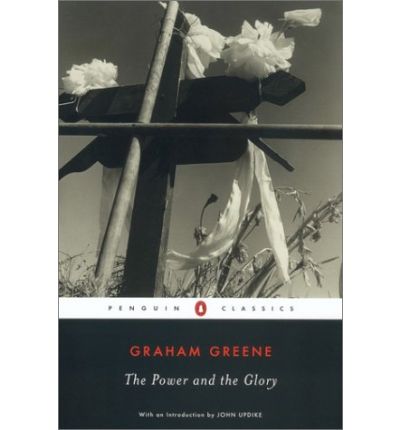
The Power and the Glory – Graham Greene

Book #589

Reviewer: Kara

In the 1930s Mexico of Graham Greene’s classic novel, God and religion have been outlawed and any priest who hasn’t escaped or relinquished his faith has been hunted down and killed. The last surviving priest who still practices religious rites is not only running for his life, but self-destructing under the weight of both his outlaw situation and his past.

I was fascinated by this unnamed main character, a ‘whiskey priest’ who drinks endlessly and is struggling to come to terms with the mortal sin he has committed and feels he can never be absolved of. Even as he runs and hides and does all he can to avoid capture and be able to continue serving his faith, he is buried deep in his own emotional upheaval and the heavy judgment his faith imposes.

The whiskey priest has many fascinating musings during his journey, but the most profound to me is this:

“That was another mystery: it sometimes seemed to him that venial sins — impatience, an unimportant lie, pride, a neglected opportunity — cut you off from grace more completely than the worst sins of all…in his innocence, he had felt no love for anyone; now in his corruption he had learnt.”

Before he committed his mortal sin, the whiskey priest had no empathy for anyone. His faith was a pulpit to stand on. Now, “in his corruption,” he sees what the grace of God and Catholic piety really mean, and his faith becomes a rock to cling to.

Greene’s novel was widely criticized by members of the Catholic clergy when it was first published for being ‘anti-Catholic’ and offensive. For me, though, and many others, including Pope Paul VI who met Greene in 1965, the novel celebrates piety and faith in their pure and empathetic forms.

Greene’s novel is full of gorgeous description of the decaying Mexican towns and the cold and mountainous countryside. Greene wrote his novel in short and very powerful scenes that pack a psychological punch. They are uncomfortable and beautiful at once. When the priest helplessly watches the policemen drink down his wine, I was livid with anger on his behalf. When he meets an elderly man in prison who takes comfort in being near him, I was moved by the connection they quickly formed.

The end of the whiskey priest’s story is both triumphant and tragic and verifies the power and the glory of the whisky priest’s Catholic faith. This is a short novel and a quick read, but it is profoundly affecting. I highly recommend this novel to anyone who has struggled to understand their own identity and sense of purpose: namely, everyone. Greene’s explorations of humanity and emotion are not often matched in their impact.