Of Human Bondage – W. Somerset Maugham

Book #741

Reviewer: Arukiyomi (First published May 2012)


The only Maugham I’ve tackled before was Cakes & Ale. That was okay, but not the best book I’d ever read. So, it was with some uncertainty that I approached this which is far longer. A couple of short chapters in though and I was hooked. The story of Philip’s life from the tender age of 9 until his early 30s had many parallels with my own but in terms of the events that befall him. But, the strength of this book lies not in the sensationalism created by unexpected happenings. Rather it’s in the slow realisation that Maugham is weaving a very deft parable of the human condition relevant to us all.

If I’d read this when I was in my early 20s, instead of my early 40s, it would have been a very different book. I would have found a lot in Philip’s childhood which echoed my own (separation from parents, the Dickensian boarding school, the loneliness of incessant bullying, the discovery of the passion of reading… and the escape it provides). But I doubt very much that I’d have been wise enough to learn the lessons Philip then goes on to learn. I doubt I would have profited at his expense even if someone had pointed out what those lessons were.

Somehow though, as I write this, I feel Maugham standing over me saying, “That’s precisely my point, old boy.” We have to learn the lessons of youth the hard way for two reasons, one our own fault and one the fault of others. Firstly, we are often bound to think that we know what is best for us, at least in the west. And from the lofty vantage point we have already raised ourselves to, we can see nothing to impede our progress further towards our aims. We are ignorant that we don’t really know what we are aiming for (false-summits abound in life) and we forget to look at ourselves, exactly the place where most of our adult problems originate. Secondly, there are very few people further on than us who bother to turn back and speak to us of the problems they encountered. For some, it’s too painful. For others, it’s best forgotten. And even fewer of those who can share are able to phrase it in a way that youth actually understands.

So, for the vast majority of us, Philip’s struggle against the eponymous human bondage is a mirror of our own. For this reason, I urge you to read this book. And I’d go so far as to urge you to re-read it every decade. I plan to do so in 2022, if I get that far. Philip yearns for freedom, for love, for acceptance, for purpose… and he blunders around thrown from one life encounter to another in something resembling cosmic pinball. You both rejoice and weep with him. You sit with him on the rollercoaster and, the journey being very intimate, your cheek catches the occasional fleck of vomit.

Very few writers can create characters as rich as Maugham has done with Philip. I was very much impressed by his life and what he learns from it. The way the character matures through the book is so subtle you need to watch out for it. The recurring relationships he has with women are a great device to see this maturity develop, particularly with that of Mildred, a character I shan’t forget in a hurry. I wonder if anyone has ever dramatised this for more than the big screen. A film-length version wouldn’t do it justice. It would make a fantastic drama series.

Anyway, in closing, I must note something that I don’t think has ever happened to me before. I was astonished some way towards the end to find Philip reading a book which turns out to be The Adventures of Peregrine Pickle by Tobias Smollett. Guess what my audio book was while I was reading Of Human Bondage. Yep, Peregrine Pickle. Amazing. Nice to know that Philip and I share some literary pathways!

A Prayer for Owen Meany – John Irving

Book #196

Reviewer: Inspirationalreads

I feel I must give some kind of disclaimer before I plow into this review; I absolutely adored this book.  I find myself a little in love with Owen Meany and he has shot straight up into one of my favourite characters of all time.  Not quite surpassing Miss Eliza Bennett but definitely on an equal footing with her. But even beyond my Owen infatuation, the story itself has stayed with me and I keep thinking about it, thinking about Owen and thinking about Irving himself.  So, dear readers, prepare yourself for much gushing, lots of praise and an emotional, totally biased review.

I’m going to just gank the synopsis straight from Goodreads, as there is a lot going on here and I don’t think I could give a summary as succinct or spoiler-free:

John Irving’s A Prayer for Owen Meany is the inspiring modern classic that introduced two of the author’s most unforgettable characters, boys bonded forever in childhood: the stunted Owen Meany, whose life is touched by God, and the orphaned Johnny Wheelwright, whose life is touched by Owen. From the accident that links them to the mystery that follows them–and the martyrdom that parts them–the events of their lives form a tapestry of fate and faith in a novel that is Irving at his irresistible best.

This is story of a friendship between Johnny Wheelwright and Owen Meany.  Our narrator is Johnny; his present time is the late 1980s living in Canada after seemingly turning his back on his native USA.  He flicks back and forth between his present and through his childhood to early adulthood where he is an observer and commentator to what is truly the story of Owen Meany.  Stunted in stature but enormous in character, Owen is Johnny’s childhood friend who becomes more than this title usually means; he is his best friend, his constant companion, co-conspirator, brother.

Predominantly, the question being raised in A Prayer for Owen Meany is one of faith.  Not only spiritual faith, but a faith in yourself, faith in what you know to be true that keeps you strong even in the face of disbelief and the overwhelming indicators to the contrary.  Early on we learn that Owen believes himself to be an instrument of God and that he knows when and how he is going to die.  And this is the blueprint for the rest of his life.  But how can this be?  Certainly those around him that know him best, Johnny and his stepfather Dan refuse to believe it.  But the disbelieving child-Johnny becomes the faithful, God-fearing adult-John and it is this set path between the two as laid out by Owen that is an amazing journey of faith by Owen and discovery and growth by John. With this confidence in knowing what fate has in store for him, Owen also has confidence in himself.  He is intelligent, he is charismatic, with people gravitating towards him.  In Owen, Irving has created a character whose personality outshines whatever shortcomings he has physically, including his “wrecked voice”.

There are thoughts here too on war and American politics.  If I had one complaint, its that this felt like Irving’s grandstand.  There are very personal opinions here that are attributed to the adult John but felt like our authors.  And they are quite specific to the time and climate of USA – in the 1960s it is their involvement in the Vietnamese war and in the 1980s it is their dubious political system.

Beyond the excellent character development and fully developed themes, the story itself is full, complex and entertaining.  There is a degree of suspended disbelief that the reader needs to take on, so be aware if this is something you might not be able to do.

I’ve recently learned of the term book hangover and the ending of this book affected me like no other this year.  True, this is not my first 5 star of the year, but it does make me want to go back and downgrade the others.  As I stated in my opening, I love this book.  I want to recommend it, but only if you are going to love it too.  Not merely like it and definitely not hate it.  I have become quite irrational about it.  It goes without saying, but 5/5 rating from me.

Quote of the Week

“Of course it is happening inside your head, Harry, but why on earth should that mean that it is not real?”
― J.K. RowlingHarry Potter and the Deathly Hallows


How perfect an observation for the lover of books.

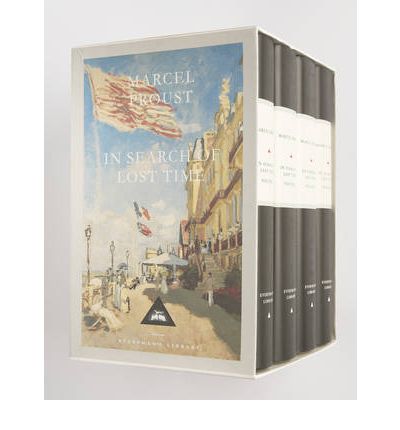
In Search of Lost Time – Marcel Proust

Book #685 

Reviewer: Kara

Please note: this is also known as Remembrance of Things Past and is in the list as such.


I’ve always said that I’d rather a book be short on plot and long on thought than fast-paced and full of clever plot devices but lacking realistic characters and something thought-provoking to sink my teeth into. The fact that I truly loved reading this 3000-page novel, from beginning to end, puts my money where my mouth is. After all, the first volume (Swann’s Way) opens with 30-ish pages describing that weird feeling of waking up and not knowing for a split second where, who, or when you are.

In Search of Lost Time is impossible to summarize, but here I go: The novel is about Marcel (the narrator, not the author) discovering, after a long life of distractions and failures, that he can reach the goal of writing a novel that he gave up long ago. The novel has two “I’s” – both young Marcel and old Marcel (writing the novel we’re reading) wax and wane throughout. This provides the reader with two different looks at characters and events that combine to give us a more rounded perspective. As Roger Shattuck, literary critic and Proust scholar says, this is just like the way that our two eyes with their slightly different locations on our face work together to give what we see depth.

There are dozens of central characters and plot points and hundreds of pages of philosophical musings and digressions, but the last 100 pages are a glorious culmination. Proust comes at his major themes from an endless variety of closely-associated angles, teasing out every nuance. Ultimately, I feel comfortable distilling In Search of Lost Time down to the following themes, in order of increasing importance, that will continue to haunt my thoughts for a long time:

Art and Literature – Proust is very clear that both literature and art are tools for human growth and reflection. This does not, however, mean that reading a good book or watching an acclaimed play will automatically change the reader/viewer and help her grow. Rather, literature and art are means to an end, starting points. As Marcel (our narrator) describes the readers of his novel: “For they were not, as I saw it, my readers, so much as readers of their own selves, my book being merely one those magnifying glasses… I would be providing them with the means of reading within themselves.” Merely having and experiencing the tool isn’t enough, the reader must then do his or her own internal work to gain from the experience.

Identity – We are, each of us, an endless number of people. As we change over time, we become new people. Additionally, we are a different person in the eyes of each person who knows us. As Marcel describes himself: “I was not one single man, but the march-past of a composite army manned, depending on the time of day, by passionate, indifferent or jealous men.”

Memory and Time – I’m discussing these two themes together because they are so interwoven. Proust very thoroughly show how our memories aren’t static, but are shaped and filtered by how our identity changes and what happens to us over time. Life weaves new connections and ideas around old memories, changing them. Proust also argues that the more we consciously focus on creating or thinking about a memory, the less real and visual it will be because we wring all the strength out of it. Involuntary memories – what readers of In Search of Lost Time would call “Proustian moments” – are the most potent. The most famous Proustian moment in the novel is when the narrator takes a bit of a madeleine cake he has dipped in tea and very suddenly recalls his childhood in an extremely sensual way.  This moments allows the narrator to occupy two time periods at once, the one he is in and the one he recalls – he “experience[s] in a flash a little bit of time in its pure state.” The novel closes with a rapid succession of five such moments, which ultimately lead the narrator to write his novel.

It took me six months to work my way through In Search of Lost Time and I would not be exaggerating to say that the experienced has changed me. My perspective has deepened, my self-visualization has been refined. And, to end on a lighter note, I’ve found another reason to read literature to add to my growing mental list:

“To read genuine literature is to accumulate within oneself a fund of possible experiences against which to achieve an occasionally intensified sense of what one is doing, to recognize that one is alive in a particular way.”

Through literature, the young look forward to life, and the old look back at it.

The Mysteries of Udolpho – Ann Radcliffe

Book #948

Reviewer: Ange P


The Mysteries of Udolpho
is described as a Gothic novel.  It is filled with villains, mysteries and castles.  It has lashings and lashings of melodrama.

It is important to remember that it was written over 200 years ago and that the audience had very different expectations of entertainment than we have today.  But, only twenty years after The Mysteries of Udolpho was written, so was Pride and Prejudice and the difference between the quality of the two could not be more distinct.

Ann Radcliffe seemed to be interested in three things:

  1. a theme of being satisfied with your place in life
  2. a plot that involved as many twist and turns as possible
  3. alpine scenery

Pages and pages of the 600 are dedicated to setting out the prerequisites to a happy life.  And this comes back to avoiding the temptations provided by big cities, being benevolent and living quietly without ambition.  The first 50 odd pages of the book sets out how Emily and her family have achieved this.  I found it repetitive and sickening.  The impression was quickly formed that Emily was the author’s ideal of womanhood.  I did not need it repeated ad nauseam.

The plot.  A lot happens in the plot.  A lot.  I’m not going to try to set out the plot in any detail.  At a very high level.  Emily meets the hero Valencourt; both her parents die; she comes under the guardianship of her Italian uncle who owns the castle Udolpho.  They travel to Venice and the Italian uncle tries to marry her off to a Count.  Then, suddenly, she is whisked off to Udolpho and confronted with a range of badly behaved men and a range of mysteries and trials that would shake the resolution of a lesser woman.  She manages her way through her tribulations with tears and fainting fits. Her troubles are increased when it becomes apparent that Valencourt is not worthy of her admiration and love.  Despite a lot happening, the only interesting part was in Italy, which is the central third of the book. The parts in France take several pages to say nothing at all.

Finally, the scenery.  I tried to remind myself while reading the scenery sections that the book was written during a time without TV’s, cameras or magazines, let along travel that was affordable to the masses.  Therefore reading descriptions of scenery was the only way that many people could experience it.  I estimate that 20% of the book is devoted to scenic descriptions.  It is overwhelming.

I knew before I started this book that Emily was a watering pot and not a modern woman.  Her main weapons are tears and her integrity.  Consistent with the theme of the book, the integrity enabled her to come out on top.   I couldn’t even detect a hint of intelligence.  She has an annoying habit of being vague rather than specific that repeatedly creates issues.  She also makes ridiculous assumptions.

Many of these bad habits are obviously plot devices.  This was probably my biggest criticism, that I found the writing clumsy.  I did not consider it to be a well written, well structured novel. Emily would find out things that weren’t revealed to the reader; or the solution to a mystery was completely unrelated to the main plot, just a simple solution to a mystery that didn’t actually contribute to the story in any way at all.  Disappointing.

Here’s the thing.  I don’t think that Mysteries of Udolpho deserves its place on the list. And I would only recommend it to people interested in literature of that period such as Jane Austen aficionados.