Open Library

I thought this would be of interest to you all, as we obviously all share a love of books.

It crossed my virtual desk this morning and I was immediately intrigued.  It is called the Open Library.
They aim to generate a web page per book.  Rather a lofty aim considering the volume of books published past, present and into the future.

There seems to be an enormous number of ebooks available to read.  This may help with some of the more difficult to find books on the 1001 Books Lists.  Then there are the lists – you appear to be able to create anything you like here.  If you are a developer then you can dip your toes in too.

Why not take a look and see what you think?  I would love to hear from you in the comments section if you were able to use it towards your reading goals, especially those associated with the 1001 Books To Read Before You Die lists.

Happy reading !


Quote of the Week

“After all, reading is arguably a far more creative and imaginative process than writing; when the reader creates emotion in their head, or the colors of the sky during the setting sun, or the smell of a warm summer’s breeze on their face, they should reserve as much praise for themselves as they do for the writer – perhaps more.”
― Jasper FfordeThe Well of Lost Plots

April Update


9   books reviewed in April.
45  books reviewed in total.
956 books to go.


There have been a few changes here on blog.  We added a button for easy access to the online book retailer Book Depository.  We editors adore this site for its accessibility, fantastic range and prices not to mention free world wide delivery.  You can read more about our update here.  We also made access to our reviewers a bit easier.  This blog is nothing without the wonderful contributions from our many reviewers.  So better access was necessary, particularly moving forward with more books and more reviewers joining us.  For more information please see this post.

We had another wide range of books read this month.  One of our new reviewers Ange P opened the month up with the sea-faring novel Treasure Island.  She must have been in the mood for adventure because she also reviewed the American classic The Adventures of Huckleberry Finn.  Co-editor Ms Oh Waily was also in a Stars and Stripes frame of mind.  She reviewed the Depression-era tale Of Mice and Men and the coming-of-age tale of four sisters, Little Women.

Science fiction had a good showing also but with two very different approaches.  If you like your sci-fi served with a humorous flavour, check out t’s review of The Long Dark Tea-Time of the Soul.  Or if  a cautionary tale where genius turns to madness sounds your thing, then the review of The Invisible Man by inspirationalreads might be more to your liking.

Troubling female relationships were the theme for two books.  Beth’s review of the disturbing The Piano Teacher told us about a destructive mother-daughter relationship.   The Prime of Miss Jean Brodie, read by inspirationalreads is about a teacher who tries to use her influence over her female students to further her own unsavoury ambitions.

April opened with a new reviewer and it closed with another new reviewer.  Kara read and reviewed the feminist classic The Bell Jar, where she compared reading this book at different times in her life and how her reception of the book changed.


As parents, the Editing crew believe a love of reading is one of the best traits we can pass on to our children.  Happily, our offspring are firm bookworms.  1001 books read is easily achieved in one’s lifetime, but being able to tick books off this list as early as possible not only makes the feat of reading the 1001 on this list a bit easier, but also sets the foundation of being able to identify what makes a truly great book.

Below is a list of young-people friendly selections.  Whether you choose to read them aloud with your young folk or suggest them to older children to read on their own, they still get to tick one off that list!

Do you have any others that you would recommend for our younger readers from the list?  Or do you think we have included any that are unsuitable?  As always, your input is very valuable.

Happy reading everyone!

The Bell Jar – Sylvia Plath

Book # 433

Reviewer: Kara
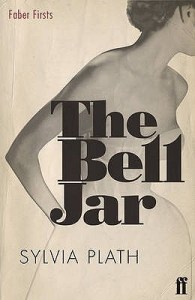
I am climbing to my freedom, freedom from fear, freedom from marrying the wrong person, like Buddy Willard, just because of sex, freedom from the Florence Crittenden Homes where all the poor girls go who should have been fitted out like me, because what they did, they would do anyway…

Esther Greenwood is a Smith College student in the early 1950s. She is an excellent student and loves to write, earning her a summer internship at a fashion magazine. However, Esther is slowly becoming disillusioned with the role she, as a woman, is asked to play in the world. She begins to question the behavior of the women around her, her feelings for her boyfriend, and the weight of her virginity hanging over her head. Esther suffers a mental breakdown that leads readers through the dizzying maze of mental health care in the 50s.

The Bell Jar landed on my to-read list back about 8 years ago, when I was a fresh-faced and idealistic college student. I briefly met Gloria Steinem and heard her speak and in follow-up discussions with other students, Sylvia Plath came up and has been in the back of my mind ever since. Now that I finally gotten around to reading The Bell Jar, I wish I had read it 8 years ago. My reaction at the time would have been strong and emotional – I was in the thick of a milder, turn-of-the-21st-century version of what Plath’s narrator, Esther Greenwood, faces. Now, at 28, I feel personally beyond what Esther faces, but I was still struck by the truth of how coming-of-age as a woman is portrayed.

As a look into the lives of young women of the 50s, this novel is fascinating. Esther’s confusion about sex and love and her path in life are heartbreaking and very nearly destroy her. There is a moment where she sees her possible futures as ripe and beautiful figs on a tree. All she needs to do is choose one, but she can’t. She doesn’t want to choose between love and career, and as she considers her choice the figs begin to blacken and rot.

This is a beautiful microcosm of early feminism, and the way that freedom could trap women just as much as patriarchy because once a decision was made there would be no turning back. A career woman wouldn’t marry or have children and a mother would have a lifelong role as housewife.

Esther’s hangup with sex also says a lot about coming of age as a woman in the 50s. She wants to lose her virginity so it will stop hanging over her head, but she has no access to birth control and is plagued by the not yet outdated notion that by losing her purity she will be cast aside by men, her community, and the world at large.

Esther’s confusion, fear and indecision plummet her into despair and the second half of the novel is a close look at the various mental health options in place in the 50s, from impersonal male psychiatrists and electric shock therapy, to low-quality state hospitals and high-quality private hospitals. It is at this point in the novel that the meaning of the “the bell jar” becomes clear. Esther, and by extension other young women of the time, feels confined under glass, breathing her own “sour air” and unable to free herself from her prison, though the ending does offer hope.

The bell jar hung, suspended, a few feet above my head. I was open to the circulating air.

The Adventures of Huckleberry Finn – Mark Twain

Book # 825

Reviewer: Ange P.

Notice
PERSONS attempting to find a motive in this narrative will be prosecuted; persons attempting to find a moral in it will be banished; persons attempting to find a plot in it will be shot.

So begins The Adventures of Huckleberry Finn and if I obey the author my review will be limited in scope.  However Mark Twain tended to ignore rules he didn’t like and so I will follow his example rather than his dictates.

The character Huckleberry Finn was first introduced in Tom Sawyer, which I haven’t read for several years.  I remember him as a disreputable boy who liked to live wild with little respect for others.  In the beginning of this book that is the boy we meet, however by the end the character is much more developed and hence much more interesting without losing any of his charm.

The plot is that Huck escapes life with his father by pretending to be dead and sets off down the Mississippi in the company of an escaped slave, Jim.  He encounters many adventures on his travels including a feud between two families that has killed more people than anyone cares to remember; a band of murderous robbers on an abandoned steamboat; a floating house; a hopeful lynch mob; and a ‘duke’ and a ‘king’ who are two of the biggest charlatans you could ever be unlucky enough to meet.  The last two sell Jim, which upsets Huck mightily since he considers Jim to be ‘his slave’ or at least that of Jim’s escaped owner, a widow in Tom and Huck’s hometown.

And rights to own humans is what a fair chunk of this book is about.  Huck is under no illusions by the end that Jim is a friend, but he can’t let go of the fact that Jim is also someone’s property. Huck has been taught that his loyalty lies with the owner, but deep down inside he is uncomfortable.  Twain clearly outlines the moral choice presented to a good person in a society where the slave owner’s rights are paramount.  In the end Huck, abetted by Tom Sawyer. decides to help Jim escape from his imprisonment.

Twain also cleverly balances his (non) message with his sense of fun, which runs throughout the entire book.  In places I was laughing out loud – and that’s unusual.  Tom’s ‘help’ is more of a hindrance because of his insistence that all aspects of the escape must be consistent with tradition.  In particular, readers should watch out for the exchange between Tom, Jim and Huck about suitable animals to provide companionship to Jim during his interment.

…Tom thought of something, and says:

‘You got any spiders in here, Jim?’

‘No, sah, thanks to goodness I hain’t, Mars Tom.’

‘All right, we’ll get you some.’

‘But bless you, honey, I doan’t WANT none.  I’s afeard un um.  I jis’ ‘s soon have rattlesnakes aroun’.’

Tom thought for a minute or two, and says:

‘Its a good idea, And I reckon its been done.  It MUST have been done; it stands to reason.  Yes it’s a prime good idea.  Where could you keep it?’

‘Keep what. Mars Tom?’

‘Why, a rattlesnake.’

I have two minor criticisms of The Adventures of Huckleberry Finn.  The first is that some of the characters, while entertaining, are just too ridiculous and especially too credulous.  The second is that it took at long time for the book to develop a sense of direction.  This might be why Twain warned against looking for a plot.  There were no clear signposts of what was to come and I found this slightly disconcerting.

Overall, an excellent read with interesting thoughts to ponder and a great sense enjoyment.