Quote of the Week

Anzac Poppy

In honour of Anzac Day.  Lest We Forget.

“Heroes who shed their blood and lost their lives! You are now lying in the soil of a friendly country. Therefore rest in peace. There is no difference between the Johnnies and Mehmets to us where they lie side by side here in this country of ours. You, the mothers, who sent their sons from far away countries wipe away your tears; your sons are now lying in our bosom and are in peace. After having lost their lives on this land they have become our sons as well.”
Mustafa Kemal Atatürk

Little Women – Louisa May Alcott

Book # 863

Reviewer: Ms Oh Waily (first published 2011)


Little Women is set in New England, during the time of the American Civil War.  The little women in question are the March sisters – Meg, Jo, Beth and Amy.
Their family was once comfortably well off but those fortunes are now reversed.  Mr March is off serving as a Chaplain in the Union Army, while at home the girls are guided by their mother whom they call Marmee.

It is considered to be loosely based on Alcott’s own childhood and adolescence.

This book has sat unread on my shelves for a great number of years and joined the Bedside Pile this past week.  My trepidation seems to have stemmed from this particular edition’s size (321 pages) and vaguely dull impressions gained from seeing the odd snippets of television movies.  We each have our own literary leanings, both positive and negative, and in my case I am not attracted to 19th Century American literature.  Sadly I have no idea why this is the case.

Back to Little Women.

The girls are effectively split into two groups.  The elder sisters, Meg and Jo, who are sixteen and fifteen at the start of the book go out to work in order to help support themselves and take a bit of the financial burden off the family.  The younger sisters, Beth and Amy either do lessons at home or attend school.

To add some male influence to the group, there is Theodore Laurence or “Laurie” and his grandfather, the family’s wealthy neighbours.  Laurie becomes as a brother to the girls and Mr Laurence a general protector with a special soft spot for Beth.
In addition, there is Mr March’s aunt, for whom Jo works as a companion and is known to the family as Aunt March.

Each of the girls has a distinct personality.  Amy is the artist of the family but she is also selfish.  Beth is the peacemaker and musician but extremely shy.  Jo is the writer who is quick to temper, and is occasionally too blunt.  Meg is the prettiest who wishes for fine things and to be rich.
The book is written in part as a story about the passage to adulthood and the alterations in character that each of the girls must go through as they grow up. It is full of references to The Pilgrim’s Progress and the journey Christian takes.  Pilgrimage had been a game the girls had played at while younger.  But now that their father is away for an uncertain amount of time they collectively decide that they should each set about taming the negative aspect of their personalities.  In this way they wish to show their father that they had not wasted the time that he was away at war and in doing so gain his good regard.

It is quite a charming story.  It is full of good morals and does a fine job of not being too preachy with it.  As it turned out, the 321 pages gave no real trouble and in the end was read over three nights.  There is a sequel, Good Wives, specifically about the next stage in the March girl’s lives.  Following on from that are the books Little Men and Jo’s Boys, all about Jo’s family.  Having enjoyed Alcott’s writing style here I may be tempted, once the Bedside Pile is under control, to find those at the library.

Just a final note, Little Women appears at number 19 on the BBC Top 200 list and it well deserves its place there.

Easier review access starts today

Today’s post is brought to you by the ever evolving design of the 1001 Books Before You Die Blog.

As we are coming towards the end of another month of great contributions from our volunteer review crew, it is time to give easier ways to access our reviewers and their reviews.  So, from today you will be able to select an individual reviewer from the new drop down menu at the top of each page.  Just hover over “The Reviewers” page and up comes the list of our lovely contributors.  Select the reviewer of your choice and you will be presented with their past contributions to choose from.

And if that is not quick enough for you, you can take a trip to the footer of each page and select the reviewer of your choice from our Top 10 contributors (by number of reviews).

There is also a plan to smarten up the Reviewers page, but that will be in the next set of upgrades.  So that is something to look forward to in the next little while.

Oh, and before I go, may I drop a small hint that the end of month review this month is going to be well worth making a visit to the blog.  In the meantime, happy reading everyone.

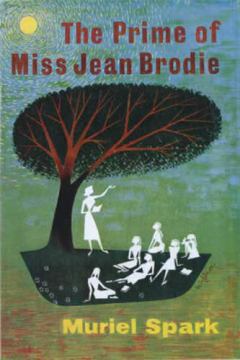
The Prime of Miss Jean Brodie – Muriel Spark

Book #450

Reviewer: Inspirationalreads

It is the 1930s and Miss Jean Brodie is a teacher at the Marcia Blaine School in Edinburgh, a traditional all girls school and all that being a traditional all-girls school in the 1930s entails. Miss Brodie however is far from the conventional teacher one would expect of Marcia Blaine. When a group of 10 year old girls are assigned to Miss Brodie, she sets out to give them an education of her own fashioning, that is not necessarily based on any school curiculum but that of her life and her interests. For the following eight years at Marcia Blaine, “Brodie’s Set” continue to be tutored and influenced by Brodie in her efforts to make them the crème de la crème of their generation.

Do not be fooled by this familiar sounding premise, this is no Dead Poets Society.

In Miss Brodie, Muriel Sparks has created a unique character. Brodie’s cause is a noble one, the moulding of a child’s mind to think against the current norms, to see beyond what society dictates for you, particularly that of a female at that time. But there is a self-obsessed and manipulative woman beating at the heart of this story. And moulding is the key word, because it is in her image that Brodie wants to make these girls. There seems to be some division amongst readers of whether Brodie is a heroine or something more sinister and I definitely fall in the latter category. Yes, she is to be admired for her free-thinking and encouragement of the girls to embrace more. But at times she is unnecessarily cruel, she holds one girl at fault more than the others, and she places importance on the physical beauty of another. Her idea of education is what she deems important; art, classical studies, drama while ignoring maths and science. And as the girls become older, she begins to use them as pawns in her life, particularly her love life.

Sparks also has an interesting approach to the timeline. We are introduced to the girls as they are at 10 years old but also as they are as adults, looking back on their time with Miss Brodie, at the same time. In Spark’s hand, this never becomes clunky but played into clever foreshadowing as we learn about a betrayal of Brodie by one of the girls. So, from early on we know of what has happened, but it is the why and the how that needs to be discovered.

So interesting characters in Miss Brodie and a number of the key girls in the Set. Interesting plot; I love a bit of underhanded manipulation. Interesting, non-linear approach to the temporal aspect of the story. So why didn’t I like it?

I grabbed this as another quick read (I had The Walking Dead compendium waiting for me, judge me not) and I found it hard going. Spark has a sparseness of prose in some aspects but a repetitiveness in others, that in combination left me cold. Miss Brodie was in her prime. The title told me, Miss Brodie told me, most of her Set also told me. And what I can only guess (being that of your humble, everyday plebian reader) was an attempt at ensuring each of the Set was easily pictured and remembered, their characteristics were repeated ad nauseum; Rose is sexy, Sandy has small eyes, Eunice is good at gymnastics. I got it and then got over it very quickly.

To be fair, these are only minor gripes, particularly when they are held up against some pretty sterling reasons why this book is on the list, and if you look at the era that it was set in and the era it was written in. Writing reviews for this blog has given me greater appreciation for the books I read, making me look at things other than just the entertainment I derived from them. But sometimes you just don’t like something no matter the amount of introspection you apply or sound logic there is as to why you should.

So, a purely personal rating of 2 out of 5. And I am well aware of this being somehow a failing on my part rather than that of Muriel Spark. She has another three books on the list and dozens more that are not, so I am willing to give it another go with Ms. Spark. We will have to see if our relationship extends beyond that.