I, Robot – Isaac Asimov

Book #539

Reviewer: Ms Oh Waily


IRToday I get to review the 1001 list’s second and final science fiction book by Isaac Asimov.

Once again I will confess at the outset to being biased in my opinions of Asimov’s writing.  I enjoy science fiction that is aspirational in it’s view of the future, but is still accessible and easy to read.  Mr Asimov, in my opinion, does both very well.  

I will also confess to another personal Asimovian quirk.  The laptop that I am typing my review on has a name.  It is R.Daneel Olivaw.  And yes, it is the name of an Asimov robot.   He does not, however, appear in this interconnected collection of short stories.

There are nine interconnected stories in this volume.  My edition ran to 249 pages, but certainly reads much faster than that would suggest.  The format is a retrospective of key events in the early development of robotics through a journalist interviewing the renowned robopyschologist, Susan Calvin on the occasion of her retirement.  Set in 2057, we are first taken back to 1996 and the story of Robbie, a non-vocal nursemaid robot, and his young charge Gloria Weston. We then take jumps forward in time through each of the eight remaining stories, investigating the development of speaking robot models, the conflict potential of the laws of robotics, the mind-reading robot, the potential fault of robots perceiving their superiority to humanity, the development of the interstellar engine and the development of a united world.  

Even reading this collection all these years after my first foray, I still find them fresh and inviting.  It astounds me to think that they were first gathered into this format in 1950 and were originally published as individual short stories between 1940 and 1950.   Once again I think it is a testament to Asimov’s style that they have barely dated.  There are clearly aspects that would seem outmoded to us today in our miniaturised computer chip world, but bearing in mind the size and cost of “computing machines” at the time Asimov was writing I think the stories hold up pretty well.

Of course no review of I, Robot could be complete without the very famous Laws of Robotics, so here they are.

The Three Laws of Robotics

1 – A robot may not injure a human being, or, through inaction, allow a human being to come to harm.

2 – A robot must obey the orders given it by human beings except where such orders would conflict with the First Law.

3 – A robot must protect its own existence as long as such protection does not conflict with the First or Second Law.

Handbook of Robotics.
56th Edition, 2058 A.D.

As a fan I am naturally going to say that you should spend some of your precious reading time on these stories.  I just hope that you enjoy them as much as I do.
My only gripe is that I had to spend my re-reading time looking at Will Smith on the cover of the book, my copy currently being in storage.  My teeth would grind every time I picked the book up as I was well aware that the film of the same name would bear a scant similarity to the stories told here.   And from what I have read of the film synopsis, I was right.  Do not believe you are going to replicate each by reading or viewing the other.
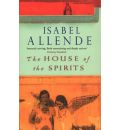
The House of the Spirits – Isabel Allende

Book #276
Reviewer: Tall, Short & Tiny

The House of the SpiritsMany years ago, on a whim, I picked The House of the Spirits off a bookshelf and bought it, with no knowledge of the author and having heard nothing of the book. What was a punt turned out to be a brilliant decision, as I thoroughly enjoyed this novel and have since read more of Allende’s work.

I love her magical, poetic style, and her ability to weave intricate relationships between characters. Her characters are all beautifully drawn; the reader is pulled into their world, and the imagination is set alight. I do wonder how this would read in Allende’s natural Spanish, and hope that none of the musicality has been lost in translation.

The House of the Spirits is a truly magical story, set in Chile, about four generations of the Trueba family. It is a story about class inequality, family and fate, with numerous plot twists and allusions to the political and social struggles in Chile’s past. It is magical and ethereal, heartbreaking and beautiful.

Clara is the main female figure in the novel. She is a clairvoyant and telekinetic, rather vague and impractical in an everyday sense, but the backbone of her family. She marries Esteban, one of the story’s narrators; he becomes involved in politics and their relationship is a volatile one. The rest of the family stem from these two.

I must give special mention to Clara’s sister, Rosa the Beautiful. She is exceptionally, ethereally beautiful, with transparent skin, yellow eyes, and green hair. She is described as mermaid-like; in any other novel, this might seem strange and detract from the story, but Allende is very skilled at building layer upon layer of “normal” characters, until each quirk simply becomes normal too.

This is a book I have lent to so many people with no hesitation, and it has been returned with excited sighs. I give The House of the Spirits 4 out of 5 stars.

The Old Man and the Sea – Ernest Hemingway

Book #521

Reviewer: Inspirationalreads

old man

I have long associated Hemingway as being the most masculine of writers.  I was aware of him being a keen hunter and the titles of his books, in particular A Farewell to Arms, For Whom the Bell Tolls and this The Old Man and the Sea also screamed “manly!”. While this was not entirely off-putting for me, it did mean that it has taken a long time in getting around to reading anything by him.  And so this, my first Hemingway, was both as expected but also a revelation in being so thoroughly deserving of all the accolades it has been awarded.

Santiago is our old man, a  fisherman in his twilight years.  A lifetime spent as a fisherman has left him little to call his own, wizened but still in relative good health for his advancing years.  Manolin is his young fishing companion and when they go 84 days without catching a fish, Manolin’s parents stop him from going out on Santiago’s skiff, sending him to fish on more successful boats.  Still full of admiration for the old man, Manolin is there to see off Santiago as he embarks on a solitary trip that lasts over two days and nights battling to catch and bring back the biggest marlin of his life.

As are many of the other reads on this list, this is a deceptively simple read.  This is the struggle of one man in a story of perseverance and strength. Nearly two thirds of this book are spent with Santiago on his lone boat struggling with this catch.  Where his mind goes, the conversations of companionship and respect that he has with this mighty marlin, his thoughts on many other things including, endearingly, baseball star Joe DiMaggio.  In an age where there is so much to fill your time, noise and distraction at your fingertips, this aspect of the book is of an age and yet timeless  because of its familiarity.  When left to your own thoughts, where does your mind stray to? What conversations do you have with yourself?  Santiago brings age-earned wisdom to his musings.  On accepting Manolin’s help;

He was too simple to wonder when he had attained humility.  But he knew he had attained it and he knew it was not disgraceful and it carried no loss of true pride.

And as his task would dictate, his mind often turns to the relationship with his prey.  He is so respectful of the mighty marlin, marveling at it’s size and what it will contribute to his life.  Income, of course, but a source of pride especially coming off an 84 day losing streak.  Something to prove to his peers who think he is too old, something to prove to Manolin’s parents.  And something to show Manolin, a thank you for his continued support and a justification for his admiration.  There is struggle here and a bloody minded persistence, necessary to stay out there for two days and two nights.  But this isn’t a the story of a fevered Ahab type trying to land his Moby Dick.  Yes Santiago has all the those above motivations but he also is a fisherman and this is his job.  And can’t this be said for so many of us?  The slog, the perseverance, the determination of getting the job done for income, but also for pride for yourself, respect from your family and friends and just because it has to be done.  Written in 1952, when a lot more employment was manual labour based, the physical task of landing this giant fish would have been more familiar.

The novel ends on a bittersweet note, one which makes this tale more of a fable, its moral clear to decipher but one I don’t want to spoil because this really is a great read.  Yes, it is one man fishing, and it is very masculine in its feel.  There are no flowery passages of prose, but there is a beautiful clarity of language, a straightforward but no less masterful manipulation that left me often re-reading paragraphs in appreciation.  Please, don’t be put off like I was.


Sula – Toni Morrison

Book #349

Reviewer: Ms Oh Waily


SSula is the first book by Toni Morrison that I have read and I’m certain it won’t be the last.

Covering the period following the First World War up until the mid 1960s, we are introduced to Sula Peace and her best friend Nel Wright.  We follow them from their girlhood through their family’s experiences and through to death.

The setting is the Bottom, a hillside settlement of blacks above the white valley town of Medallion.  We are introduced to three generations of the Peace family, grandmother Eva, mother Hannah and Sula, herself.  We are also shown briefly into Nel’s family as a counterpoint.

It is a brutal story of poverty, the strength of black women and just how far they will go for themselves and their families.  It shows pain, not so much overcome as accepted alongside happiness.  It shows what that sort of struggle can do to a young woman’s personality.

Sula and Nel become friends at around 12 years old.  They are almost as one.  They share experiences, feelings and grow up together as an outlet away from their respective homes.  Then, one day, a dreadful accident happens and things change.

Nel stays in the Bottom and marries.  She raises a family and takes the conventional road, in keeping with the way her mother did before her.  Sula leaves the Bottom and goes off to college, only returning after experiencing many cities across the country.  She is at best, unconventional and at worst, provocative.

I found the subject matter and the story to be hard reading.  It is often confronting and disturbing.  But this is softened because the story is told with such beautiful prose.  Even the repeated use of the ‘n’ word and many other colloquialisms does not diminish the skillful use of language.

Here, describing Sula and Nel’s meeting.

So when they met, first in those chocolate halls and next through the ropes of the swing, they felt the ease and comfort of old friends.  Because each had discovered years before that they were neither white nor male, and that all freedom and triumph was forbidden to them, they had set about creating something else to be.  Their meeting was fortunate, for it let them use each other to grow on.  Daughters of distant mothers and incomprehensible fathers (Sula’s because he was dead; Nel’s because he wasn’t), they found in each other’s eyes the intimacy they were looking for.

Referring to the evil days that followed Sula’s return to Medallion, here is the general attitude of the townsfolk.

What was taken by outsiders to be slackness, slovenliness or even generosity was in fact a full recognition of the legitimacy of forces other than good ones.  They did not believe doctors could heal – for them, none ever had done so.  They did not believe death was accidental – life might be, but death was deliberate.  They did not believe Nature was ever askew – only inconvenient.  Plague and drought were as “natural” as springtime.  If milk could curdle, God knows robins could fall.  The purpose of evil was to survive it and they determined (without ever knowing they had made up their minds to do it) to survive floods, white people, tuberculosis, famine and ignorance.  They knew anger well but not despair, and they didn’t stone sinners for the same reason they didn’t commit suicide – it was beneath them.

I found this book to be troubling and thoughtful on many levels.  The reading itself is very easy but the subject matter is not.  It prods and pokes and makes you uncomfortable.  But that is a good thing.  Complacence is not.   The characters are at once compelling and repulsing.  (Not repulsive, I hasten to add.)  You are drawn to their difficulties but wonder at their choices.
At under 200 pages, with well written prose, this is a very quick read and I can highly recommend it.

The Virgin Suicides – Jeffrey Eugenides

Book #143
Reviewer: Tall, Short & Tiny

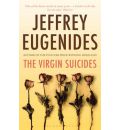
The Virgin SuicidesBefore reading The Virgin Suicides, I knew of it only as a film starring Kirsten Dunst; when I purchased a copy of the book second-hand, she graced the cover. Having not seen the film, and having heard very little about the story, I was going into this read completely open-minded.

The novel is about the suicides of the five Lisbon girls, living with their parents in suburban America. It is narrated by one or more (this is left quite ambiguous) middle-aged men who were teenage boys at the time of the suicides; men who have been infatuated by, and obsessed with, the girls and their deaths for more than twenty years.

It didn’t matter in the end how old they had been, or that they were girls, but only that we had loved them, and that they hadn’t heard us calling, still do not hear us, up here in the tree house with our thinning hair and soft bellies, calling them out of those rooms where they went to be alone for all time, alone in suicide, which is deeper than death, and where we will never find the pieces to put them back together.

The Lisbons are a catholic family with five daughters: Cecilia, Lux, Bonnie, Mary and Therese. Mr Lisbon is a teacher, and Mrs Lisbon is a housewife; from the outside, they appear to be your normal middle-class family. However, their lives are changed one summer when 13-year-old Cecilia attempts suicide by cutting her wrists; weeks later, at a party at their home, she jumps from a second-story window and dies. The reason for her suicide and the effects on her family become the neighbourhood’s main point of gossip, and the narrator(s) use information from these neighbours as they try to piece everything together, decades later.

When 15-year-old Lux misses her curfew after a school dance, her parents pull the girls out school and to all intents-and-purposes, the family disappear from public life. The house becomes derelict; none of the Lisbons leave the house, and no one goes to visit.

After the remaining daughters successfully end their lives (three of them on the same night), their parents leave the neighbourhood; their belongings are thrown away or sold, and the young men scavenge through the remains, searching for anything they can claim as evidence in their quest to understand what went on in that house.

This is rather a dark novel, touching on an extremely sensitive issue. What makes it most poignant and tragic is that it reflects on normal life; the Lisbons are an average middle-class family, living in a normal neighbourhood in a normal suburb. The fact that their neighbours react to the suicides with such fascination highlights that this is the kind of place where things like that just don’t happen, and I wonder if Eugenides was commenting on this aspect of society as a whole?

Everybody had a story as to why she tried to kill herself. Mrs Buell said the parents were to blame. “That girl didn’t want to die,” she told us. “She just wanted out of that house.” Mrs Scheer added, “She wanted out of that decorating scheme.”

I was left feeling a little disappointed at the end of the novel, and I’m not 100% sure why. Perhaps I was hoping for more clarity on the deaths of the young girls, more reasons, more information. I usually don’t mind when loose ends are left untied, but for some reason, it left me feeling a bit empty with this story.

I can’t say it was an enjoyable read, but I did like Eugenide’s prose and the way the descriptive nature added to the mystique of the story, thus I give it 3.5 out of 5 stars.