Beloved – Toni Morrison

BOOK #223
Reviewer: Tall, Short, Tiny & a Pickle

BelovedBeloved was my first Toni Morrison novel, and golly, what a place to start. This is a powerful story, with memorable characters and a strong sense of history.

Beloved tells the story of Sethe and her 18-year-old daughter Denver, who have escaped from slavery to Ohio – a free state – after the American Civil War.

In order to keep her children safe, Sethe tries to kill Denver and her three siblings, but is is successful in killing only her eldest daughter. Her two sons run away, and Denver is just a baby at the time, but her older sister, age two, is buried with a tombstone with simply “Beloved” on it. When a strange young woman appears on their new front porch, saying nothing about who she is but claiming her name is Beloved, Sethe believes that she is her murdered daughter. She falls over backwards to spoil Beloved, offering her the best of everything, including food, to the detriment of her own health. While Sethe wastes away, Beloved grows larger; she becomes very demanding and throws toddler-like tantrums when she doesn’t get her way.

While Sethe’s actions towards her children seem abhorrent on the surface, one of her redeeming features is her intense devotion to her children; her attempts at murder are to keep her children protected from the horrors she experienced as a slave. I went through stages of loving and hating Sethe for her treatment of Beloved and Denver, and by the end of the story, I still had mixed feelings towards her.

Denver is a shy, intelligent girl, often portrayed as possessing a gift for communicating with ghosts. While Beloved flourishes, Denver appears to withdraw further from the outside world, but by the end of the novel, she is proven to be much stronger, more courageous and determined than I first thought. Denver is the most interesting of characters, for me, and I found her a fascinating character.

“There is a loneliness that can be rocked. Arms crossed, knees drawn up, holding, holding on, this motion, unlike a ship’s, smooths and contains the rocker. It’s an inside kind–wrapped tight like skin. Then there is the loneliness that roams. No rocking can hold it down. It is alive. On its own. A dry and spreading thing that makes the sound of one’s own feet going seem to come from a far-off place.”

The character of Beloved is also intriguing, and throughout the story, Morrison presents three different perspectives regarding who Beloved may be. She may simply be a stranger, a young woman who has been kept locked away as a slave for many years, which would account for her language and social difficulties. Sethe believes her to be her Beloved, her toddler, because of the way she acts, her outward appearance, her breath that smells like milk and her knowledge of a few facts that only one of Sethe’s children could know. In later chapters, Beloved tells stories that make Sethe and the reader wonder if she is Sethe’s mother; she shares personal traits with Sethe’s mother and recounts stories of her voyage to America from Africa.

Beloved is a great story, with a strong sense of the power the past can have over people, and how they can either overcome it, or let it haunt them forever. It is uplifting, horrifying, saddening and hopeful all at once, and I can’t recommend it highly enough.

Cannery Row – John Steinbeck

Book # 565

Reviewer: Ms Oh Waily


CRWhen I read Steinbeck’s Of Mice and Men back in 2012 I meant to follow up immediately with this relatively slim novel.  Sadly I moved on and Cannery Row had to wait until now.

Let me start off the review by saying outright – I loved this.  Everything about it.  And my review may be overly glowing as a result.

The novel was first published in 1945 but it is set during the Great Depression.  Specifically it is set in Monterey, California and one particular avenue which is colloquially known as Cannery Row for it’s rows of sardine canneries*. It is the story of the locals on the Row.  Lee Chong is the local grocer and shopkeeper.  Dora Flood is the local Madam and owner of the misnamed Bear Flag Restaurant, where her girls are available to the local population.  Doc is a marine biologist who owns and lives in his workshop at Western Biological, and then there are Mack and ‘the boys’ – squatters in Lee Chong’s warehouse known as the Palace Flophouse and Grill.

The novel is barely a novel in the sense of having a plot.  Really it feels like a meander through the lives of these many and varied characters.  The thread that holds it all together are the ‘boys’ from the flophouse.  Mack, Hazel, Jones and Eddie pop up throughout and provide much of the entertaining reading.  But we are treated to vignettes of life amongst a range of locals, we are invited in to their lives and given an insight into the hard lives of the depression.

You would think that a novel set in the depression with the central characters being a group of bums would be, in itself, depressing.  You would be wrong.  Other than a few poignant sections, the joie de vivre that exudes from the pages belies the harshness of the struggle to put food on the table or a roof of some sort over their heads.   Steinbeck beautifully describes the lives and surroundings of these characters, so much so that you feel you can reach out and touch their them.  Here is how he introduces us to Doc’s laboratory:

Behind the office is a room where in aquaria are many living animals; there are also the microscopes and the slides and the drug cabinets, the cases of laboratory glass, the work benches and little motors, the chemicals.  From this room come smells – formaline, and dry starfish, and sea water and menthol, carbolic acid and acetic acid, smell of brown wrapping-paper and straw and rope, smell of chloroform and ether, smell of ozone from the motos, smell of fine steel and thin lubricant from the microscopes, smell of banana oil and rubber tubing, smell of drying wool socks and boots, sharp pungent smell of rattlesnakes, and musty frightening smell of rats.  And through the back door comes the smell of kelp and barnacles when the tide is out and the smell of salt and spray when the tide is in.

He continues to document Doc’s world in his library and kitchen, and then on to his person:

Doc is rather small, deceptively small, for he is wiry and very strong and when passionate anger comes on him he can be very fierce.  He wears a beard and his face is half Christ and half satyr and his face tells the truth.

And wonderful descriptions of this sort abound in this story about people.  But not to be outdone are the humorous pieces of observation, including this classic towards the end of the story when Mack and the boys (and entire neighbourhood) create a party for Doc:

The nature of parties has been imperfectly studied.  It is, however, generally understood that a party has a pathology, that it is a kind of an individual and that it is likely to be a very perverse individual.  And it is also generally understood that a party hardly ever goes the way it is planned or intended.  This last, of course, excludes those dismal slave parties, whipped and controlled and dominated, given by ogreish professional hostesses.  These are not parties at all, but acts and demonstrations, about as spontaneous as peristalsis and as interesting as its end product.

The humour exudes throughout the novel.  Even when the viewing is grim, there is the buoyancy of the human spirit, softening the edges and making the bizarre seem normal and even uplifting.

My edition is 136 pages long.  It’s not much, but it’s worth the effort.

Happy reading.

* according to Wikipedia the street that the novel is actually set in was Ocean View Avenue, but was later renamed to Cannery Row in honour of the story.

All Quiet on the Western Front – Erich Maria Remarque

Book #667
Reviewer: Tall, Short, Tiny & a Pickle

All Quiet on the Western FrontIt’s been a long time since I read a book that had a such profound effect on me as All Quiet on the Western Front. I think its impact has been greater than expected because the book itself exceeded all of my expectations, in every way.

The story is told in the first person, by Paul Baumer, a young German soldier fighting in World War One. It tells of the everyday living conditions of the German soldiers; of the daily struggles, battles, friendships and threats, of the acts of war that were mundane, not unusual, or heroic. When Paul goes home on leave, he feels like he no longer belongs; he doesn’t know how to be a civilian any more, and struggles to see where he will fit in when the war is over. He is relieved to return to his regiment, to his friends, even though he knows it is to the chance of death that he returns. As he watches his friends fall, he tends towards a madness that must be a common scenario during war.

We get back pretty well. There is no further attack by the enemy…in spite of our great hunger we do not think of the provisions. Then gradually we become something like men again.

Night again. We are deadened by the strain – a deadly tension that scrapes along one’s spine like a gapped knife. Our legs refuse to move, our hands tremble, our bodies are a thin skin stretched painfully over repressed madness, over an almost irresistible, bursting roar.

There are sentences that are beautifully written, that evoke a sense of peace and stillness, followed by paragraphs that are so fast-paced that they create a sense of the frantic intensity that must have been trench warfare during this time.

He staggers up and runs. I keep beside him. We have to get over a hedge; it is higher than we are. Kropp seizes a branch, I heave him up by the leg, he cries out, I give him a swing and he flies over. With one bound I follow him and fall into a ditch that lies behind the hedge.

Monotonously the lorries sway, monotonously come the calls, monotonously falls the rain. It falls on our heads and on the heads of the dead up in the line, on the body of the little recruit with the wound that is so much too big for his hip; it falls on Kemmerich’s grave; it falls in our hearts.

As could be expected, death is a recurring theme in this novel; it is impossible to write or read about war without knowledge of the incredible number of lives that were (and continue to be) lost. Remarque has a unique ability to treat this subject both poetically and soberly; he does not try to cover it up or pretend it wouldn’t have invaded every man’s thoughts during the time in the trenches, and this adds to the powerful profundity of the story.

We have become wild beasts. We do not fight, we defend ourselves against annihilation. It is not against men that we fling our bombs, what do we know of men in this moment when Death is hunting us down – now, for the first time in three days we can see his face, now for the first time three days we can oppose him; we feel a mad anger.

The story also offers us a view of war that is poignant and, for me, right on the mark. Remarque’s commentary on the futility of war is as relevant today as it was at the time of publication:

“I think it is more of a kind of fever,” says Albert. “No one in particular wants it, and then all at once there it is. We didn’t want the war, the others say the same thing – and yet half the world is in it all the same.”
“But there are more lies told by the other side than by us,” say I; “just think of those pamphlets the prisoners have on them, where it says that we eat Belgian children. The fellows who write those lies ought to go and hang themselves. They are the real culprits.”

How senseless is everything that can ever be written, done, or thought, when such things are possible. It must be all lies and of no account when the culture of a thousand years could not prevent this stream of blood being poured out, these torture-chambers in their hundreds of thousands. A hospital alone shows what war is.

The ending of the story is possibly one of the most poignant and profound endings I’ve read in a long time. I read it twice before closing the book, and it echoed in my brain for days afterwards:

He fell in October 1918, on a day that was so quiet and still on the whole front, that the army report confined itself to the single sentence: All quiet on the Western Front.

He had fallen forward and lay on the earth as though sleeping. Turning him over one saw that he could not have suffered long; his face had an expression of calm, as though almost glad the end had come.

All Quiet on the Western Front is a book that I think everyone should read; I can’t say I enjoyed it, as such, but it has had an effect on me that means I’d not hesitate to recommend it to you all.

The Forsyte Saga – John Galsworthy

BOOK #769
Reviewer: Tall, Short, Tiny & a Pickle

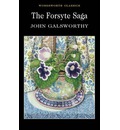
The Forsyte SagaThe Forsyte Saga is a trilogy about money, class, and morals at the end of the Victorian/start of the Edwardian era. It focuses on a large upper-middle class family who are very conscious of their wealth being “new money”. The story focuses on two branches of the family (the Jolyon Forsytes and the James Forsytes), and it is their interactions that form the main plot of this saga. It is a series about the expansion of wealth and the price of beauty and love.

It isn’t a story I would rush to recommend, and I did breathe a sigh of relief to have finished. Indeed, there were moments where I put it aside to read something more interesting; I felt that it dragged and wasn’t nearly as exciting or intriguing as I’d been led to believe. To me, it read like a soap opera, and while I’m aware that this would have heightened its appeal to the filmmakers who made it into a miniseries not too long ago, it didn’t really appeal to me as I thought it would.

The style of Galsworthy reminds me of my perennial favourite, Charles Dickens, but he seemed to write with less flair. Perhaps comparing him to Mr Dickens isn’t fair, but it is hard not to when the similarities are so obvious; personally, I found Galsworthy’s prose a bit pompous.

One of the main character is Soames Forsyte (son of James), who is a solicitor and “a man of property.” This refers to his physical possessions as well as his relationships with other characters in the book. Soames’ journey throughout the book is complicated; he struggles with the concept that he can not “own” other people. His wife, Irene, is a beautiful woman, but she is also quite aloof and distant; we learn early on that her relationship with Soames is strained, to say the least. Irene is a character we never fully understand or know, and she remains somewhat of an enigma right to the end. Neither of them are particularly endearing, and by the end of the novel, I had very little feeling about either of them.

Another character who takes on a main role, and the only character I actually really liked, was “young” Jolyon, an impoverished artist who has been long estranged from the rest of the Forsyte clan. His attitude to possession is the complete opposite to Soames’, his cousin; he appreciates beauty and people, and is not interested in materialistic possessions. I liked him partly due to his attitude, but also because he made his own share of mistakes; he was the most realistic of the characters, for me.

The rest of the family are all described in great detail, and we learn a little about each one at various stages. Galsworthy is very skilled at describing his characters – big and small – without letting it take over the story. I particularly liked this early description of the family’s patriach, which says so much about the old man’s character in so few words:

He held himself extremely upright and his shrewd, steady eyes had lost none of their clear shining, thus he gave an impression of superiority to the doubts and dislikes of smaller men. Having had his own way for innumerable years, he had earned a prescriptive right to it. It would never have occurred to old Jolyon that it was necessary to wear a look of doubt or defiance.

Galsworthy also goes on to describe more of the Forsyte men:

Through the varying features and expression of those five faces [the Forsyte brothers] could be marked a certain steadfastness of chin, underlying surface distinctions, marking a racial stamp, too prehistoric to trace, too remote and permanent to discuss – the very hallmark and guarantee of the family fortunes. Among the younger generations, in the tall, bull-like George, in pallid, strenuous Archibald, in young Nicholas with his sweet and tentative obstinacy, in the grave and foppishly-determined Eustace, there was this same stamp – less meaningful perhaps, but unmistakeable – a sign of something ineradicable in the family soul.

There are, as with many stories of this era, a number of little subplots that add to the drama of the story; if I’m to be truly honest, I often found myself wishing that Galsworthy would just get on with the main story.

I can see why some would enjoy this saga, and therefore why it earned its place on this list, but it wasn’t for me.

The Maltese Falcon – Dashiell Hammett

Book #660

Reviewer: Ms Oh Waily


TMFAnd finally we reach the last remaining Dashiell Hammett novel on the 1001 list. I can say, categorically, that I have enjoyed each and every one of them despite the great variance of topic and tale telling.
If you have missed them, I reviewed The Thin Man back in March and have completed the remaining three this month.  That would be Red Harvest, The Glass Key and today’s review of The Maltese Falcon.

Samuel Spade and the story of the Maltese Falcon is arguably Hammett’s best known work. It certainly was to me, with The Thin Man a distant second.  That could be a result of an earlier obsession with Humphrey Bogart films, of course, including the 1941 rendition of this story.

We meet Sam and his partner, Miles Archer, in their offices in San Francisco.  A young woman, Miss Wonderly, comes to hire them to follow a man who has supposedly run off with her younger sister.  The money is good, so they take her on.  Miles, with an eye to the pretty lady, says he will do it for her and does so.  Spade, on the other hand, thinks she looks like trouble.

Later that night Spade is rung by the police and told that Archer has been shot.  He goes down to the scene, but appears disinterested.  As the story progresses, it is clear that he is not fond of Archer and has been playing around with his wife, but he feels he owes it to his partner to find out the truth about his death.
Spade is not a particularly likeable character, is quite loose with the women in his life, but is smart, cunning and determined.  Hammett’s description of him is quite telling of his character.

Samuel Spade’s jaw was long and bony, his chin a jutting v under the more flexible v of his mouth.  His nostrils curved back to make another, smaller, v.  His yellow-grey eyes were horizontal.  The v motif was picked up again by thickish brows rising outward from twin creases above a hooked nose, and his pale brown hair grew down – from high flat temples – in a point on his forehead.  He looked rather pleasantly like a blond satan.

Spade ends up in the firing line from the police investigation when not only is Miles Archer murdered, but so is the man he was tailing – on the same night.
As the story progresses we find out that Miss Wonderly is not who she says she is, nor is her non-existent runaway sister real.  We find her to be Brigid O’Shaughnessy, a rather cunning liar and thief.  She also is not a particularly likeable character, especially from a modern woman’s perspective.  She sets her sights on Spade and embroils him in the cross and double-cross world of international thievery.  Along the way we meet the wonderful cast of characters that Hammett has created; Joel Cairo, Wilmer Cook and Casper Gutman are all marvellous to read and beautifully described.  I must say that although the 1941 film does not necessarily cast quite according to Hammett’s descriptions (Humphrey Bogart would need to grow another 3 or so inches to be “quite six feet tall”), they do all bring to life each of the main characters in a fair representation.  So much so that whenever I read Casper Gutman’s dialogue I continually saw and heard Sydney Greenstreet‘s voice and inflection in my head.

Unlike The Thin Man, this one’s one-liners and comebacks were relatively toned down, but Spade is still prickly and quick with his words.  In this instance he is facing down Lieutenant Dundy’s questioning over Archer’s death.

Placidity came back to Spade’s face and voice. He said reprovingly: “You know I can’t tell you that until I’ve talked it over with the client.”
“You’ll tell it to me or you’ll tell it in court,” Dundy said hotly. “This is murder and don’t you forget it.”
“Maybe. And here’s something for you to not forget, sweetheart.  I’ll tell it or not as I damned please.  It’s a long while since I burst out crying because policemen didn’t like me.”

Still the same pig-headed, gritty character as many of Hammett’s others.  But a smooth ladies man with it.  Or is that a heartless ladies man?  You need to decide.

I have thoroughly enjoyed my time travel back to the late 1920s courtesy of Dashiell Hammett and I don’t think you will be disappointed if you choose to find one or two of his works either.   The writing is good, the characters are interesting, the stories are well plotted and not obvious from start to finish.  All round easy, fun reads.  I’m rather sad that there are no more on the list.

Happy Reading everyone.