After the Quake – Haruki Murakami

Book #64

Reviewer: Inspirationalreads

11299Murakami is another author that I have been in awe of and yet a bit wary.  He is a firm favourite among many of my fellow readers, highly lauded by many a critic/reviewer.  This was the last available to review on this list of the four books he has on here.  And yet I was intimidated by the highly surreal nature often referred to where his books are concerned, where readers were unsure of what was happening but were enjoying themselves, happy to be taken for the ride.  This was further emphasised when I read After Dark, another short story collection of his that is not on this list.   So nabbing this last opportunity to review a Murakami for this list (so far at least) I put myself in the mindset of being open and willing to go wherever Murakami wanted to take me.  Which for all my mental preparedness ended up being very middle of the road.

After the Quake features six short stories all set in the aftermath of the destructive 1995 earthquake in Kobe, Japan.  Rather than being directly set in and around Kobe, or having the characters be directly affected by the earthquake itself, these stories are more ripples than aftershocks, the earthquake being a passing mention,  a distant motivation.  So while this collection is called After the Quake, this is far less a unifying theme as there is another more obvious ; that of human relationships.  Be it the losing of some and gaining of new, re-connecting with yourself, searching for a connection that is missing, or re-connecting in a more meaningful manner this thread of connectivity runs throughout five of the six stories here. For me, this was unexpected and whether or not it was because I had mentally prepped myself for something different, a little disappointing in their straightforwardness and accessibility.  That is not to say that these stories are not poignant or meaningful, as this common thread does make for interesting thought when looked at as a collective.  The reactions of these different characters and the different aspects of human inter-connectivity are displayed in scenarios that never feel forced and could be everyday occurrences anywhere.  In the first story, our main character’s wife leaves him and he is given the opportunity of a new connection when he is sent on a mysterious work trip.  In another, a business woman has a spiritual encounter that encourages her to let go of the painful past in order to move forward and connect more truthfully and happily in the future.

It is just that this does not feel like a new handling of a common theme; nothing here is fresh and off-kilter like one would come to expect from Murakami.  It is not until I got to the fifth of the sixth stories, ‘Super-Frog Saves Tokyo’ that the absurd surrealism that I have come to associate with Murakami comes into play and for me, this story becomes the saving grace of the collection.  This thread of relationships can be drawn through this story as well, even though it is, as the title depicts, about a super-sized, super-skilled frog battling a giant worm to prevent an earthquake in Tokyo.  A loan collector, who thinks little of himself, is chosen as Super-Frog’s companion due to his selflessness and giving nature towards not only his family, but his friends and colleagues too.  Perhaps it is that he, who is humble and giving in his relationships with others is worthy of such a task, that of defending the city of Tokyo.  This odd little tale was a bright spot that stood out because of how different it was and was enjoyable because of the difference.

This book would be an odd choice as an introduction to Murakami so I would not recommend it for this.  It is however a nice study of human interaction and a must read for Super-Frog alone.  Maybe Murakami’s plan was to make the expected unexpected and therefore not so far out of his scope after all. Maybe this is just a lesson for me to leave any and all expectations at the door, especially when it comes to this author.

Oliver Twist – Charles Dickens

Book #918
Reviewer: Tall, Short, Tiny & a Pickle

Oliver TwistReading Oliver Twist was my first foray into the novels of Charles Dickens. I have vivid memories of lying in the sun at my parents’ house, reading the copy my mother had read when she was at school. It is fair to say that Oliver Twist was an excellent introduction to to the Dickensian world, and I have been a huge fan ever since.

If you haven’t yet read Oliver Twist, you will no doubt be familiar with it in its screen and stage adaptations. That famous scene where Oliver dares to ask for more gruel is etched in many memories as a poignant moment in a tragic tale.

In brief, Oliver Twist is a young orphan who finds himself journeying towards London. Along the way, he meets a young pickpocket (Jack Dawkins, aka The Artful Dodger) who tells of a place where he can get free board with a group of “gentlemen”. Oliver is an innocent, naive, good-hearted boy who often doesn’t see the true nature of people, and agrees to join Dawkins in London, where he finds himself surrounded by a host of delightfully-unsavoury characters. The leader of this group, Fagin, is a criminal with a devilish nature; he tricks and corrupts young men, and is often portrayed as shying from daylight, prayer and anything of a decent nature. Ultimately, the decency of Oliver’s character wins out, and we have a happy ending where good triumphs evil, but Dickens tells a very interesting story along the way.

He paints a very dramatic, miserable picture of poverty, unusual for a time when many writers glossed over the plight of the poor. The novel reflects on the effects of industrialism on the working classes of England, and states that many resorted to theft and crime in order simply to survive. However, Oliver’s character is different – he remains innocent and decent throughout the novel, regardless of the situations he finds himself in, and never resorts to the life of crime presented to him. He speaks properly, compared to the rest of the poor, and from the outset, I found myself hoping that better things would be in store for him.

I am a fan of Dickens’ writing style, and as I said earlier, this was the novel that cemented my love for his work. I enjoy his descriptive passages, the realism of his characters and their plights, and the interactions between them. He describes his characters so well, down to the last tic, that when I saw a local stage production of this a number of years ago, I was pleased to see the actor playing Fagin had adopted his mannerisms perfectly.

Passages such as:

The sun, – the bright sun, that brings back, not light alone, but new life, and hope, and freshness to man – burst upon the crowded city in clear and radiant glory. Through costly-coloured glass and paper-mended window, through cathedral dome and rotten crevice, it shed its equal ray.

serve to create a powerful image as you read, and the novel is filled with such eloquent descriptions. There are, in true Dickens-fashion, moments of comedy, which serve to cut through the inherently sombre nature of the story:

“Bless their dear little hearts!” said Mrs. Mann with emotion, “they’re as well as can be, the dears! Of course, except the two that died last week.”

If you’ve never ventured to read anything by Charles Dickens, this would be my recommendation as the place to start. An incredibly good read, with a happy ending that sees good triumph over evil in that ultimate of symbolic and moral battles.

A well-deserved 5 out of 5 stars from me.

150 Books Reviewed: WINNER!

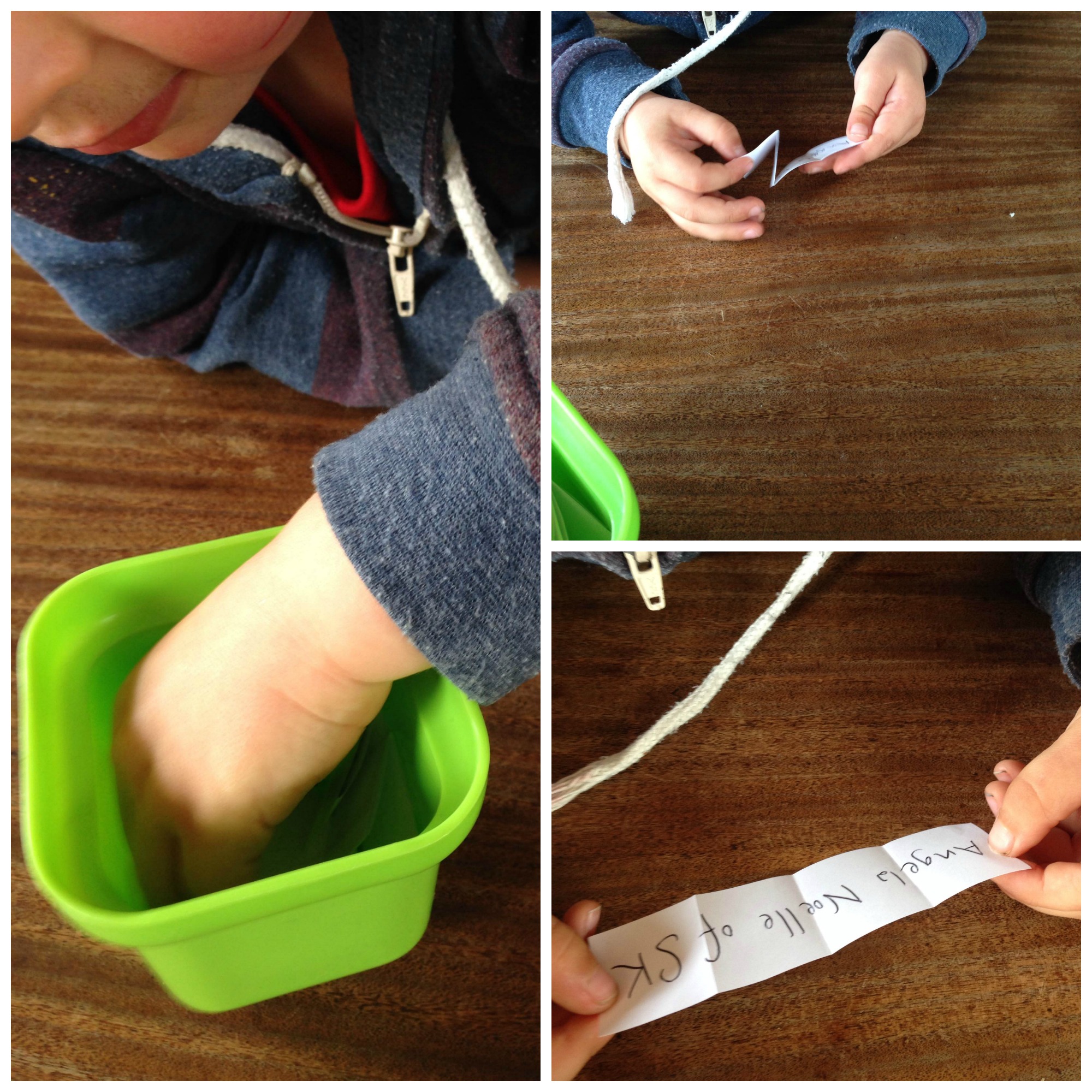
The lucky winner of our giveaway celebrating 150 books reviewed is…

1001 Book WinnerAngela Noelle of Striking Keys!

Angela submitted a very insightful review of 1984 for publication.

Thank you to everyone who entered; while you may not have won a new book, you have won our everlasting thanks for taking us that step further on this review journey.

If you’d like to join our review crew, we’d love to have you on board.

Happy reading everyone!

The Adventures of Sherlock Holmes – Sir Arthur Conan Doyle

Book #804

Reviewer: Ms Oh Waily 


TAOSH I read The Adventures of Sherlock Holmes a good number of years ago as a teenager and enjoyed them.  But they were essentially consigned to memory until I thought to revisit them after my earlier review of The Hound of the Baskervilles.

The adventures are a series of twelve, relatively, short stories.  Most will set you back less than an hour to read and each is a little vignette of Holmesian deduction.

The twelve cases are:

  • A Scandal in Bohemia
  • The Adventure of the Red-Headed League
  • A Case of Identity
  • The Boscombe Valley Mystery
  • The Five Orange Pips
  • The Man with the Twisted Lip
  • The Adventure of the Blue Carbuncle
  • The Adventure of the Speckled Band
  • The Adventure of the Engineer’s Thumb
  • The Adventure of the Noble Bachelor
  • The Adventure of the Beryl Coronet
  • The Adventure of the Copper Beeches

The most likely story that you would be familiar with is the first, A Scandal in Bohemia.  It is in this piece that we meet ‘that woman’, Irene Adler.  American opera singer, socialite and apparently a brilliant woman to have outwitted Mr. Holmes.  Then you read the story, or listen on audiobook as I did, and you are left wondering at the idea that being observant and quick witted equals being a brilliant woman and a great opponent for the master deducer.
Oh how times have changed Sir Arthur, oh how they have changed.

Each of the succeeding stories brings out different mini-mysteries, some of which Holmes solves faultlessly while others like the Irene Adler case, are not so clear cut in the perpetrators being brought to justice.  In some instances, it is a case of unmasking goings-on rather than actual crime.

I found the writing to be almost as good as The Hound of the Baskervilles, with just enough setting for each story before getting to the nitty-gritty of the various mysteries to be detected.  Holmes’ deductions are sometimes obvious in advance of his explanations, other times not so much.  And as I mentioned in my previous review, unlike the often portrayed superior attitude of Holmes to Watson in film versions, there is nothing to note of that in these stories either.  In fact, he is quite complimentary and warm about his companion for the most part.

It is another pleasant read, or listen, that will not tax you.  It is worthy of a place on the list as a good selection of the different types of mystery story and if you enjoy it enough you will find it to be the first of five Sherlock Holmes short(ish) story collections for you to hunt out.  This one is the earliest, dated 1892, and was published ten years before The Hound of the Baskervilles but only two years after The Sign of Four.
If you find yourself enjoying the Victorian world of Holmes and Watson, I can only imagine reading the novels and short stories in published order, would give an even more rounded aspect on Conan Doyle’s characters.  To do that, start at the beginning with A Study in Scarlet, and then check the list at the bottom of the page here at Wikipedia for published order.

I hope you enjoy this slice of Victoriana as much as I did.

A Room With A View – E.M Forster

Book #761

Reviewer: Tall, Short, Tiny & a Pickle


A Room With A ViewWhen I was 16-years-old, a friend and I became obsessed with the novels of E.M Forster. We thought we were incredibly sophisticated and open-minded, and went so far as to write our own stories using similar language and ideas.

One of my favourites was A Room With A View; it was amusing in its portrayal of pretentious Victorian manners, and the dialogue was brilliant. In flicking back through the novel for the purposes of this review, I found myself again smiling at a few exchanges.

“Am I to conclude,” said Miss Bartlett, “that he is a Socialist?”
Mr Beebe accepted the convenient word, no without a slight twitching of the lips.
“And presumably he has brought up his son to be a Socialist, too?”
“I hardly know George, for he hasn’t learned to talk yet. He seems a nice creature, and I think he has brains. Of course, he has all his father’s mannerisms, and it is quite possible that he, too, may be a Socialist.”

A Room With A View is set in Italy and England. In Florence, Italy, young Lucy Honeychurch and her cousin Charlotte meet a Mr Emerson and his son George; they are staying at the same hotel and when the gentlemen offer to switch rooms with the young women, they are offended by their lack of “manners”. Charlotte forms an instant dislike of the Emersons and convinces Lucy to feel the same; Lucy falls for young George, but upon her return to England, accepts the proposal of someone else. The novel ends back in Florence, with Lucy having eloped with one of her suitors…you’ll have to read it to find out who!

Like many writers of the time, Forster had a tendency to comment on sexuality, religion and class. A Room With A View is a definite commentary on these, with a focus on the repression of women and feminine sexuality at the time. There is an obvious struggle in Lucy between the old-fashioned values she has been raised by, and the more liberal values she believes in. This is made more prominent for her after her stay in Italy, where the gap between the classes is much less than in England, and she realises how much ridiculous value is placed on class and society back home. Most importantly, A Room With A View is a novel about following your heart, despite what society thinks or tells you to do.

The notes at the back of my copy of the novel explain the symbolism of the title of the book, which is rather handy, because I know 16-year-old me wouldn’t have picked up on this: the “rooms” refer those characters and places that are considered conservative, like England, Lucy’s mother, and her pretentious fiancé, while the “views” refer to those that are considered liberal and open-minded, like Italy, the Emersons and Lucy herself.

I enjoyed A Room With A View immensely as a young adult, and the passages I re-read now brought that enjoyment flooding back. A recommended read if you like amusing Victorian-era novels that allude to society’s failings before their time.