Sula – Toni Morrison

Book #349

Reviewer: Ms Oh Waily


SSula is the first book by Toni Morrison that I have read and I’m certain it won’t be the last.

Covering the period following the First World War up until the mid 1960s, we are introduced to Sula Peace and her best friend Nel Wright.  We follow them from their girlhood through their family’s experiences and through to death.

The setting is the Bottom, a hillside settlement of blacks above the white valley town of Medallion.  We are introduced to three generations of the Peace family, grandmother Eva, mother Hannah and Sula, herself.  We are also shown briefly into Nel’s family as a counterpoint.

It is a brutal story of poverty, the strength of black women and just how far they will go for themselves and their families.  It shows pain, not so much overcome as accepted alongside happiness.  It shows what that sort of struggle can do to a young woman’s personality.

Sula and Nel become friends at around 12 years old.  They are almost as one.  They share experiences, feelings and grow up together as an outlet away from their respective homes.  Then, one day, a dreadful accident happens and things change.

Nel stays in the Bottom and marries.  She raises a family and takes the conventional road, in keeping with the way her mother did before her.  Sula leaves the Bottom and goes off to college, only returning after experiencing many cities across the country.  She is at best, unconventional and at worst, provocative.

I found the subject matter and the story to be hard reading.  It is often confronting and disturbing.  But this is softened because the story is told with such beautiful prose.  Even the repeated use of the ‘n’ word and many other colloquialisms does not diminish the skillful use of language.

Here, describing Sula and Nel’s meeting.

So when they met, first in those chocolate halls and next through the ropes of the swing, they felt the ease and comfort of old friends.  Because each had discovered years before that they were neither white nor male, and that all freedom and triumph was forbidden to them, they had set about creating something else to be.  Their meeting was fortunate, for it let them use each other to grow on.  Daughters of distant mothers and incomprehensible fathers (Sula’s because he was dead; Nel’s because he wasn’t), they found in each other’s eyes the intimacy they were looking for.

Referring to the evil days that followed Sula’s return to Medallion, here is the general attitude of the townsfolk.

What was taken by outsiders to be slackness, slovenliness or even generosity was in fact a full recognition of the legitimacy of forces other than good ones.  They did not believe doctors could heal – for them, none ever had done so.  They did not believe death was accidental – life might be, but death was deliberate.  They did not believe Nature was ever askew – only inconvenient.  Plague and drought were as “natural” as springtime.  If milk could curdle, God knows robins could fall.  The purpose of evil was to survive it and they determined (without ever knowing they had made up their minds to do it) to survive floods, white people, tuberculosis, famine and ignorance.  They knew anger well but not despair, and they didn’t stone sinners for the same reason they didn’t commit suicide – it was beneath them.

I found this book to be troubling and thoughtful on many levels.  The reading itself is very easy but the subject matter is not.  It prods and pokes and makes you uncomfortable.  But that is a good thing.  Complacence is not.   The characters are at once compelling and repulsing.  (Not repulsive, I hasten to add.)  You are drawn to their difficulties but wonder at their choices.
At under 200 pages, with well written prose, this is a very quick read and I can highly recommend it.
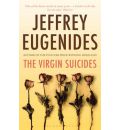
The Virgin Suicides – Jeffrey Eugenides

Book #143
Reviewer: Tall, Short & Tiny

The Virgin SuicidesBefore reading The Virgin Suicides, I knew of it only as a film starring Kirsten Dunst; when I purchased a copy of the book second-hand, she graced the cover. Having not seen the film, and having heard very little about the story, I was going into this read completely open-minded.

The novel is about the suicides of the five Lisbon girls, living with their parents in suburban America. It is narrated by one or more (this is left quite ambiguous) middle-aged men who were teenage boys at the time of the suicides; men who have been infatuated by, and obsessed with, the girls and their deaths for more than twenty years.

It didn’t matter in the end how old they had been, or that they were girls, but only that we had loved them, and that they hadn’t heard us calling, still do not hear us, up here in the tree house with our thinning hair and soft bellies, calling them out of those rooms where they went to be alone for all time, alone in suicide, which is deeper than death, and where we will never find the pieces to put them back together.

The Lisbons are a catholic family with five daughters: Cecilia, Lux, Bonnie, Mary and Therese. Mr Lisbon is a teacher, and Mrs Lisbon is a housewife; from the outside, they appear to be your normal middle-class family. However, their lives are changed one summer when 13-year-old Cecilia attempts suicide by cutting her wrists; weeks later, at a party at their home, she jumps from a second-story window and dies. The reason for her suicide and the effects on her family become the neighbourhood’s main point of gossip, and the narrator(s) use information from these neighbours as they try to piece everything together, decades later.

When 15-year-old Lux misses her curfew after a school dance, her parents pull the girls out school and to all intents-and-purposes, the family disappear from public life. The house becomes derelict; none of the Lisbons leave the house, and no one goes to visit.

After the remaining daughters successfully end their lives (three of them on the same night), their parents leave the neighbourhood; their belongings are thrown away or sold, and the young men scavenge through the remains, searching for anything they can claim as evidence in their quest to understand what went on in that house.

This is rather a dark novel, touching on an extremely sensitive issue. What makes it most poignant and tragic is that it reflects on normal life; the Lisbons are an average middle-class family, living in a normal neighbourhood in a normal suburb. The fact that their neighbours react to the suicides with such fascination highlights that this is the kind of place where things like that just don’t happen, and I wonder if Eugenides was commenting on this aspect of society as a whole?

Everybody had a story as to why she tried to kill herself. Mrs Buell said the parents were to blame. “That girl didn’t want to die,” she told us. “She just wanted out of that house.” Mrs Scheer added, “She wanted out of that decorating scheme.”

I was left feeling a little disappointed at the end of the novel, and I’m not 100% sure why. Perhaps I was hoping for more clarity on the deaths of the young girls, more reasons, more information. I usually don’t mind when loose ends are left untied, but for some reason, it left me feeling a bit empty with this story.

I can’t say it was an enjoyable read, but I did like Eugenide’s prose and the way the descriptive nature added to the mystique of the story, thus I give it 3.5 out of 5 stars.

June Update

Monthly reviewThis past month, we welcomed a new reviewer, Angelo, to the team. His first review, for Sputnik Sweetheart (#78), was excellent, and we’re really pleased that he’s offered to review more. Welcome, Angelo!

Sputnik Sweetheart wasn’t the only Haruki Murakami novel reviewed this month; The Wind-Up Bird Chronicle (#125) was also reviewed, meaning there is only one of his entries left to review.
Other novels reviewed this month included the very-well-known One Flew Over the Cuckoo’s Nest (#436) and Animal Farm (#564), The Secret History (#147), Cold Comfort Farm (#650), The Nose (#919) and The Summer Book (#352).

June also saw the 150th book reviewed, which is a great milestone to have reached. That distinguished honour went to Ken Kesey’s One Flew Over the Cuckoo’s Nest.

The 150th review also means that it is competition time!! Watch this space!

Quote of the Week

“Everywhere I go I’m asked if I think the university stifles writers. My opinion is that they don’t stifle enough of them. There’s many a best-seller that could have been prevented by a good teacher.”
― Flannery O’Connor

Ah now, do you agree?  And why?

Foundation – Isaac Asimov

Book #527

Reviewer: Ms Oh Waily


FI come to this book as an avowed fan of Isaac Asimov’s work.  His were the first and most memorable of the science fiction genre that I read as a teenager.  If I’m being honest, it has been a very long time since first reading the Foundation series, and I was concerned that I had allowed them to bask in the glow of a youthful fondness.

It turns out that I needn’t have worried.

Foundation is the first, in publication order, of the seven books written about the collapse of the First Galactic Empire and the series of events that ensue.  It is preceded, chronologically in the story by two prequels.

Originally published as a single volume in 1951, it was a set of five short stories that bind together to form a fairly coherent single volume story of the first 150-odd years of the ‘Foundation Era’ aka F.E.  As short stories they were previously published between 1942 and 1944.

The setting begins in the last years of the Galactic Empire, which has been in existence for 12,000 years.  Psychohistorian Hari Seldon is the central figure in the first of the five stories and play a very minor role throughout.  Psychohistory is used by the mathematician to predict the fall of the Empire and together with an impending 30,000 years of a futuristic “Dark Age” where all knowledge will be lost.  Seldon and his cohorts set out to shorten that Dark Age by thousands of years using the power of psychohistorical prediction.  To this end they manipulate two Foundations at either end of the galaxy.  In Foundation we are taken to a barren world, Terminus, and it’s progress through multiple “Seldon Crises” as viewed by the main protagonist in the crises resolution.

The writing is remarkably unharmed by 70+ years of advancement in science.  And although it is science fiction, it is still essentially about people and how they choose to behave, albeit in an imagined future setting.  The conflicts and vagaries of humankind here on present day Earth are mirrored and commented up in this classic piece of fiction.  I think it is quite amazing to realise that these stories were written by a 21 year old and were the beginnings of an entire fictional universe that over a span of 50 years of Asimov’s writing ties in fluidly with his other works – the Robot series and the Empire series – and has been taken further by other, modern, authors such as David Brin and David Bear.

Here is a small taster of the straightforward writing style. Hari Seldon is here confronting his newly arrived, and soon to be successor Gaal Dornick, with the numerical prediction of the fall of the Empire.

“And what of the numerical probability of total destruction within three centuries?”
“I couldn’t tell.”
“Surely you can perform a field-differentiation?”
Gaal felt himself under pressure.  He was not offered the calculator pad.  It was held a foot from his eyes.  He calculated furiously and felt his forehead grow slick with sweat.
He said, “About 85%?”
“Not bad,” said Seldon, thrusting out a lower lip, “but not good.  The actual figure is 92.5%”
Gaal said, “And so you are called Raven Seldon? I have seen none of this in the journals.”
“But of course not.  This is unprintable.  Do you suppose the Imperium could expose its shakiness in this manner? That is a very simple demonstration in psychohistory.  But some of our results have leaked out among the aristocracy.”
“That’s bad.”
“Not necessarily.  All is taken into account.”
“But is that why I’m being investigated?”
“Yes.  Everything about my project is being investigated.”
“Are you in danger, sir?”
“Oh, yes.  There is probability of 1.7% that I will be executed, but of course that will not stop the project.  We have taken that into account as well.”

As a long time fan it is hard to be completely unbiased, however if this book has one real failing it is the repetitiveness of background in some of the stories.  This is a natural consequence of the original short story format, but it does still grate a little.  If you are a fan of complex and complicated prose, then this is not likely to be for you.  If you wish to start a journey into a unique view of Asmiov’s future universe, then this is a very light and easy entryway.

Happy reading everyone.