The Week Ahead

This week we are heading on an international literary voyage.

Our first port of call is New Orleans, Louisiana.  On Monday, John Kennedy Toole will be taking us on a whirlwind, crazy tour of the city’s eccentric population circa 1960.
A Confederacy of Dunces is our second Pulitzer Prize winning work to be reviewed and its rather sad road to publication is a story in itself.
Join Ignatius J. Reilly, medievalist and general layabout on a whacky adventure in working for a living.  You will be left in stitches.

Then on Wednesday we will have our bookish inspired Quote of the Week.

Finally on Friday we will be taking a trip from France to Japan as we follow the life of the silk merchant, Hervé Joncour.  Silk by Alessandro Baricco will be taking us on an historical visit to the 19th century silk industry, and through the life altering experiences that Hervé has as a result of his visits to Japan.
A short, but well formed novella, according to our reviewer.

Now if you are a little quirky, like at least one editor here at 1001 Books, you may have the odd reading tic.  The particular foible I have in mind is reading every book by an author you can get your hands on.  Even with all of the published books available to choose from, written by innumerable individuals, the 1001 Books To Read Before You Die list still manages to provide you with ready reading.

Here is a very small sample of authors with multiple entries.  Take another look at the list, there are plenty more to choose from.

Kazuo Ishiguro has 5 entries.

1. Never Let Me Go
110. The Unconsoled
190. Remains of the Day
230. An Artist of the Floating World
274. A Pale View of Hills

Ian McEwan has 8 entries.

2. Saturday
42. Atonement
81. Amsterdam
95. Enduring Love
162. Black Dogs
216. The Child in Time
283. The Comfort of Strangers
302. The Cement Garden

J.M.Coetzee has 10 entries.

4. Slow Man
21. Elizabeth Costello
34. Youth
77. Disgrace
124. The Master of Petersburg
232. Foe
266. The Life and Times of Michael K
287. Waiting for the Barbarians
309. In the Heart of the Country
337. Dusklands

Happy reading everyone.

The Day of the Triffids – John Wyndham

Book #526

Reviewer: Ms Oh Waily


First published in 1951, this is a classic cold war, post-apocalyptic novel.  The triffids of the title are large, mobile, carnivorous plants.  They are supposedly the creation of biotechnological tinkering by those dastardly Soviets.
The oil men of the capitalist states are more than happy to pay for the illicit shipment that will result in farm upon farm of triffids producing cheap, high quality oils, though.
We first meet the novel’s protagonist, Bill Masen, as he wakes up in hospital with bandages over his eyes.  He has been working with the triffids for some time when he takes a sting that nearly results in him being blinded.  While he is lying in hospital unsighted the “comet” comes along and creates a spectacular light show that everyone watches.

The comet brings the apocalypse.  Bill wakes up the following morning to find the world and its inhabitants have been rendered sightless, while he is ironically able to see once he removes his bandages.  This is where the story begins with the great opening line, “When a day that you happen to know is Wednesday starts off by sounding like Sunday, there is something seriously wrong somewhere.”

Indeed there is.  It is the start of the end for civilisation as we know it.

While puzzling it out and stopping at various pubs along the way, Bill meet Josella Playton.  Josella has been captured and tied up in order to be the “eyes” of another person.  Bill helps to rescue her and they form a bond in the aftermath of the disaster.  There is discussion on whether to stay and help the masses of people who can no longer tend to themselves, or to leave the city for the countryside where things are less dangerous.  There follows a meandering story of the few sighted people’s response to such a disaster and how the prevailing morals and attitudes play out against a pragmatic and hard nosed alternative world view.

I thought it would be menacing to read this book.  It wasn’t.
The triffids are not particularly scary, although they are meant to be semi-sentient and organised.  They clearly have some good weaponry at their command, but they are not really the centre of the story.  It is how we create things that go on to have unforeseen consequences that takes centre stage.  The menace is ourselves and the arrogance that “nothing can go wrong” with our experimentation.  The menace is what we can turn into when things get unpleasant.

I found the story to be very easy reading.  It did not feel menacing to me despite the clearly nasty situation that the characters and the world was facing.  I put that down to Wyndham’s style of writing.  This topic in another pair of writer’s hands could have my blood running cold.

The language and the social mores are of their time (late 1940s, early 1950s) and that adds to the soft edge this novel has.  We have become considerably harder and more cynical over the years, but the questions raised sixty years ago are still valid.  How would we all cope if something of a worldwide magnitude catastrophe occurred?  What choices would we need to make?  How would we reconcile those with our existing morals?

One of the oddest things it made me think of was self-sufficiency.  If push came to shove, could I support myself and my family?  Do I have the skills if there was no one else to do it for me?  We are so interdependent now that this aspect of the breakdown of society was perhaps the most chilling for me, not the scientifically engineered giant venus flytrap-style threat.

Although not at all what I was expecting to read, I did enjoy it and it did provide some food for thought.  It also gave some very nice quotes to share.  Here are some that I think give good voice to Wyndham’s thoughts.

It must be, I thought, one of the race’s most persistent and comforting hallucinations to trust that ‘it can’t happen here’ – that one’s own little time and place is beyond cataclysms.

There are plenty of people living in various parts of the world, my own included, who have had a year from hell that was totally unexpected.  The idea that it can’t happen here is a very strong one and it is a pertinent observation on his part, even now.

And on the thinking that would be required in such a post-apocalyptic time,

The simple rely on a bolstering mass of maxim and precept, so do the timid, so do the mentally lazy – and so do all of us, more than we imagine.  Now that the organization has gone, our ready-reckoners for conduct within it no longer give the right answers.  We must have the moral courage to think and to plan for ourselves.

Coker, another of the main characters mid-way through the book also has something of a rant about this default to non-thinking.  In the context of the era, it is a gender based rant about dependence, but could easily apply to all of us who quite happily sit back and rely on others to cover our (self-induced) skill shortages.

Times have changed rather radically.  You can’t any longer say: “Oh, dear, I don’t understand this kind of thing.” and leave it to someone else to do for you.  Nobody is going to be muddle-headed enough to confuse ignorance with innocence now – it’s too important.  Nor is ignorance going to be cute or funny any more.  It is going to be dangerous, very dangerous.

I would recommend this book on the strength of those questions alone – it could be read somewhat like a rousing civil defence advertorial.  But I think it unlikely to feel menacing, from a fear of triffids perspective, after so many years and such literary and film-based nasties as the human mind has created in that sixty year gap.

Enjoy a classic view of the world.

Quote of the Week

“Books are the perfect entertainment: no commercials, no batteries, hours of enjoyment for each dollar spent. What I wonder is why everybody doesn’t carry a book around for those inevitable dead spots in life.”
― Stephen King

The Picture of Dorian Gray – Oscar Wilde

Book # 809

Reviewer: Hayley


The story is about a young man named Dorian Gray who becomes the subject of a painting by artist Basil Hallward. The artist, like everyone else, is taken aback by Dorian’s beauty. While he is being painted he meets a friend of the artist, Lord Henry Wotton. Lord Henry has a view on life that enthralls Dorian Gray; his view being that the only things worth pursuing in life are beauty and fulfillment of the senses. Dorian realises that one day his beauty will fade and expresses a desire that it be the painting that ages, not him. He gets his wish and his life becomes a series of debauched events and frivolous luxury. The portrait shows all these acts as Dorian remains unchanged.

I must admit prior to reading this book I did not know much about it or Oscar Wilde. I knew the basic storyline of a man who’s portrait ages instead of him, and I knew that Oscar Wilde was an Irish poet/storyteller who was seen as scandalous and immoral at the time for his homosexuality.

The novel starts out with one of the three main characters, Lord Henry Wotton, going to visit his good friend and artist Basil Hallward. He finds him painting a young man by the name of Dorian Gray and becomes instantly taken with him. Mr Wilde never holds back with his descriptions of how beautiful Dorian Gray is.  When Lord Henry first meets him he describes him as “wonderfully handsome, with finely-curved scarlet lips, frank blue eyes and crisp gold hair”. I’m sure most would agree that it is Lord Henry who starts Dorian Gray on his downward spiral, but it is also when he first lays eyes on the portrait and “The sense of his own beauty came on him like a revelation”. It is then that he starts to realise there will be a day when his beauty fades, “the grace of his figure broken and deformed”.  So he expresses a desire to “sell his soul” so that it is the painting that ages rather than he. And of course, he gets his wish.

This for me, is when the novel really gets good.  Dorian Gray, fuelled by a “poisonous” French decadence novelª, a present from Lord Henry, goes on a downward spiral of every vice and act of debauchery he can get his hands on. I won’t go into too much else of the plot as I don’t want to give the story away of what happens to the various characters.  There is an actress he “falls for” and her brother who become involved in the story and, of course, the main characters of Basil and Lord Henry. I found myself much hating Lord Henry and feeling very sorry for Basil (or “poor Basil” as I called him).

Overall I enjoyed the dark gothic nature of this book, having never really read anything like this before  and I’m now keen to read more!  I know the book was used in Mr Wilde’s trial where he was accused of “gross indecency with other men” but by today’s standards the homoerotic nature running through the book is very subtle.

I was interested to find out how Mr Wilde saw himself in the book, if at all, and found a quote from Oscar which said “Basil Hallward is what I think I am: Lord Henry is what the world thinks me: Dorian is what I would like to be—in other ages, perhaps”. I guess that sums up the three different characters in the book and when you read the book it definitely gives you an insight into Mr Wilde himself.

I’m glad I read the book as it was part of my book goals to read more “classics” and I think it was definitely a good one to start with. And to quote Irvine Welsh who wrote the introduction to the edition I read “The Picture of Dorian Gray is, and will continue to be, Oscar Wilde’s most accessible work, and the perfect introduction to this marvellous writer”. And I completely agree!


ª the title of the novel is never revealed but at Oscar Wilde’s trial he admitted that he had in mind Joris-Karl Huysman’s A Rebours.

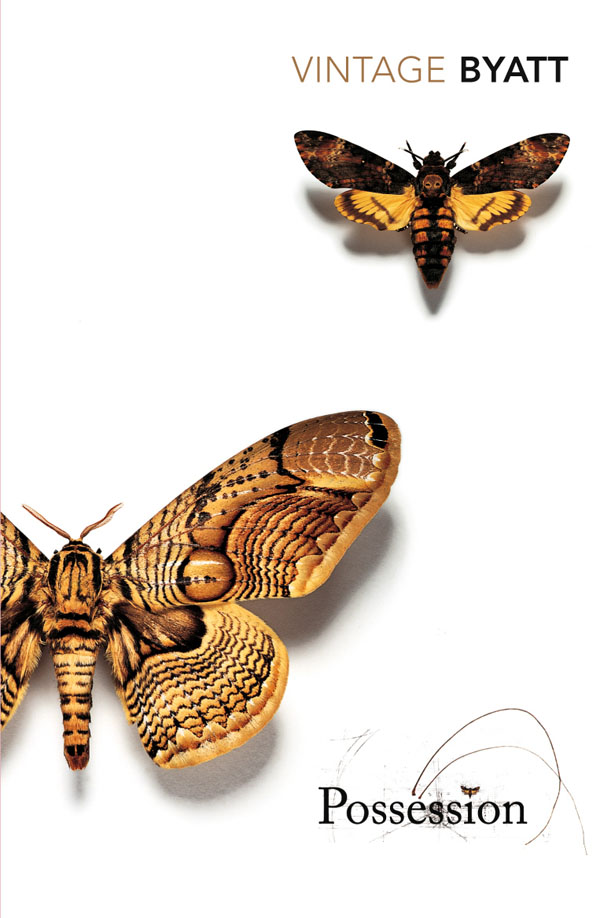
Possession – A. S. Byatt

Book # 183

Reviewer: Tall, Short & Tiny


It’s 1986, and self-proclaimed “failed” academic Roland Michell is doing some routine research work into [fictional] poet Randolph Henry Ash. He stumbles upon some previously-unread drafts of what sound like a love letter – written to someone other than Ash’s wife. As he tries to unravel the mystery behind the letter and the woman it was meant for, Roland realises that this could change the way people think about the poet, his works, and his private life. As other academics become aware of the existence of the letter, Roland is caught in a race to discover the full story, which will alter the face of academic research forever.

I had no pre-conceived ideas about this book, having heard nothing about it before, and therefore didn’t know what I was expecting…but it certainly wasn’t this. It took me a while to really get into it; I found the characters insipid and uninspiring, and the setting of the background information seemed to plod along at snails’ pace. Then suddenly, a quarter of the way through, it became a compulsive read; the plot suddenly became captivating, intriguing, beguiling…it was like reading a crime-thriller novel, and I was desperate to turn each page. I found myself – on numerous occasions – foregoing a sleep-in so I could continue reading, and my bedside lamp was turned off later and later at the opposite end of the day.

The central theme of Possession is…well…possession, in various forms – the need for people to own something, or someone. There’s the idea of possession between lovers (present in the parallel and complementary love stories in the two separate centuries – each pair seem to struggle with morality, expectation and the need for individuality, which serve to highlight their need for clarification on their position within each relationship); the need for a researcher to feel some kind of ownership over their subject (each of the main academics is desperate to be the one to unravel the story, to gain more insight into their chosen subject. They all seem to become obsessed with their missions, and in many cases, I guess obsession and possession go hand-in-hand); and the concept of ownership when it comes to historically significant discoveries – do they belong to the person who found them, or to the country in which they were found, or to the person for whom they were intended (and therefore their descendants), or to the highest bidder (this is explored throughout the entire novel – the power struggle between the academics moves beyond simply the desire for information, to the desire to possess the artefacts that are uncovered. In the end, it comes down to the law, and the resignation by all that the information can belong to only one)?

Byatt intersperses the story with chapters consisting solely of Victorian-esque poetry, all of which she wrote herself, as well as letters between the lovers and journal entries from the various 19th-Century characters. I enjoyed the first few, but then found myself flipping through these chapters to find where the story re-started – unless you have a strong liking for Victorian poetry (a la Browning and Tennyson), these seem to me to be superfluous to the central story, as the meanings are ultimately explained by the 20th-Century characters. However, her talent as a writer and as a poet are undeniable, and these poems certainly showcase that.

There were moments of predictability, but these were the result of logical thought rather than following any sort of typical formula. As the story unfolded and more information came to light, the mysteries unravelled further and it became easier to see a few steps ahead. The ending was certainly not a surprise, which gave the novel the perfect 19th-Century tie-up-all-loose-ends feel.

After some initial trepidation, I thoroughly enjoyed Possession in the end, and would be more than willing to seek out further works by Byatt for future reading. My advice to others tempted to pick up this book? Persevere, if you find it starts off slow – it’s worth it in the end.