The Catcher in the Rye – J.D. Salinger

Book #529

Reviewer: Naomi, of Create-Believe-Dream


TCITRThe Catcher in the Rye has the distinct reputation of being both the most-censored and the second most assigned book in the same year in American schools (1981). It is said to sum up perfectly the city of New York in the fifties and has been acclaimed as one of the “three perfect books” in American literature alongside The Great Gatsby and Adventures of Huckleberry Finn (source Wikipedia). It’s a book whose reputation precedes it and title evokes much. And I loved it.

Despite its reputation and popularity I had never read it before and only did so at the suggestion of my husband who thought I would enjoy it. He reads to me in bed each night and suggested it for this purpose (yes, we are totally, sickeningly adorable). I think hearing it read by a male voice really accentuated the wonderful characterisation of the protagonist Holden Caulfield.

The Catcher in the Rye is a book more about people than plot which always appeals to me. The main action of the book takes place over two days and is recounted by Caulfield from a hospital bed after the fact. A disillusioned and confused Caulfield has been expelled from his fancy private school Pencey Prep and decides to leave before the end of the term and spend a few nights in New York until his parents expect him home from school. He meets a range of characters in the city, some of whom he knows and some whom he doesn’t including nuns, a prostitute and her pimp, the mother of a school friend, tourists, friends, and family members. Each of the interactions he has tell us more about him as a person and serve to highlight his downward spiral eventuating in some sort of breakdown after he returns home.

I’m a bit of sucker for coming of age/ teenage angst stories, even as an adult I can still remember what a tumultuous and overwhelming time of life it was. It is also such rich territory for character development and this is where the beauty of this book lies. Caulfield is an intelligent, rebellious and astute character, easily able to see through the “phony” world of adulthood for which his school is attempting to mould him. He is alienated from his peer group and shows a wistful attachment to the innocence and simplicity of childhood. The title of the book comes from a passage where he expresses his desire to protect children from the seeming horrors of adulthood. He was a very real, believable and sympathetic character and I was very moved by the book because of this.

Salinger’s writing style would have been, I imagine, very provocative for a fifties audience. The stream of consciousness style of the narration, the use of (by today’s standards very tame) bad language and colloquial speech, and Caulfield’s open and frankly expressed views on sex could possibly overshadow the purity and simplicity of the story and the character of a lost young person trying to find their place in the world. This is what has stayed with me most, and I can understand why this book still resonates with readers today.

Jane Eyre – Charlotte Brontë

Book #904

Reviewer: Sharmin @ A Battalion of Words


Today we are welcoming a new member of the Review Crew. Please give a warm welcome to Sharmin.

JE

Charlotte Brontë’s Jane Eyre is not in the least a glamorous love story. However, in this elegantly written novel, there lives a seemingly ordinary young woman who is spirited, and righteous in nature. Although continuously told throughout her life to suppress her passionate disposition, first by her family, next by the institution which – ideally — should have nurtured her intellect and independent nature, she still refuses to compromise her life. Though at first Jane’s physical plainness is associated with mediocrity by almost everyone around her and while their opinion of her physically lacking appearance doesn’t change much, she still comes to be respected as an honest and intelligent individual.

We first meet Jane Eyre as an abused, young orphan living with her only known relatives by whom she is sent off to Lowood School for girls. She spends a number of years there being further abused before taking a position at Thornfield Hall as the governess of a young girl. Upon helping the man who is the heir of Thornfield Hall one night, their relationship grows into something more than the average one between a superior and an employee. From here we see Jane and Mr. Rochestor’s love live through the passage of time in their attempts to deny each of the other or secure their love through more ideal methods.

Brontë’s novel, although a love story at its core, is also a study of beauty and poverty. Her criticism of physical beauty and its’ irrelevancy proves strong as does her thoughts on the rigid nature of the wealthy English class. Brontë lets her heroine describe herself as a “plain, quakerish girl”. Jane’s physical “plainness” is harmonized by her lover, Mr. Rochester, who is described as someone widely disregarded as unattractive. In the following passage we get a few thoughts on Mr. Rochestor in Jane’s voice:

“I am sure most people would have thought him an ugly man; yet there was so much unconscious pride in his port; so much case in his demeanour; such a look of complete indifference to his own external appearance; so haughty a reliance on the power of other qualities, intrinsic or adventitious, to atone for the lack of mere personal attractiveness, that in looking at him, one inevitably shared the indifference; and even in a blind, imperfect sense, put faith in the confidence.”

Mr. Rochester is arguably one of the most charismatic love interests I have read about in a long time. Despite my initial impression of him as thick-skinned and bitter, he turned out to be intense, intelligent and flawed.

I’ve also read somewhere that the images she paints of the boarding schools are very accurate and that she draws knowledge from her own experiences of residing and working in one early in life. And surely enough, poverty is a force captured fully by Brontë’s beautiful writing style. The passage below showcases Jane’s experiences during the beginning of her time at Lowood.

“…but within these limits we had to pass an hour every day in the open air. Our clothing was insufficient to protect us from the severe cold; we had no boots, the snow got into our shoes, and melted there; our ungloved hands became numbed and covered with chilblains, as were our feet. I remember well the distracting irritation I endured from this cause every evening, when my feet inflamed, and the torture of thrusting the swelled, raw, and stiff toes into my shoes in the morning. Then, the scanty supply of food was distressing: with the keen appetites of growing children, we had scarcely sufficient to keep alive a delicate invalid.”

Even harboring all the hardships of her life, Brontë makes Jane a resilient and morally robust protagonist who, even in her misfortune, finds satisfaction and love. Unlike her sisters’ novel, which is just as dark and profound as Charlotte Brontë’s if not more, the characters are hopeful, optimistic and redeeming in nature. They also have more in common than their passion for each other, a mutual respect for one another—a trait lacking between the two main protagonists in Wuthering Heights.

If you are a first time reader of Brontë, be warned if you go into this novel expecting another Pride and Prejudice as I did, than you will be slightly put off because while I love Austen, Brontë has a more brooding tale to tell. While it is not as biting in its dialogue or humor as Pride and Prejudice, it is just as satisfying. However, the most delightful of lines from Brontë’s Jane Eyre is most probably the first line in the very last chapter, “Reader, I married him” which concludes the entire story as simply and straightforwardly as it began.

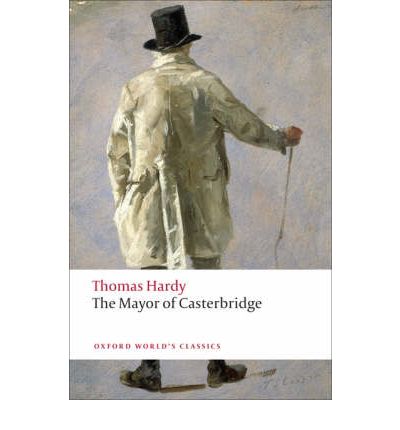
The Mayor of Casterbridge – Thomas Hardy

Book #821

REVIEWER: Naomi, of Create-Believe-Dream

TMCThomas Hardy is the master of the missed moment. If one were to make a pie chart of the plot elements of a novel such as The Mayor of Casterbridge the sum of the parts would be infinitely greater than the whole.

Essentially The Mayor of Casterbridge turns on one crucial moment where Michael Henchard in a fit of drunken pique auctions his wife (Susan) and daughter (Elizabeth-Jane) off to a sailor in a bar at a fair. As a result Henchard resolves not to drink again for as many years old as he is (21) and we return to his story 18 years later when he is the Mayor of Casterbridge, and a successful business man. Susan and Elizabeth-Jane return to Casterbridge after the death at sea of the sailor who bought them and has husbanded and parented them since that moment. What follows is a tangled web of events where Henchard ‘marries’ Susan, after breaking off the engagement he had with a younger woman Lucette Le Sueur. At the same time Henchard takes into his employ Donald Farfrae who develops an attachment to Elizabeth-Jane. He makes an enemy of the man he had promised the job to, Joshua Jopp and his business starts to decline, Susan dies, Lucette returns, Henchard’s sobriety ends and the ensuing events would be a soap opera in the hands of just about any other writer.

When you start to read a Hardy novel, you do so in full knowledge that most of the characters will be left unhappy and full of regret, if they are alive, by the last page. However his work is not maudlin or sentimental and one of the main reasons his work never descends to this is his pithy, reportage style of writing. His descriptive passages are taut and real, the landscape comes alive around you as do the multitude of minor characters who colour the landscape. The plot while complicated and full of twists is, at its most essential, the tale of a flawed man trying to redeem himself for one glaring mistake and getting caught in the net woven from the smaller ones he makes in the process.

Having read a number of Hardy’s novels and short stories I knew what I was getting in to. However, although Casterbridge is regarded by some critics as Hardy’s greatest novel it was not, for me, his most appealing or moving. This could be for a number of reasons. Firstly the protagonist, Henchard, is not an overly sympathetic character. He is arrogant, argumentative and cold. And in addition I found the women characters quite weak, especially Elizabeth-Jane who was downright insipid. Maybe I’m just geared to the higher levels of injustice and melodrama in Tess of the d’Urbervilles and Far From the Madding Crowd. However, it justifiably earns its place on the list, along with most of his other character based work. Hardy is a writer, reporter, anthropologist, moralist and psychologist rolled into one and as a result, quite a worthwhile person to spend several hours of your time with.

Sons and Lovers – D.H Lawrence

Book #749

Reviewer: Ange, of Tall, Short & Tiny


SAL This is my first experience of reading Lawrence, and now that I’ve finished, I can happily say I was pleasantly surprised. Initially, I found the chapters to be incredibly long and rather monotonous, but as the story progressed, it became more of a page-turner than I expected. It wasn’t, however, the gripping plot that kept me interested, for there really wasn’t much of a plot at all. It was the characters, and the intensely woven relationships between them, that had me wanting more.

Sons and Lovers is said to be semi-autobiographical; if this is true, then Lawrence certainly had a very interesting relationship with his mother. The novel’s protagonist is Paul Morel, a young man with an intense, passionate love for his mother, and an intense hatred of his father. As I read, I couldn’t help but be reminded of the story of Oedipus, such were the relationships between them.

Initially, I felt some compassion for Paul, sorrow for the power his mother had over him, and pity for the choices he made. However, by the end of the novel, I didn’t like him at all. He seemed spoiled and pathetic, incapable of thinking for himself at the same time as incapable of thinking of anyone but himself. He was selfish and arrogant, unfeeling and rather nasty at times. I think Lawrence made him out to be made this way through his mother’s influence, but I simply didn’t like him.

I feel a bit “meh” about Mrs Morel. A less-than-ideal marriage, the death of a child, living beneath her station…everything points towards a woman unlucky in love and life. Her actions didn’t seem malicious or cruel; I don’t believe she set out to ruin her sons’ potential love lives, but instead she wished for them to be happier in their marriages than she was.

Miriam, Paul’s childhood love, seemed to be the sweet girl-next-door kind of character; meek and supplicating, she came across as being willing to do, and put up with, anything for love. However, by the end of the novel, it was evident that despite her apparent meekness, she was incredibly strong and perceptive. Her ultimate realisation of the truth of her relationship with Paul made me want to give a little sigh of celebration; I was proud of her.

I didn’t like Clara Dawes, Paul’s older lover, initially, but as her relationship with Paul developed, and her character along with it, I found her to be rather endearing and likeable. She was strong in character, but possessed a fragility in stark contrast to this strength, which made her brashness seem like a front. She was quite a different character to Miriam in this regard, and in the end, I liked her best.

As I mentioned above, there wasn’t really much of a plot to Sons and Lovers. However, Lawrence is said to have summarised it in a letter to his editor in late-1912:

It follows this idea: a woman of character and refinement goes into the lower class, and has no satisfaction in her own life. She has had a passion for her husband, so her children are born of passion, and have heaps of vitality. But as her sons grow up she selects them as lovers — first the eldest, then the second. These sons are urged into life by their reciprocal love of their mother — urged on and on. But when they come to manhood, they can’t love, because their mother is the strongest power in their lives, and holds them. It’s rather like Goethe and his mother and Frau von Stein and Christiana — As soon as the young men come into contact with women, there’s a split. William gives his sex to a fribble, and his mother holds his soul. But the split kills him, because he doesn’t know where he is. The next son gets a woman who fights for his soul — fights his mother. The son loves his mother — all the sons hate and are jealous of the father. The battle goes on between the mother and the girl, with the son as object. The mother gradually proves stronger, because of the ties of blood. The son decides to leave his soul in his mother’s hands, and, like his elder brother go for passion. He gets passion. Then the split begins to tell again. But, almost unconsciously, the mother realizes what is the matter, and begins to die. The son casts off his mistress, attends to his mother dying. He is left in the end naked of everything, with the drift towards death.

I love this summary, and think it explains everything so perfectly without spoiling anything, that I don’t feel the need to expand further. Besides, Lawrence used the word “fribble” (used here to refer to a frivolous, wasteful, materialistic person), which isn’t a word you hear…well…ever, really!

Sons and Lovers gets 4/5 stars for me; it loses half a point for the first few chapters which sent me to sleep, and half a point for the lack of any real plot. Definitely worth a read, and the persevering through the first part to get to the good bits.

A New Year begins

We hope you have enjoyed the Summer Series of posts so far.  There are only three weeks left of our reduced schedule and then it is back into the full flow of posting two reviews per week.

As always, we would like to thank our volunteer crew of reviewers, your support makes this all possible.   We have had some lovely offers of reviews over the past little while, and now that we are about to get under way with the full schedule, it is time for me to put my editorial hat back on.  If you have offered a review (or two) but have not committed to a date for sending those in, please do so as soon as you can.  If we don’t hear from you shortly we will consider those books open for other reviewers to choose.
We appreciate that life can get in the way of fun things like reading good books, so please just let us know with a quick email.

For those of you who have committed to dates, or are in the process of doing so, many, many thanks for your continued support.

If you have been thinking about sending in a review, you are most welcome to do so.  We don’t bite.  Much.  But as this year starts, we will be introducing a new requirement for our Review Crew.  Deadlines.  Both Tori and I have increased commitments at home this year, so our time is precious, and to help with the posting schedule we will now need any promised reviews to have an agreed date for submission.  Hopefully you won’t find this additional requirement to be too onerous.

Now on to some odd facts about our reviews to date.

We have published 112 reviews so far.  Most sit on their own with no surrounding books reviewed yet.

The most consecutive reviews we have is three:

536. The 13 Clocks – James Thurber
537. Gormenghast – Mervyn Peake
538. The Grass is Singing – Doris Lessing

There are a number of duos sitting next to each other, including:

37.The Book of Illusions – Paul Auster
38. Gabriel’s Gift – Hanif Kureishi

209. The Long Dark Teatime of the Soul – Douglas Adams
210. Dirk Gently’s Holistic Detective Agency – Douglas Adams

310. The Passion of New Eve – Angela Carter
311. Delta of Venus – Anaïs Nin

698. Mrs. Dalloway – Virginia Woolf
699. The Great Gatsby – F. Scott Fitzgerald

789. The Turn of the Screw – Henry James
790. The War of the Worlds – H.G. Wells

989 a. Monkey: A Journey to the West – Wu Cheng’en
990. The Princess of Clèves – Marie-Madelaine Pioche de Lavergne, Comtesse de La Fayette

Feel free to offer a review to fill in any gaps between singles, and maybe by this time next year we will have a larger run of consecutive books reviewed.

And following up on an earlier post about which 100 is the most popular, here is an update some six months later.

Books 1 – 99: 19 reviews  (5 more)
Books 100 – 199: 12 reviews (5 more)
Books 200 – 299: 16 reviews (7 more)
Books 300 – 399: 12 reviews (5 more)
Books 400 – 499: 8 reviews (2 more)
Books 500 – 599: 7 reviews (5 more)
Books 600 – 699: 6 reviews (4 more)
Books 700 – 799: 12 reviews (2 more)
Books 800 – 899: 10 reviews (1 more)
Books 900 – 1001: 10 reviews (8 more)

Interestingly this past six months has worked quite well in balancing out the 100s, but there is still something of a middle of the bed slump going on in the 400, 500 and 600s.  What do we all have against mid-20th century literature that it is the least reviewed period so far?

Happy reading everyone !